Importance of Sleep

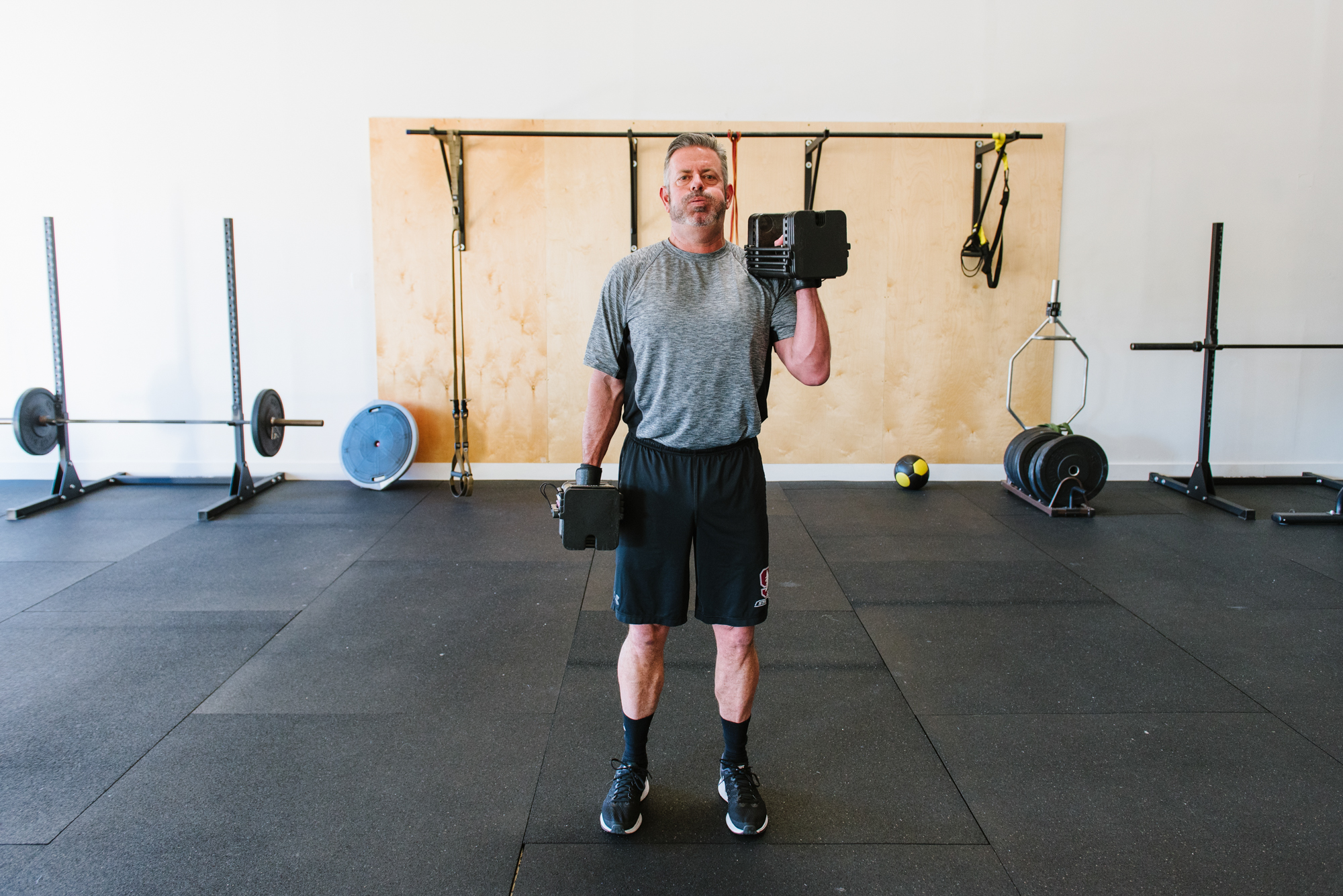
Quality sleep should be one of the top priorities for supporting health and fitness goals. You can train hard in the gym and eat all the right foods, but if you’re not getting adequate sleep, your body and mind can suffer. Without sufficient rest, the muscles you work out during training sessions cannot properly recover, which inhibits muscular growth and development.  During sleep, the body increases growth hormone production, which is essential for muscle repair, connective tissue rebuilding, and overall recovery from training. Even one or two nights of poor sleep can reduce attention span, slow reaction time, and impair decision-making, all of which directly impact work performance and daily productivity.

Research supports that optimal sleep plays a critical role in physical recovery and cognitive performance. Studies published by the National Sleep Foundation demonstrate that inadequate sleep can impair muscle recovery, reduce strength output, and negatively affect focus, decision-making, and physical and cognitive reaction time.

A healthy recommendation for good-quality sleep is to get 7-9 hours of sleep nightly.  The progress made in the gym is reinforced during rest and recovery, not always during the workout itself.  When you prioritize sleep, you give your body and mind the time needed to reboot and recover.


Written by Coach Paul Atienza

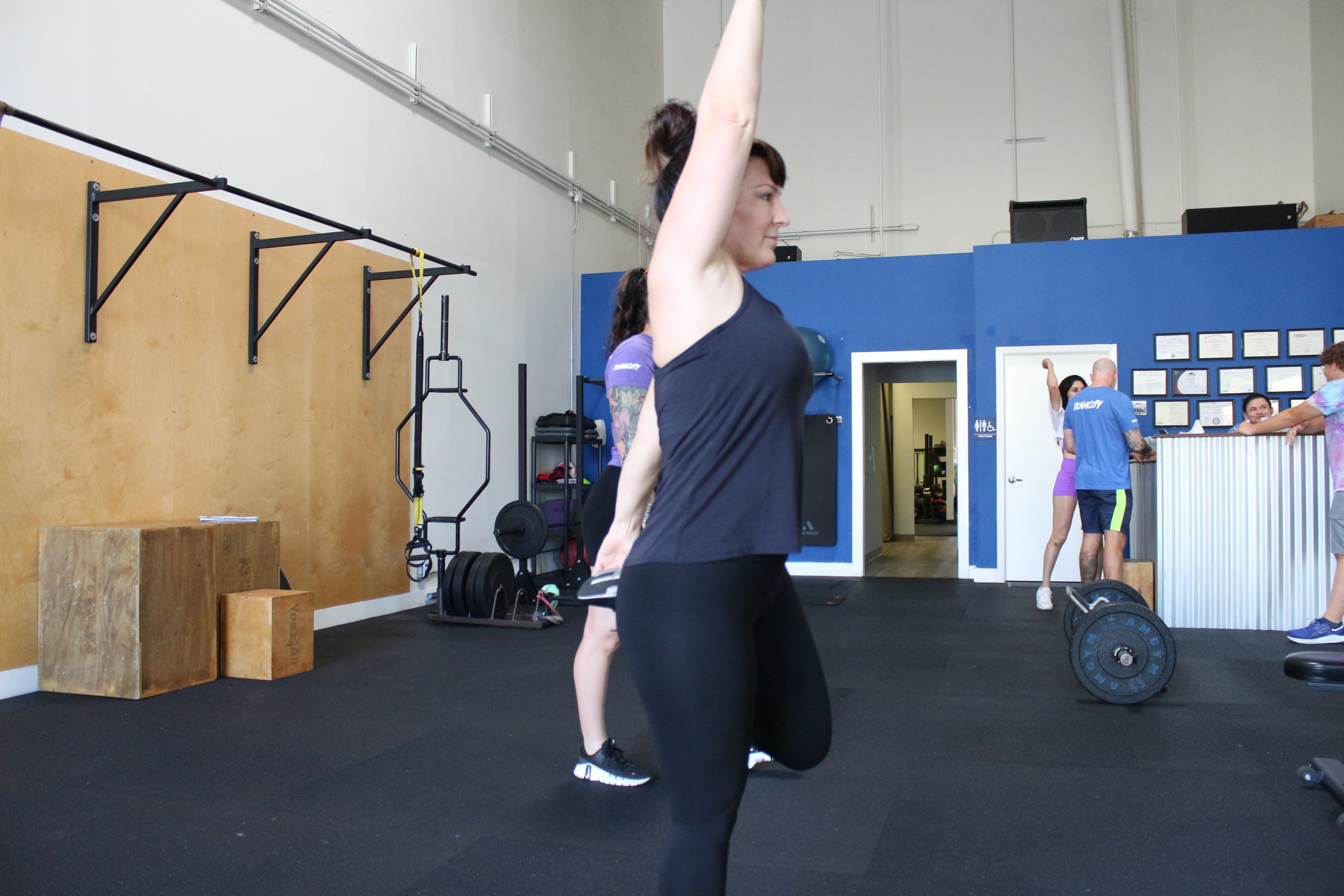
Exercise Tip of the Month: Lateral Split Squat

Commonly seen Lower-body exercises at the gym might include squats, lunges, and leg presses. However, one overlooked movement that is critical not only for refining lower-body strength but also for reinforcing the structural integrity of the stabilizing muscles of the hips, knees, and ankles is side-to-side movement.

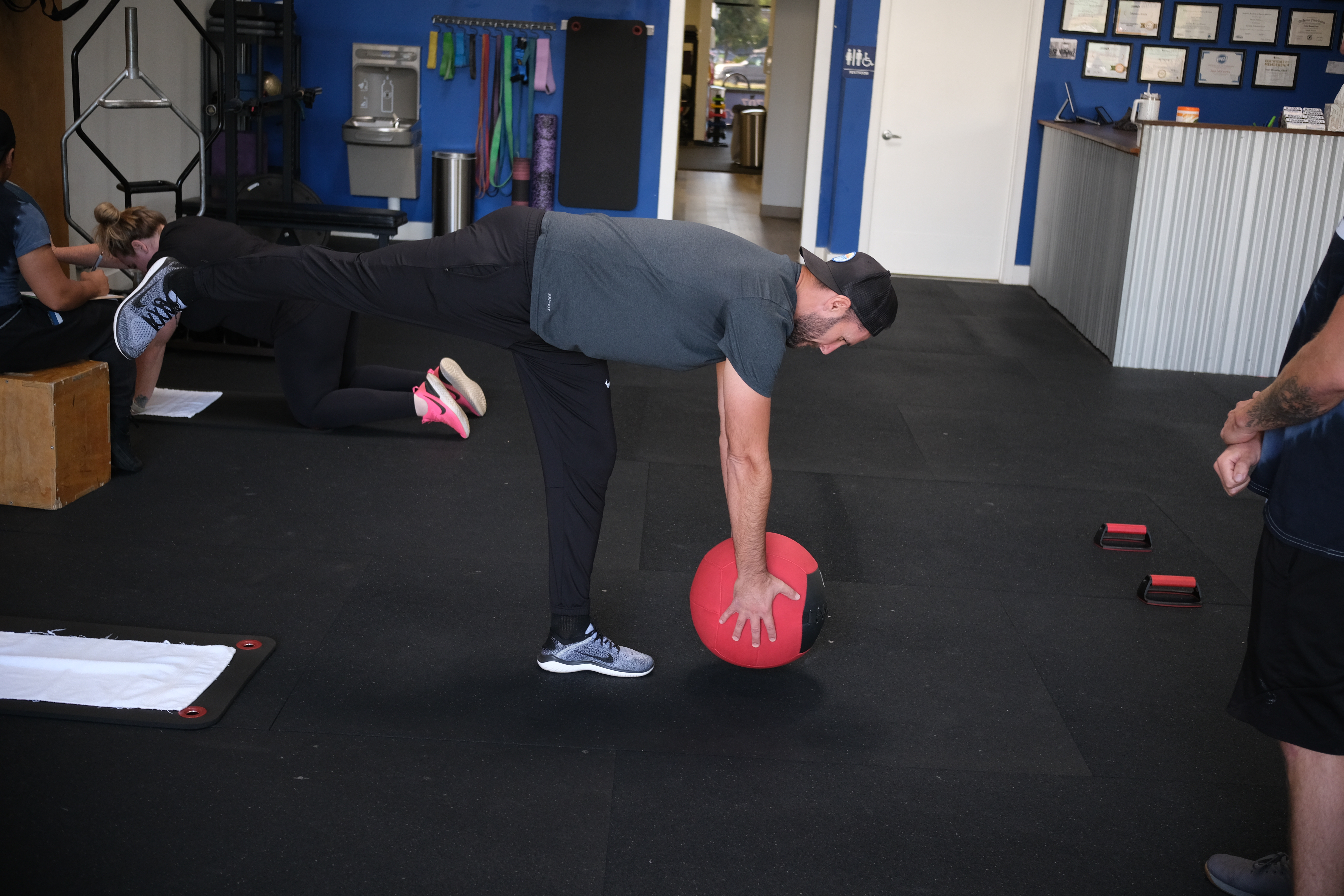
The lateral split squat targets lower-extremity muscles involved in powering medial and lateral (left-to-right) movement. By loading the hip abductors and adductors while requiring balance and coordination, lateral lower-extremity exercises reinforce side-to-side strength and stability.

The demands of single-leg mechanics and shifting the body’s center of gravity laterally promote muscular adaptation in the lower extremities to optimize changes of direction, balance, and coordination.  Exercises involving side-to-side movement help improve confidence in everyday physical activities that require lateral lower-extremity movement.

The lateral split squat challenges balance and proprioception, recruiting the stabilizing muscles of the hip and knee that are critical for long-term joint health and injury prevention.  If an imbalance occurs, such as stepping off a curb or needing to quickly move out of the way of something approaching you (such as a person or vehicle), the ability to shift one’s body to one side or the other is beneficial for avoiding potential injury.

The next time you’re planning a lower-body workout, consider adding a few sets of lateral split squats. You may be surprised at how much your hips and legs benefit from moving in a new direction.

Written by Coach Vincent Nguyen

Posture Awareness During Squatting Exercises

“Make sure you look forward,” I cued Tina, one of our personal training clients, as she was performing a set of “zombie squats” during one of her training sessions.  Her eyes darted toward me momentarily to receive the instruction and then returned to looking straight ahead.  She immediately rotated her head upward, with her chin and face projecting toward the gym’s ceiling.  The back of her neck looked like a capital “C,” her cervical spine contorted unnaturally.  “No, look forward, not upward,” I added.  After a grimace of irritation toward my secondary exercise correction cue, she looked straight ahead, as if her line of vision was perpendicular to the surface of the wall in front of her.  What followed was a harmonious composition of hip, knee, and ankle movements that allowed her body to descend and ascend throughout the squat while maintaining optimal posture.

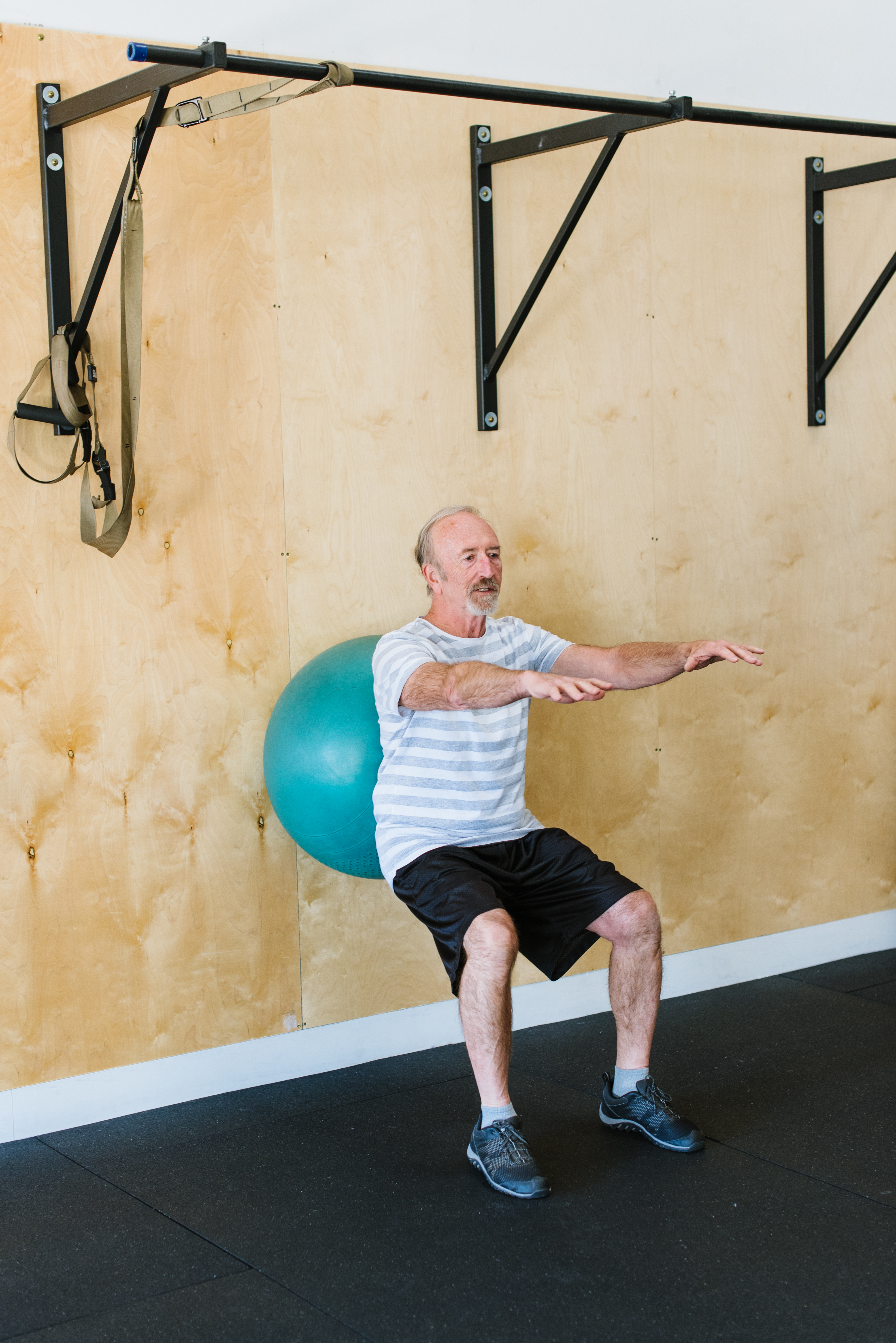
We utilize a zombie squat in our clients’ exercise prescriptions to teach them the nuances involved in performing a squat proficiently.  A commonly understood definition of squatting is the act of lowering your hips downward and backward to sit on a chair.  Sitting down and back is a cue we use when teaching our personal training clients how to squat correctly.  We add an extra component in the zombie squat, which involves extending the arms in front of the body while performing a squatting movement.  This action of bringing the arms in front of the body resembles the dancers in Michael Jackson’s music video “Thriller,” who are portrayed as undead humans, or zombies, who have come out of their graves, extend their arms in front of them, and perform a masterfully coordinated dance with Michael Jackson.

Postural awareness and coordination are needed to conduct a squat proficiently.  Cueing exercise participants to extend their arms out in front of them to emulate the actions of a cast member from Night of the Living Dead isn’t prompted just to get a chuckle out of our coaching staff.  The act of extending the arms in front of the body during squatting exercises serves as a reminder to keep the torso from collapsing forward.

Along with the lower-extremity muscles responsible for coordinated movements of the hip, knee, and ankle, the paraspinal muscles along the lumbar and thoracic spine, the muscles of scapular stabilization, and the neck stabilizers need to be engaged.  If these additional stabilizer muscles aren’t engaged, the head can tilt forward, the shoulder can slump forward, the lower back can round, and most of the weight of the body can transfer forward, causing the heels to come off the ground while squatting.  This lack of engagement of the stabilizing muscles of the torso during a squat can lead to a slew of suboptimal muscle and joint dysfunction, including neck, back, and knee injuries.  Therefore, it’s imperative to understand the preparatory actions that need to be engaged before performing squat-specific exercises.

Having participants extend their arms anteriorly during squats reminds them to keep their torso upright.  We use the cue “park the shoulder blades down and back” to ensure the muscles that attach from the base of the skull and the thoracic spine to the shoulder blades are activated.  When the muscles of cervical, thoracic, and scapular stabilization are engaged, the vertebral column is less likely to bend throughout squatting movements.  Furthermore, we use the phrase “act like you’re balancing two plates of scalding hot tea on the back of your hands” throughout the squatting movement.  This cue helps clients ensure their center of gravity doesn’t shift forward while in the “zombie-style” extended-arm position.  Optimal torso posture, along with a balanced center of gravity, allows the strong muscular motors of the hips to perform most of the work.  This shifts strain off the back and knee, directing more force to the hips.  To perform the zombie squat:

In a standing position, extend your arms in front of you to just below armpit height.  Keeping pressure on the heels and the feet flat on the ground, rotate your hips outward until you feel a slight muscular sensation in the outer hip and glute muscles.    In a slow, controlled motion, gradually lower your hips and back as you bend your knees.  Lower your hips until the crests of your hips are slightly above the level of your knees.  Reverse the motion by pushing your heels into the ground and using your glutes to push your hips under your body until you reach a standing position.  Repeat this movement for five to ten repetitions.

Daily activities usually involve sitting, looking down at our phones, or hunching over tables and desks to type, write, or eat.  Consistently practicing exercises that reinforce optimal posture can reduce the likelihood of muscle and joint dysfunction, while also enhancing our productivity and everyday quality of life.

Sean McCawley, the founder and owner of Napa Tenacious Fitness in Napa, CA, welcomes questions and comments. Reach him at 707-287-2727, napatenacious@gmail.com, or visit the website napatenaciousfitness.com.

Coach Alec Goes the Distance

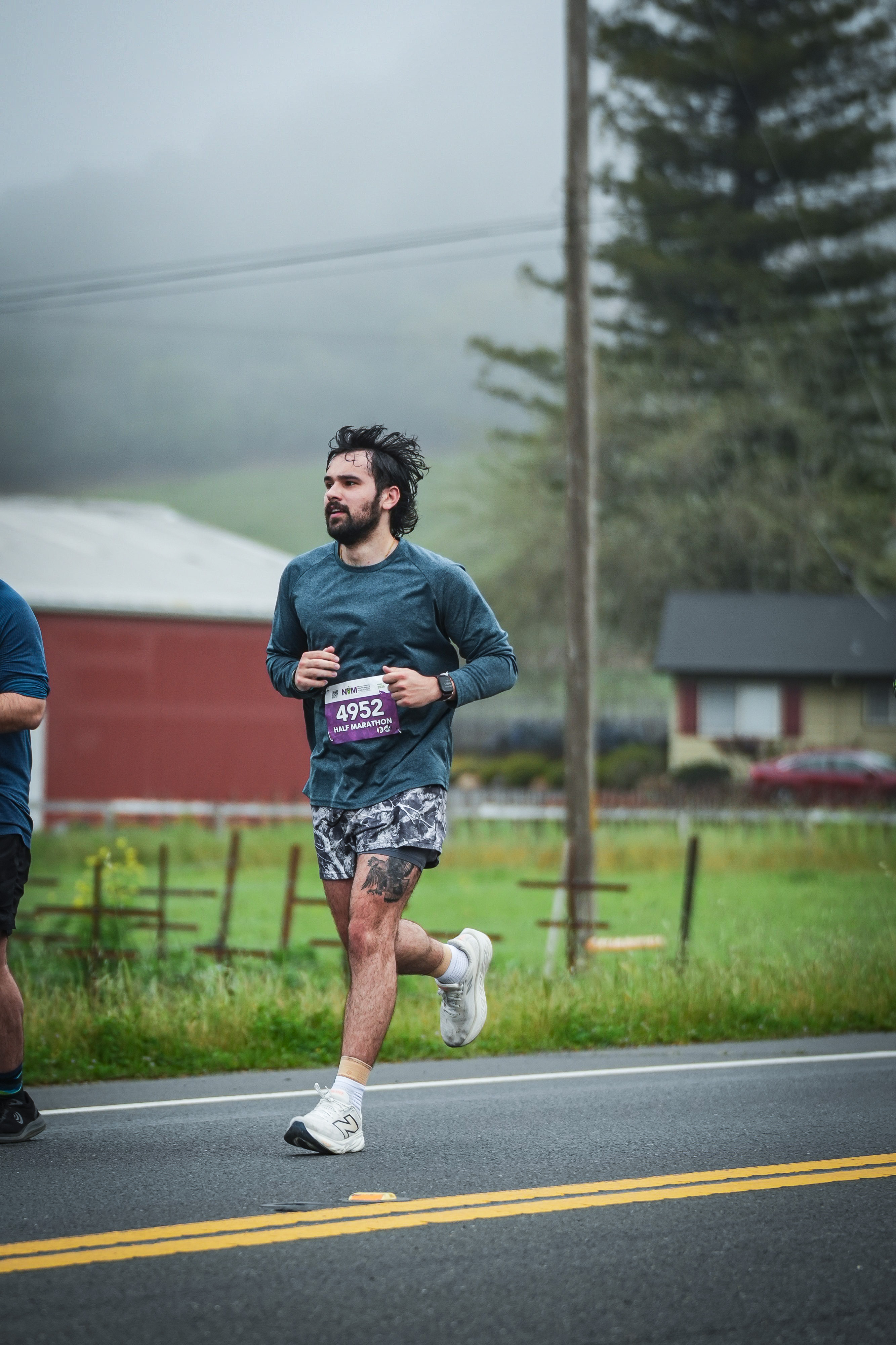
On Sunday, March 1st, 2026, Napa Tenacious Fitness’ own coach, Alec Cornwell, participated in the Napa Valley Half Marathon. This was his first half-marathon, and he completed it in 1 hour, 56 minutes, and 57 seconds, exceeding his expectations and finishing strong. Coach Alec’s main preparation consisted of one long run over the weekend and two maintenance runs on his days off from the gym. Alongside his runs, he incorporated two to three additional exercise sessions per week, including strength training, joint mobilization tactics, and injury-prevention techniques, to stay strong and avoid setbacks as he prepared for the race.

The race itself was pleasant, with a couple of low rolling hills and great views of the surrounding vineyards and wineries on a foggy Sunday morning in Napa Valley. However, crossing the finish line was the most fulfilling moment for him, serving as a testament to the hard work, dedication, and consistency he put into preparing for and completing the race.

The Mediterranean Diet

In the fitness world, diets like Keto, Paleo, and “low-carb” aim to promise fast results. But what if there were an approach that improves performance, recovery, and long-term health without extreme restrictions? Enter the Mediterranean diet.

Inspired by traditional eating patterns in Greece and southern Italy, this approach emphasizes food quality, balance, and consistency rather than rigid macro targets. It prioritizes fruits and vegetables, whole grains, legumes, healthy fats (especially olive oil), and lean proteins like seafood. Poultry and eggs are included in moderation, while processed foods and red meat are limited.

For active individuals, the Mediterranean diet provides steady carbohydrates to fuel training, high-quality protein to support muscle repair, and antioxidants to reduce inflammation and support immune function. Backed by strong research on heart health and longevity, it’s widely regarded as one of the most sustainable and effective eating patterns available.

Try this simple Salmon “Recovery” bowl recipe. The following key ingredients include:

  1. 5-6 oz of salmon
  2. 1/5 cup of white/brown rice or quinoa
  3. ¼ of sliced cucumber
  4. ½ of an avocado
  5. ¼ cup of edamame

This meal is very versatile, pairing well with a variety of sauces. I like doing a soy glaze where you add:

  1. 1/8 of a cup of low-sodium soy sauce
  2. ¾ tablespoon (tbsp) of oyster sauce
  3. ¾ tbsp of honey
  4. ¾ tbsp of water
  5. ¾ tbsp of olive oil
  6. Feel free to add crushed red peppers or fresh minced ginger for a little heat.

Thoroughly mix these ingredients in a bowl, then glaze the salmon and bake it at 400°F for 15 minutes. Make sure to flip halfway and reglaze the salmon with the leftover sauce. Plate however you like using the ingredients mentioned above, and enjoy!

Written by Coach Vincent Nguyen

Sciatica Solutions and Strong Hips

Sciatica is a term used to describe pain, tingling, or numbness that travels from the lower back down through the hip and into the leg due to irritation of the sciatic nerve.  It forms from several nerve roots in the lumbar and sacral spine and travels through the pelvis, deep in the hip, down the back of the leg, and attaches to the heel.  As the body’s largest nerve, the sciatic nerve innervates many of the muscles of the hip and leg and carries sensory information from much of the lower extremity back to the spinal cord.

Common causes of sciatica include piriformis syndrome, in which the deep intrinsic gluteal muscles and the piriformis become tight or inflamed, compressing the sciatic nerve.  The piriformis is worth noting because it lies over the sciatic nerve.  When the piriformis becomes inflamed or tightens, it can apply pressure on the sciatic nerve.  The compression of the piriformis muscle pressing down on the sciatic nerve can cause nerve pain-like sensations throughout the legs and feet.

Injuries and deconditioning to the lower back and hips can also lead to sciatica.  If left untreated or neglected, weak back and hip muscles can cause a slew of back conditions, including compressed discs, impinged nerves, or advanced forms of lower spinal degenerative bone disease, such as arthritis.  The roots of the sciatic nerve originate from the lumbar and sacral vertebrae.  Compression or misalignment of the vertebrae can produce nerve and muscle conditions similar to those seen in piriformis syndrome.  The difference from piriformis syndrome is when compromising spinal conditions are present is that misaligned vertebrae or intervertebral discs compress spinal nerve roots that can produce sciatica symptoms for months.  This condition can be a more challenging form of sciatica to treat because bones can’t be stretched or recovered the same way muscles can.  Therefore, sciatica stemming from spinal impingement is a more complicated puzzle to solve than a tight hip muscle.

Skeletal muscles have regenerative properties that adapt to the workload they endure via the SAID principle, which means specific adaptations to imposed demands.  An example of a specific adaptation to an imposed demand is when a person consistently performs thirty seconds of planks first thing in the morning three days out of the week, for a three-month period.  The result will most likely be a stronger upper body, core, and hip adaptation because a steady dose of exercise-induced stress was executed for a ninety-day period for muscles to adapt to the stress imposed on them.

Muscle is a soft connective tissue that adapts to become stronger when put through a bout of safe, effective strength training.  On the other hand, bones are hard structures that, if left unsupported by stabilizing muscles, can collapse onto the tissues between them, causing problems.  In the case of spinal-originating sciatica, vertebrae can collapse onto the spinal nerve roots, producing chronic sciatica.

Strong glutes and hip stabilizers help keep the pelvis balanced and prevent excessive stress on the lower back.  Deconditioning of the glutes and hip extensors forces smaller muscles, such as the piriformis in the hip and the paraspinal muscles bordering the outer lumbar vertebrae, to compensate, increasing the risk of nerve irritation.

One of the largest and most dense muscles in the body is the glutes.  Comprised of a layer of dense, powerful muscles, the glutes power the lower extremities to move forward, backward, away from the body, and toward the body.  A commonly overlooked function of the glutes is hip extension,  which is the action that moves the hips forward while keeping the body upright, stable, and aligned under the torso.

A simple and effective body weight exercise we coach our personal training clients to perform to assist in hip and glute strengthening is the supine hip extension, also known as the “hip bridge”:

To perform the Supine Hip Extension, start by positioning yourself flat on your back on the ground with your arms extended and your knees bent.   Press your feet into the ground and lift the hips upward until a brief muscular sensation is experienced in the hamstrings and glutes.  Repeat this movement for five to ten repetitions.

When the glutes are strong and active, they help position the pelvis directly beneath the torso. This alignment reduces excessive arching or rounding of the lower back and creates a more balanced, supported spine.  Therefore, strong glutes keep the hips underneath you, so your back doesn’t have to carry the load.   Incorporating consistent daily actions that strengthen the hips have the potential to fend off and mitigate the progression of sciatica.

Sean McCawley, the founder and owner of Napa Tenacious Fitness in Napa, CA, welcomes questions and comments. Reach him at 707-287-2727, napatenacious@gmail.com, or visit the website napatenaciousfitness.com.

Drop Neck Syndrome Prevetion: Scapular Protraction and Retraction

“Drop Neck” is a condition where the neck muscles are too weak to hold the head upright. It is also known as Dropped Head Syndrome (DHS). This causes the head to tilt forward and downward. “Drop Neck” is caused by weakness in the neck extensor muscles. This can result from sedentary lifestyle habits, overuse or underuse injuries, and nerve impingement caused by prolonged poor posture during everyday physical activities. Suboptimal spinal alignment during exercise can also strain the neck even more. Lifting heavy weights overhead or stretching the neck too hard can worsen “Drop Neck”.

One simple yet effective bodyweight movement to help with a drooping neck is scapular protraction and retraction with the arms and shoulders elevated.  This is a safe movement you can do at home. We instruct our personal training clients to perform this scapular protraction and retraction exercise before every workout to strengthen the muscles that support the neck and help it remain upright in optimal alignment.  Strengthening the muscles that attach the shoulder blades to the neck and base of the skull helps prevent injuries to the cervical spine, the tops of the shoulders, and the scapular stabilization muscles around the thoracic spine and shoulder blades.  Here are a few helpful cues, along with a video reference below on how to perform our version, included in our dynamic stretching routine, of scapular protraction and retraction:

To perform the scapular protraction and retraction dynamic stretch:

  1. Lift your arms and bend them at about a 90-degree angle.
  2. Make sure your arms are in line with your armpits.
  3. While maintaining your elbows at a 90-degree angle and keeping your fingertips facing forward, glide your shoulder blades forward along your rib cage until you feel a stretch in the upper back and a muscular sensation in your pectoral region.
  4. Reverse the motion and glide your shoulder blades backward against your ribs.
  5. You should feel a muscular sensation in the muscles surrounding your shoulder blades.
  6. Repeat this movement for five to 10 repetitions.

Below is a helpful reference video on how we teach our clients to perform scapular protraction and retraction

Written by Coach Paul Atienza

Exercise is Medicine for Knee Arthritis

Arthritis is a degenerative joint condition in which the smooth cartilage that normally cushions the ends of the joints gradually wears down. Healthy cartilage allows joints to glide smoothly and distribute forces during everyday movements.  Previous joint injuries, the repercussions of a life of manual labor in one’s career and lifestyle, or advancing age contribute to cartilage degradation over time within significant joints in the body.  Sharp, twinging pain is especially common in the knee joint where areas of arthritis are present.  As the joint’s smooth gliding and cushioning properties wear down, hindrances to movement due to pain during walking, climbing stairs, kneeling, and getting up from the ground can occur. When this cartilage becomes thinner or roughened, the bones experience increased friction and pressure at the joints during daily activities involving lower-extremity movements.

The knee joint is comprised of the connection at the inferior portion of the femur and the superior portion of the tibia.  The femur is the thigh bone.  The tibia is the larger of the two bones of the shin. The tibia’s neighbor is the fibula, on the outer side of the shin.  At the end of the femur, where it connects to the tibia, there are two bony knobs called condyles.  The medial condyle is on the inner portion of the femur, closer to the midline of the body, and the lateral condyle is located on the outer portion of the femur on the same side of the body as the pinky toe.  These femoral condyles sit on top of the proximal portion of the tibia called the tibial plateau.

The femoral condyles and the tibial plateau have a cartilage coating that provides a smooth track and gliding surface, allowing the bones to roll and slide along them, like a rocking chair or the wheels of a train on tracks.  If the cartilage covering the ends of these joints wears down, the bony surfaces of the knee joints can contact each other to produce bone-on-bone friction.  Imagine there was decomposed granite or sand on the surface of where a rocking chair usually rocks on a hardwood floor.  The crunchy, grinding motion of gritty material beneath the rocking portion of the chair creates a rough, uneven surface, making the rocking feel bumpy and potentially causing it to slide out of alignment with its direction of travel.  The development of knee joint arthritis can produce similar issues, including degeneration of the cartilage coating the femoral condyle and tibial plateau.

Surrounding the knee joint is a series of connective tissues composed of ligaments, tendons, and muscles.  Ligaments attach bones to each other.  Tendons connect muscles to bones.  Muscles contract to move bones.  While preserving ligaments by avoiding injury is important, ligamentous tissue doesn’t recover at the same rate as tendons and ligaments.  The lack of blood supply and the small size of ligaments don’t have the regenerative and growth properties when compared to tendons and muscles.  However, muscles will develop, grow, and become stronger with regular exercise, which can help mitigate pain and support joints affected by arthritis.  A few examples of muscles that reinforce the knee joint include the hamstrings, adductors, and hip flexors.

The hamstring muscle originates at the hip and attaches to the medial and lateral portions of the shin.  Hamstrings bring the femur toward the back of the body and act as a flexor to the knee. It’s important to note that hamstrings have stabilizing components to the knee that assist in ensuring the knee joint doesn’t track too far forward past its range of motion, which provides injury prevention properties to the knee’s cruciate ligaments and menisci.

The adductors originate in the groin region of the inner thigh and have multiple attachments that span down the bottom portion of the femur and the tibia.   Adductors are responsible for bringing the leg toward the midline of the body and act as structural stabilizers of the inner portion of the knee joint.

Hip flexors and quadriceps originate at the anterior crest of the hip and attach to the top of the shin bone, directly under the anterior presentation of the knee joint.  The quadriceps have the kneecap ensheathed within it, which helps with patellar tracking, preventing it from shifting medially or laterally out of alignment and causing friction at the front of the knee.

Dealing with arthritis is challenging.  However, strengthening the muscles and tendons that support the knee joint’s structural integrity is within a person’s direct control.  We just have to be consistent in exercise practice.  Education on the strength and conditioning techniques for the connective tissue attachment points that support the knee joint can help mitigate knee pain and dysfunction.    Skeletal muscle cells grow, and muscle architecture improves when a consistent, effective strength and conditioning routine is followed.  Therefore, it can’t be overstated enough that one of the most effective medicines for managing arthritis is exercise.

Sean McCawley, the founder and owner of Napa Tenacious Fitness in Napa, CA, welcomes questions and comments. Reach him at 707-287-2727, napatenacious@gmail.com, or visit the website napatenaciousfitness.com.
Deep Intrinsic Core and Hip Muscles

“Engage your core” is a term we often hear to avoid back injury during strenuous activity.  It should go without saying that bracing one’s core is beneficial when lifting a wine box off the ground, carrying it thirty meters, rotating it to place it on a shelf, and lifting it to a shelf of varying heights.  A rounded back when picking an awkwardly shaped object off the ground that exceeds thirty pounds, followed by turning from the back in a jerky and uncontrolled motion, is a potent scenario for a back injury to occur.  These injuries can present as a paraspinal muscle strain or, worse, as stress on intervertebral discs.  Strained muscles stressed from lower back injuries can heal over time.  However, stress to the cartilaginous discs between our vertebrae doesn’t heal as fast as muscle tissue.  Furthermore, stress on discs can press against spinal root nerves, causing burning “nervy” pain and neuropathy, such as numbness and tingling in the lower extremities.

We’ve more than likely heard and read that a strong core aids in athletic ability as well.  For example, as a golfer strikes the ball off a tee or putts, their core must be contracted and held still at certain points, and also strongly contracted to produce coordinated rotational movements in unison with the hips, harnessing power for a successful strike.  Another example of athletic core engagement is a tennis player’s strike on the ball during a two-handed backhand swing.  After planting their feet in the ground and preparing to strike the ball, a chain reaction of force production originates from the ground, passes through the hips, into the rotational core muscles of the abdomen and trunk of the body, and eventually to the arms holding the racket.  That harmony of force production sends energy to the racket to produce a successful strike on the ball.

The combination of stabilization, rotational power production, and coordinated neuromuscular engagement of the core and hip muscles significantly enhances the potential for stick-and-ball athletes to succeed in their athletic arena.  While activities such as golf and tennis might receive a lot of attention when it comes to appreciating the core, simply lifting a box of wine off the shelf and walking through a tasting room have strikingly similar demands on core and hip muscle engagement.  Therefore, people in the working population can significantly benefit from exercise education that covers how to develop a consistent core-strengthening practice to improve their function and productivity.

“Core” muscles can be defined in many ways.  A helpful way to identify the core we teach our personal training clients is that any area from the ribs to the bottom of the butt cheeks is considered the “core” of the body.  Therefore, the phrase “tighten your core” doesn’t just mean to flex your abs or “bring your stomach in”.  Paraspinal muscles along the back of the spine, the deep intrinsic core muscles of the psoas lining the anterior portion of the spine, the various layers of gluteal and hip rotator muscles in the posterior aspect of the hip, and the hip flexors connecting the hips to the upper portion of the femur are all “core muscles.”  Therefore, working the core is far more sophisticated than just lying on the ground conducting the crunches instructed on a “10 Minute Abs” video.

Emphasizing muscular engagement of the lower back, deep intrinsic core muscles, and the anterior and posterior aspects of the hips can significantly increase core strength over a thirty to ninety-day period if exercise sessions are consistently prioritized each week.  A simple and effective exercise that can be done in various settings, from a local gym or in one’s own home setting, is the supine “legs only” dying bug:

To perform, lie down with your back flat on the ground.  Bring your arms up to where your finger tips are pointed toward the ceiling, elbows extended, and arms are perpendicular to the armpit axis.  Additionally, flex the hips and bring the knees to a position perpendicular to the hips.  The knees should start in a bent position at a ninety-degree angle. Ensure to perform a posterior pelvic tilt, in which the crests of the hips are pulled toward the front of the rib cage, the navel is pulled in toward the front of the spine, the arch of the lumbar spine is relatively flat on the ground, and the glutes are engaged.  While keeping the spinal, abdominal, and glutes engaged, extend one leg and point the toe out to where it is extended at about a thirty-to-forty-five degree angle from the ground.  You should feel muscular engagement in the abdominal and front of the thigh.  Return your leg to its initial position, then repeat the same movement on the other side.  Repeat this movement for three to five repetitions.

Simple and effective exercises that cover a large surface area of the lower back, the deep intrinsic core muscles, the glutes, and the hip flexors can significantly improve core muscle infrastructure and functionality.  Choosing safe and appropriate exercise to reinforce core muscle conditioning can help us not only excel in our recreational activities but also in the simple, commonly overlooked movements we perform in our careers and hobbies.

Sean McCawley, the founder and owner of Napa Tenacious Fitness in Napa, CA, welcomes questions and comments. Reach him at 707-287-2727, napatenacious@gmail.com, or visit the website napatenaciousfitness.com.
Finger, Wrist, and Elbow Strength

After finishing a set of dynamic stretches, Nestor, one of our personal training clients, mentioned, “The inner part of my elbow is flared up.  I think I have a case of tennis elbow from going crazy on the drums last night.  I’d like to take it easy on a few of the more rigorous strength training exercises requiring gripping.”  First off, Nestor had symptoms of golfer’s elbow, not tennis elbow.  These terms are commonly misidentified because both sides of the elbow can become irritated from overuse injuries, usually stemming from repetitive movements that accumulate stress on the connective tissue of the elbow joint.  These symptoms commonly arise with the individual not even realizing they’re overworking the area.  These conditions produce pain in the inner and outer portions of the elbow, which can affect forearm and grip strength and be a distraction during everyday physical activities.

To build a path to recovery for Nestor’s golfer’s elbow, we first needed to enlighten him about the cause of the injury.  Additionally, it was beneficial for him to understand the difference between golfer’s elbow and tennis elbow.  The elbow has a network of muscles that span from the fingers, hand, and wrist and originate from the bony knob of the elbow.  This bony prominence of the elbow is called an epicondyle. Our plan, as his health and fitness coaches, is to enhance his performance in his drumming sessions and in other aspects of his life that require hand grip and forearm strength.  Therefore, we needed to ensure we were strengthening the correct muscles and mindfully avoiding overworking the areas of his elbow that were causing pain.

The outside, or lateral, portion of the elbow is the lateral epicondyle, which has a bony knob akin to its neighbor on the opposite side of the forearm, the medial epicondyle.  This is where the finger and wrist extensors attach.  Imagine your hand is pronated as if your knuckles are facing you.  If you can see your fingernails, that means you can identify where the extensor muscles start.  The extensors trace along the back of the fingers, down the back of the hand, along the top of the forearms, and attach to a common tendon at the lateral epicondyle.  These muscles contract to bring the fingers and wrist toward the top of the hand, similar to the action of looking at your fingernails after a fresh manicure.  When the extensors are overworked, they can lead to symptoms of tennis elbow.

On the inside of the elbow, the wrist flexor muscles are secured via a set of tendons.  Imagine turning your palm upward as if you’re holding a mirror and facing it toward your face.  The muscles originating from the palm of the hand, passing through the wrist, running along the bottom of the forearm, and finally attaching to the medial epicondyle are your flexor muscles.  This is the site of tendinous attachment that can become stressed, producing golfer’s elbow.

Golfer’s elbow is named for the repetitive wrist flexion and forearm rotation demands of the golf swing, which repeatedly load the common flexor tendon at its attachment to the medial epicondyle. Over time, this stress can exceed the tendon’s capacity to recover, leading to irritation and pain on the inside of the elbow.  When we review Nestor’s issue of pain in his inner elbow, we can see how the motion of lifting a drumstick and percussively striking the surface of his drum kit mimics that of a golfer.  The difference is that Nestor was using lighter, shorter-length instruments to strike objects at an increasingly intense cadence than that of a golf swing.  These similar mechanics seemed to align with the site of injury Nestor reported for his elbow.  Therefore, we programmed exercises into Nestor’s exercise prescription that could not only rehab his golfer’s elbow (in his case, “drummers’ elbow”) but also enhance his drumming performance and decrease the likelihood of future injury.

An injury prevention exercise we conduct with our personal training clients to stave off golfer’s elbow and strengthen forearm and grip strength is standing wrist supination and pronation:

To perform the standing supination and pronation exercise, stand upright with both arms extended in front of the body at about armpit height.  Simultaneously, rotate both arms toward the midline of the body as if you are rotating your hands up like you’re holding a plate, and then downward as if you’re pouring a cup of coffee.  Reverse this motion by slowly rotating both arms toward the outside of the body with an emphasis on obtaining as much range as possible to achieve a sense of muscular activation around the wrist, forearms, and shoulders.  You should feel muscle tension in the shoulders, triceps, and forearms.  Repeat these movements for five to ten repetitions.

Discovering the causes of musculoskeletal injuries is an important part of our lifetime fitness efforts.  If something is hurting, it’s beneficial to our everyday quality of life and functionality to educate ourselves about the causes of injuries and practice exercises that help prevent them from coming back.

Sean McCawley, the founder and owner of Napa Tenacious Fitness in Napa, CA, welcomes questions and comments. Reach him at 707-287-2727, napatenacious@gmail.com, or visit the website napatenaciousfitness.com.