
Injuries, joint conditions, and pain-producing areas among our personal training clients commonly occur in the lower back, knees, and shoulders. In terms of which area of the body is most affected by pain, the lower back seems to be public enemy number one, followed by the knees as the second most compromised area, and in third place, the shoulders. Experiences throughout life in physically demanding careers, previous athletic practices, or coming out the other side of a significant injury can have effects on the back, knees, and shoulders. While musculoskeletal pain is closely linked to dysfunctional body movements, there are tactics to mitigate and manage these conditions. Understanding what worsens the affected areas and which tactics provide relief is key to optimizing daily productivity when managing chronic pain.
When an exercise participant reports significant pain during our personal training sessions, one of the first things we teach our clients is what not to do during exercise. A common flaw we see in our personal training clients’ performance is letting the head tilt forward, with the chin closer to the chest and the eyes pointed downward, producing an excessive kyphotic curve in the cervical and thoracic spine. This suboptimal posture produces the rounded shape of a fishing pole with a fish on it. This excessive curvature of the thoracic spine, which is the twelve vertebrae beneath the cervical spine of the neck, creates a vicious cycle of complications in multiple areas of the upper and lower back. When the chin is tucked towards the chest, and a person’s gaze is downward, the shoulders tend to internally rotate towards the midline of the body. This inward rotation of the shoulders caves the chest in and separates the shoulder blades on the back of the body.
When the shoulder blades slide forward along the rib cage, a position known as scapular protraction, the head of the humerus, which is the ball at the top of the upper arm bone, simultaneously rotates inward. This combination of hyper-internally rotated shoulders and protracted shoulder blades shortens the pectoral muscles along the front of the chest, pulling the torso into an even deeper forward curve. Prolonged staring at phone screens, looking at computer monitors during desk work, and leaning over a steering wheel while driving during long commutes contribute to excessive forward-leaning posture. Over weeks and months of repeating these activities, the body begins to accept this rounded, forward-leaning posture as its default. The result can lead to chronic pain, reduced range of motion, and decreased productivity in normal daily functioning.
A remedy to this forward collapse is to train the muscles that pull the body in the opposite direction. This means strengthening the posterior chain, which includes the muscles along the back of the body. Exercises that require the body to extend, reach back, and maintain spinal alignment help reverse conditions that cause forward collapse of the torso. One of the most effective and accessible ways to accomplish this is through prone exercises.
Prone exercises are performed with the body facing downward, either lying flat on the belly or positioned on the hands and knees. Both orientations naturally recruit the posterior chain, including the muscles surrounding the shoulder blades, the glutes, and the spinal extensors. These are precisely the muscles that become underactive and weakened when excessive kyphotic posture takes hold due to the cumulative demands of everyday life.
One of our favorite prone exercises to prescribe for our personal training clients is the bird dog. To perform a bird dog, begin in the prone quadruped position on your hands and knees, with your wrists directly beneath your shoulders and your knees directly beneath your hips. Maintaining a neutral spine, simultaneously reach your right arm forward and extend your left leg backward, as if someone is gently pulling your hand and foot in opposite directions. Hold this extended position for two to three seconds, feeling the muscles along the back of your shoulder and glute engage, then return to the starting position and alternate sides. This movement trains the muscles that draw the shoulder blades back toward the spine and extend the hip.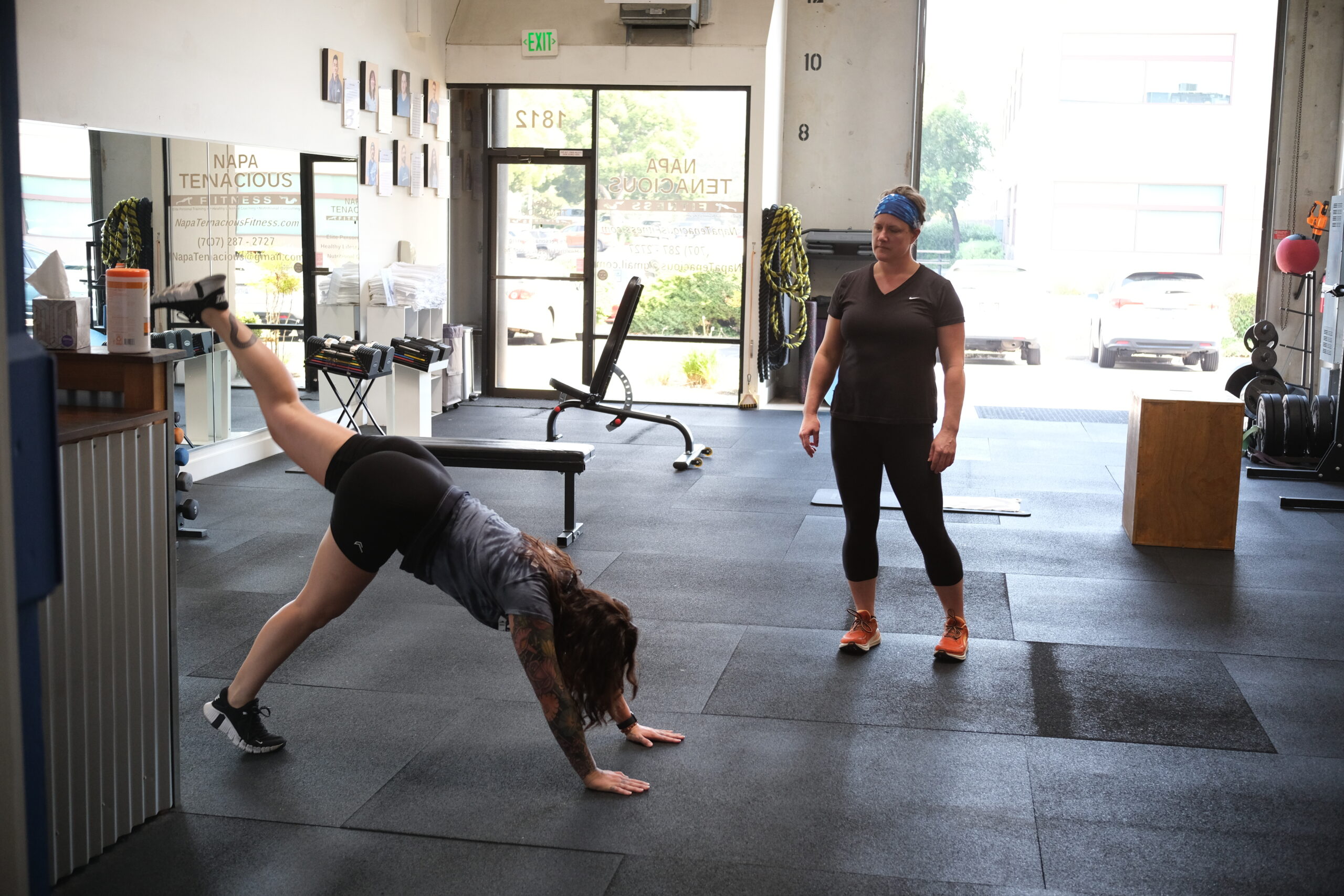
Prone exercises such as the bird dog do not require equipment, just a comfortable surface, a few quiet minutes, and the intention to invest in your body’s long-term health. Many of our personal training clients incorporate bird dogs into their morning routine before heading out for recreational physical activity or a long day on their feet. It is a simple and effective way to counteract the postural demands that the rest of the day will inevitably impose. We recommend performing bird dogs two to three times per week, completing two sets of ten repetitions on each side.
Sean McCawley, the founder and owner of Napa Tenacious Fitness in Napa, CA, welcomes questions and comments. Reach him at 707-287-2727, napatenacious@gmail.com, or visit the website napatenaciousfitness.com.