
Exercise and Enhancing the Journey as we Age

As the Earth circles the sun, it adds another year to its portfolio of time in its resume of existing in the universe.  Humans on Earth enjoy the ride, experiencing everyday interactions with friends, family, and co-workers.  Every year, we observe the weather becoming cooler or warmer, the sun rising earlier or setting later, and we learn new things about our relationships, careers, and our bodies.  Our journey through life can offer us challenges, some of the happiest moments, and lessons that change our direction and what we find important.

Age affects the functions of our bodies, which might influence our ability to choose which activities we engage in.  The advancement of age can affect our emotional, physical, and psychological well-being.  If our health and well-being are neglected, our journey through life can be significantly impacted, hindering us from achieving our goals and aspirations.  While we can’t negotiate with Father Time to go back in time, maintaining a consistent practice toward lifetime fitness can significantly enhance our life experience as we ride on the wings of time, using our bodies as a vehicle to take it all in.

Every few years, wrinkles on the cheeks, crows’ feet around the eyes, and maybe a few unexpected moles and freckles appear on the skin from time to time.  Some would say they add character to our appearance.  An important factor deserving just as much attention as the age-related changes on our skin are the cells residing under our skin. Maintaining the integrity of our muscles, bones, and internal organs can’t be overstated.

After a significant amount of years spent enduring the physical, emotional, and psychological stress of living over multiple decades, the connective tissue under our skin endures similar repercussions from the laborious activities our bodies undergo during physical activity or recovery from injuries and illnesses.  In other words, wrinkles aren’t just present on our skin due to the effects of age.  Changes in the body due to the advancement of age appear in the form of muscles becoming tighter, tendons and ligaments losing some of their elasticity and strength, reductions in bone mineral density, or cartilage degradation at the ends of joints.

After retirement from a successful career, people can be presented with invaluable gifts at that time in their life, as they enter their fifties, sixties, or seventies.  Monumental vacations that people look forward to for decades might appear.  Maybe a few grandkids have been brought into this world to spend time with.  The opportunity to engage in recreational physical activity, such as spending twenty or more hours per week playing tennis, golf, running, or pickleball, is more prevalent.  While these opportunities bring happiness, joy, and pleasure that can rarely be replaced, they require a body that has sufficient energy, can move in various planes of motion, and can get up and down from the floor with minimal issues.  It should come as no surprise that if one’s physical strength, mobility, coordination, and energy aren’t at sufficient levels, these post-retirement activities that occur later in life are challenging to obtain.  Therefore, the need to adhere to a consistent practice of exercise, stretching, eating the right foods, and limiting undesirable stress levels can’t be overstated.

The advancement of age doesn’t need to be an experience that appears suboptimal.  The human body is a vehicle for the person it belongs to, enabling them to enjoy the splendors and beauties our world offers, and granting us the privilege of enjoying the people around us.  Maintaining the body’s condition by exercising regularly, providing it with healthy fuel, and surrounding ourselves with positive people can deliver us to those invaluable moments in life.  Perhaps we can aim to ensure the next year of our life is the best we can be physically, mentally, and emotionally for years to come by focusing on our lifetime fitness efforts.
Sean McCawley, the founder and owner of Napa Tenacious Fitness in Napa, CA, welcomes questions and comments. Reach him at 707-287-2727, napatenacious@gmail.com, or visit the website napatenaciousfitness.com.
Testing, Practicing, and Training Your Balance

Humans function in dynamic environments and rely on the body’s automated responses to adjust to imbalances.  The body’s internal wiring is equipped with a vast network of neuromuscular connections,  granting the ability to immediately adapt to even the slightest indication of imbalance.  The human body’s infrastructure functions as a central processing unit, with hard-wired connections that contribute to everyday movements, including dynamic changes in direction, balance calibration, posture, and maintaining an upright stance.  A few factors playing a pivotal role in optimal balance include the reaction time of the eyes, the inner ear complex of the vestibulocochlear system, and the proprioceptive properties of the body’s skeletal muscles.

Presentations of visual imbalance can occur when a person needs to immediately direct their gaze to another location or turn their head, which can lead to dizziness.  If the head shifts to a different orientation quickly and the eyes are not conditioned to such an immediate demand, the brain may not detect the change in direction, potentially disrupting the body’s ability to maintain an upright posture. This could lead to disturbances in forward-to-backward, and side-to-side stability, resulting in a sense of instability.  Examples might include getting up too fast from a seated position.

Proprioceptive cells are located throughout the body’s skeletal muscles, which automatically trigger muscles to assist in maintaining balance during everyday human movement.  An example of the proprioceptive system of muscles adjusting to an imbalance in our environment might be the body automatically taking an additional step forward during a normal walking pattern after tripping over a crack jutting out of the sidewalk.

Vision plays a role in maintaining balance because it is one of the first stimuli our brain perceives when moving in a dynamic environment.  Before we even move our bodies in activities such as walking, the eyes scan the environment, providing information that helps our bodies prepare to make the appropriate movements to interact with our surroundings successfully.  Vision contributes to postural awareness, limiting excessive body sway, and triggering proprioceptive muscles to adjust to minor movements that might affect our balance.  Additionally, the eyes help us detect threats, which can prompt our bodies to move in a different direction to avoid potential injury.  For example, when walking through a crosswalk, the possibility of a car running a red light is rare but could pose a severe threat to our health.  When the eyes see this, the body immediately reacts with an increased sense of urgency, either to stop, take a lateral step,  or turn around to run backwards to avoid an accident.

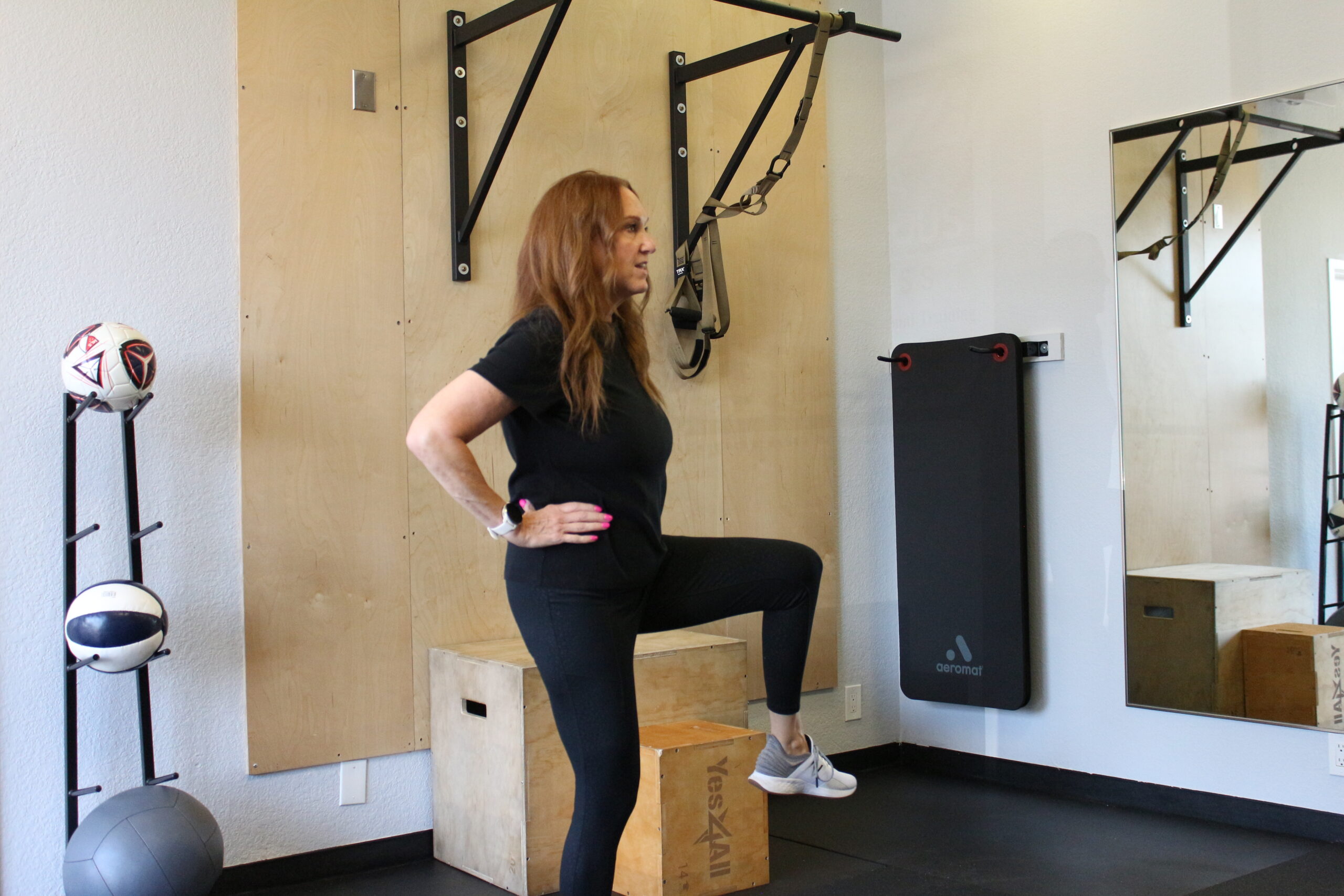
An exercise we conduct with our personal training clients to improve balance is the traditional heel-to-toe walk.  This movement is commonly used during a test conducted by our law enforcement officer friends when testing a person’s balance after they have been cited for potentially being under the influence of a substance that hinders their ability to operate a motorized vehicle.  However, it serves as an invaluable tool of exercise that not only requires no equipment to improve fitness levels, but is rewarding when practiced often:

To perform the heel-to-toe walk, stand with both feet on the ground and toes facing forward.  While distributing your center of gravity toward one foot, gradually bring the opposite foot forward until it is just before your stable foot, and touch your heel to the toe of the stabilizing foot.  Once your balance has been recalibrated to the new leading foot, bring the trailing foot around the stabilizing foot and repeat the same movement, traveling in a straight line.  Travel forward in this movement for about the length of five to ten feet.

The brain is a processing center.  It’s only as good as the information coming in.  Sensory information comes into the brain via the data and feedback from the visual, vestibulocochlear, and neuromuscular proprioception systems. If this information is received in a faulty manner in a deconditioned sense of balance, it will elicit a diminished signal to address imbalances.

Stimulating and training components of balance can assist in improvements in turning the head, change-of-direction, and balance recalibration. Muscles shorten and lengthen in response to an immediate change in sensory input.  Exercise helps stimulate these mechanisms to process environmental feedback efficiently. It aids in maintaining and potentially increasing the speed at which we respond to situations that require balance to preserve our well-being.  Therefore, the more coordinated, strong, and conditioned to dynamic movements a person is, the more adaptable they can be to a presentation of imbalance.

Sean McCawley, the founder and owner of Napa Tenacious Fitness in Napa, CA, welcomes questions and comments. Reach him at 707-287-2727, napatenacious@gmail.com, or visit the website napatenaciousfitness.com.
Tennis Elbow Rehab, Injury Prevention, and Pickleball Strength and Conditioning

Last Saturday, I capped off a productive work week with a ninety-minute pickleball practice session with my friend Nico.  After smashing a ball at each other, laughing, and exchanging light-hearted banter, we tapped paddles and commented on the amazing cardiovascular workout pickleball offers.  As two gentlemen entering our forties, it felt good to carve out time to practice a sport-specific activity and have fun away from the pressures of our work life and navigating interpersonal relationships.

Nico has about three years of pickleball experience.  I have a little more experience since I’ve been playing competitive pickleball since 2018 and have over four hundred tournament matches under my belt.  While we both have a similar sense of athleticism, my experience has put me a few skill levels ahead of Nico.

“You’re improving, and it’s fun to see you develop into a refined player,” I told Nico.  “It’s been a lot of fun, and I enjoy improving my game.”Nico replied,  then shifted the conversation to another topic: “What areas do you think I can get better at?”

A factor I felt was decelerating his progression was his grip on his paddle.  Instead of holding the handle of the paddle in the same fashion as a tennis player would hold a racket, he moved his hand up on the handle to where his index finger was on the paddle face, and the other half of the handle wasn’t being used to hold onto.  This modification appeared to impede his ability to hit the ball with his backhand.

When a shot went to his forehand, he would cleanly strike the ball and direct the shot to his desired location on the court in precise detail.  However, when the ball went to the opposite side of his body, and he needed to turn his grip over to where his knuckle faced the ball and his arm had to cross to his body’s midline, a sense of indecision was present in his body language.  His arm would contort to keep his forehand facing the ball, and his typical sense of confidence would diminish when he needed to switch to a backhand swing.  Therefore, I told Nico, “Your grip seems to slow you down from working on your backhand.”  Nico shrugged his shoulders with a look of dismay. “I have tennis elbow,” he commented.  “It hurts my elbow when I use my backhand.”

Tennis elbow is a common painful condition among racket and paddle sport athletes.  Also known as lateral epicondylitis, tennis elbow can be defined as an irritation, inflammation, or tearing of the connective tissue at the outer portion of the elbow.  The lateral epicondyle of the elbow is a bony prominence located on the outer portion of the forearm, on the same side as the pinky finger, just below the humerus.   This bony point is where the extensor tendons of the fingers and wrist originate.  The extensor tendons of the wrist and fingers bring the fingers and wrist toward the forearm.  These wrist muscles of finger and wrist extension have long, string-like tendons that connect to each finger and the carpal bones below the fingers.  With the anchor point being a common tendon attaching at the lateral epicondyle, these muscles act as pulleys to bring the fingers and wrist toward the back of the forearm.

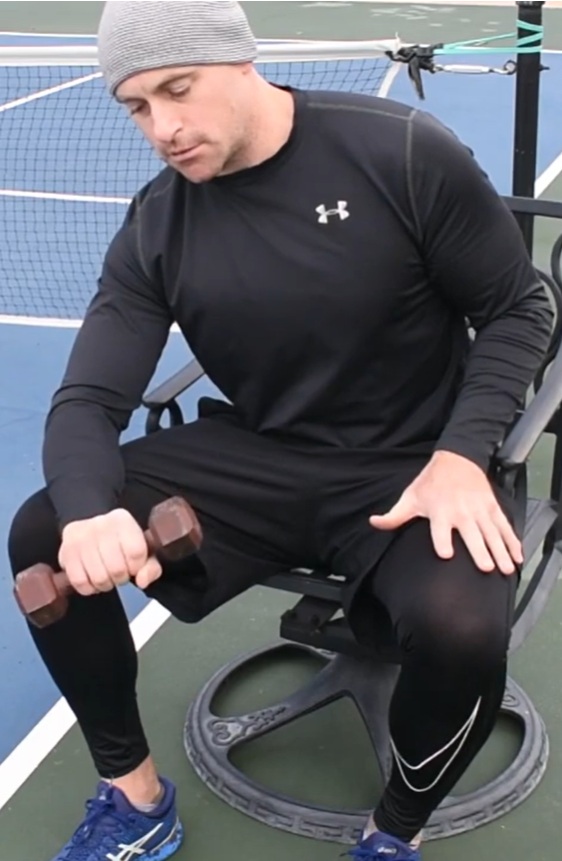
In an effort to manage elbow pain during pickleball outings, I suggested Nico practice an injury prevention tactic we recommend to our personal training clients who experience tennis elbow, the eccentric dumbbell wrist extension:

Hold a dumbbell in one hand, resting on the knee in a seated position.  Use the other hand to assist the hand holding the dumbbell in bringing the wrist up to an extended position.  Release the hand holding the dumbbell and slowly lower the dumbbell downward for a count of five seconds.  Once the hand holding the dumbbell has lowered in a controlled and stable manner, use the free hand to assist the dumbbell hand to the starting position.  Repeat this movement on both hands for five to ten repetitions.

It wasn’t Nico’s lack of athleticism or incompetence on the court that impeded his progress.  It was the fear of physical pain being produced from using his backhand to strike the ball.  The backhand strike in paddle and racket sports requires stability, flexibility, and dynamically coordinated movements from the forearm extensors, which were precisely the areas that Nico felt pain in.  It became clear to me that this wasn’t a sport-specific technique issue.  It was an overuse injury caused by deconditioned forearm extensor muscles that couldn’t hold up to the demands of standard action in pickleball.

I suggested that Nico add a component of strength and conditioning to his pickleball routine.  Something as simple as completing one set of eccentric wrist extensions, a few times a week, to manage tennis elbow pain has the potential to significantly enhance Nico’s pickleball performance.

Sean McCawley, the founder and owner of Napa Tenacious Fitness in Napa, CA, welcomes questions and comments. Reach him at 707-287-2727, napatenacious@gmail.com, or visit the website napatenaciousfitness.com.
Healthy Decisions in The Land of Chicken Fried Steak

A recent trip to Tulsa, Oklahoma, gave me the opportunity to connect with rarely visited distant relatives and experience the state’s iconic features.  Along with learning that the scissor-tailed flycatcher is the state bird, whose silhouette is featured on most license plates, I became familiar with the state dish: chicken-fried steak.  This was on almost every menu and displayed as a brunch special, from the most basic truck stop diner to the fanciest upscale restaurants.  The one-pound cube steak is coated in flour, deep-fried in oil, and doused with a fine coat of midwestern-style white gravy. Oklahoma’s state dessert, the apple hand pie, joins the deep-fried, flour-based food family.  Pairing these iconic Oklahoma-style hearty, rib-sticking, belly-expanding combinations in one sitting produces the perfect storm of calories that won’t make you want to eat for another forty-eight hours.

Oklahoma holds a special place in my heart due to the fascinating line of events in my family’s heritage that led to my existence in Northern California.  My grandfather was born in Oklahoma and relocated to California somewhere between the 1930s and 1940s to join the army.  One could imagine that, after being an official “Okie” with an upbringing in an agricultural worker family and being dirt poor in the middle of nowhere, Oklahoma, the opportunity to join the military and fly airplanes at a base with sunny and moderate weather located near Burbank, California, would be enticing to a young country boy coming from the Midwest plains.

Even though the consumption of deep-fried, hilariously calorie-dense food items containing processed carbohydrates goes against my intuition as someone who has studied how to help people have happier and stronger lives via optimal dietary decision making, I appreciated where this dish came from and how it served as a nutrient-dense meal for people who didn’t have the resources of healthier food options nearly one-hundred years ago.  My grandfather shared stories of his youth in Oklahoma, where his typical breakfast consisted of biscuits and gravy, and his evening meal was biscuits with meat.  He shared that the area he was in lacked the resources to produce the robust, fresh, and vibrant veggies and healthy items that are currently available in our sunny area of California on a moment’s notice.  We can go to the grocery store whenever we want and purchase eggs, any vegetable we want, and pre-packaged carbohydrates that are ready to consume with just five to ten minutes of preparation.  We have a significant advantage in terms of food resources and the ability to make healthier decisions compared to previous generations, who faced scarcity and lacked access to nutritious food options, particularly in the arid, bone-dry plains of Oklahoma in the 1930s which lacked the sophisticated organization and availability of healthier food options we currently have available.

Work and family obligations can pose challenges to dietary tactics.  Travelling can take us to areas where we lack the convenience of having our usual foods readily available.  As I journeyed through Tulsa, surrounded by neon-lit signs advertising chicken-fried steak and fried apple pie, I realized I needed to practice discipline and employ a few tactics to maintain healthy lifetime fitness habits.

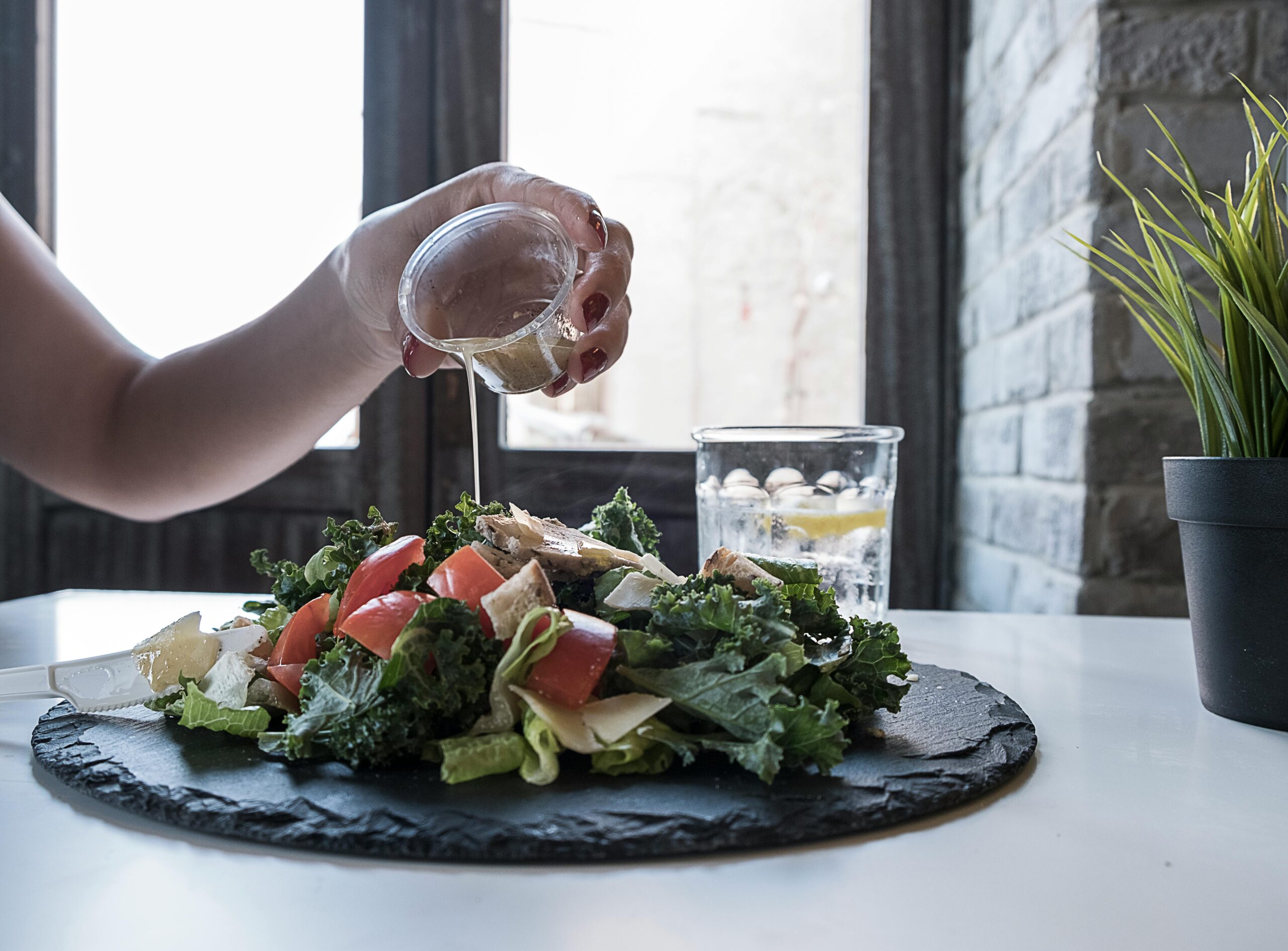
To counteract the effects of my insulin skyrocketing and returning to Napa ten pounds heavier than usual due to consuming copious amounts of traditional “Okie” food, I practiced a few nutritional decision-making tactics we share with our personal training clients to help them when they travel.   Searching out restaurants before the trip and reviewing the menus of nearby eateries is a valuable tactic for making optimal dietary choices when we’re outside our usual healthy eating comfort zone.  There was a restaurant close by that offered side dishes along with breakfast, like a serving of yogurt, a side of eggs, or chicken apple sausage.  Additionally, I examined restaurant menu items featuring salads and appetizers with leaner protein options, including shrimp dipping dishes, hummus, veggie dishes, and grilled steak salads.

To help stay on track when traveling, logistics can lead us to places where food resources are uncertain. It might be helpful to research and map out a few healthy food options before we even step into the plane or get in the car.  Perhaps a store nearby offers packaged salads, or a restaurant features a menu with lean proteins and veggies.  We might be away from the comfort of the healthy food items we are accustomed to at home, but that doesn’t mean we need to fly off the rails completely and only eat what’s popular in a foreign land.  More often than not, there are healthy items available.  When travelling, set aside some time before departure to prepare, so that we can support our healthy eating efforts by surrounding ourselves with the most nutritious food items available.

Sean McCawley, the founder and owner of Napa Tenacious Fitness in Napa, CA, welcomes questions and comments. Reach him at 707-287-2727, napatenacious@gmail.com, or visit the website napatenaciousfitness.com.
Staying Active During the Less Sunny Months

As the Napa Valley enters October, we see a few leaves on the trees beginning to transition to shades of amber, brown, and yellow, and fall to the ground.  Sounds of leaf blowers and rakes start to fill the air.  The hills begin to morph into a darker green and brownish hue as the trees and grape vines bordering the valley’s hillsides fade from the lively, vivid green hues we are accustomed to observing during a northward drive up Highway 29 on a hot summer day in July.  We’ve already been granted a few bouts of rain, giving us the first hints of cold, crisp air we haven’t experienced since early in the year.  The sun doesn’t light up the sky as brightly as it did during the hot summer months, signaling the change of season to a less bright, colder, and potentially wetter period over the next few months.

The desire to venture outside when the climate is cold, wet, and dark can become diminished.  Peering outside to see damp ground and having to make the extra effort to dress in layers can create an aversion for people accustomed to sunny and warm days.  For gardeners and home improvement enthusiasts looking to enhance the outdoor area of their homes, wet and cold environments can pose a potential barrier to heading outdoors and completing projects.  The shift toward the dark, damp, cold months of fall and winter can make the inside of one’s warm, dry, and well-lit house more enticing than shivering outside on a fifty-degree day and cleaning mud off of shoes after slogging through rainy, puddle-filled streets.

Along with wanting to stay indoors more during the fall and winter months comes the challenge of having less space to move around in.  For example, the inside of a two-thousand-square-foot home offers less surface area to function in when compared to the activities we conduct outside when the sun is shining.  Fewer steps are likely to be taken throughout the inside of a house when compared to participating in outdoor activities. The computer chair at a home office looks far more appealing than venturing out into a chilly, overcast day. Couches, recliners, and televisions seem to get more attention when it’s gray and wet outside.  For some, bingeing a Netflix or Hulu series on a rainy day can sound far more enticing than taking a leisurely walk, hike, or jog on a cold, dark, and wet evening after a long workday.

The dark and cold winter months can lead to a decrease in physical activity.  We know that getting our steps in, basking in the sun on a warm day, gazing at one of the most sought-after and picturesque landscapes in the world, which we Napans are blessed with, and engaging in social interaction with other humans outside, all support a healthy and happy life.  If we do less of those things, we might face the challenge of having less movement and being less engaged with other humans outside of our homes.  Reduced physical activity can lead to increases in subcutaneous fat mass, slower metabolism, and a decrease in lean muscle mass.  This can lead to muscle weakness, increased joint pain, or metabolic conditions such as pre-diabetes or increased levels of cholesterol.  To counteract the suboptimal outcomes of being stuck indoors, fitness routines that can be performed indoors are invaluable during these seasons when the weather influences us to stay indoors.

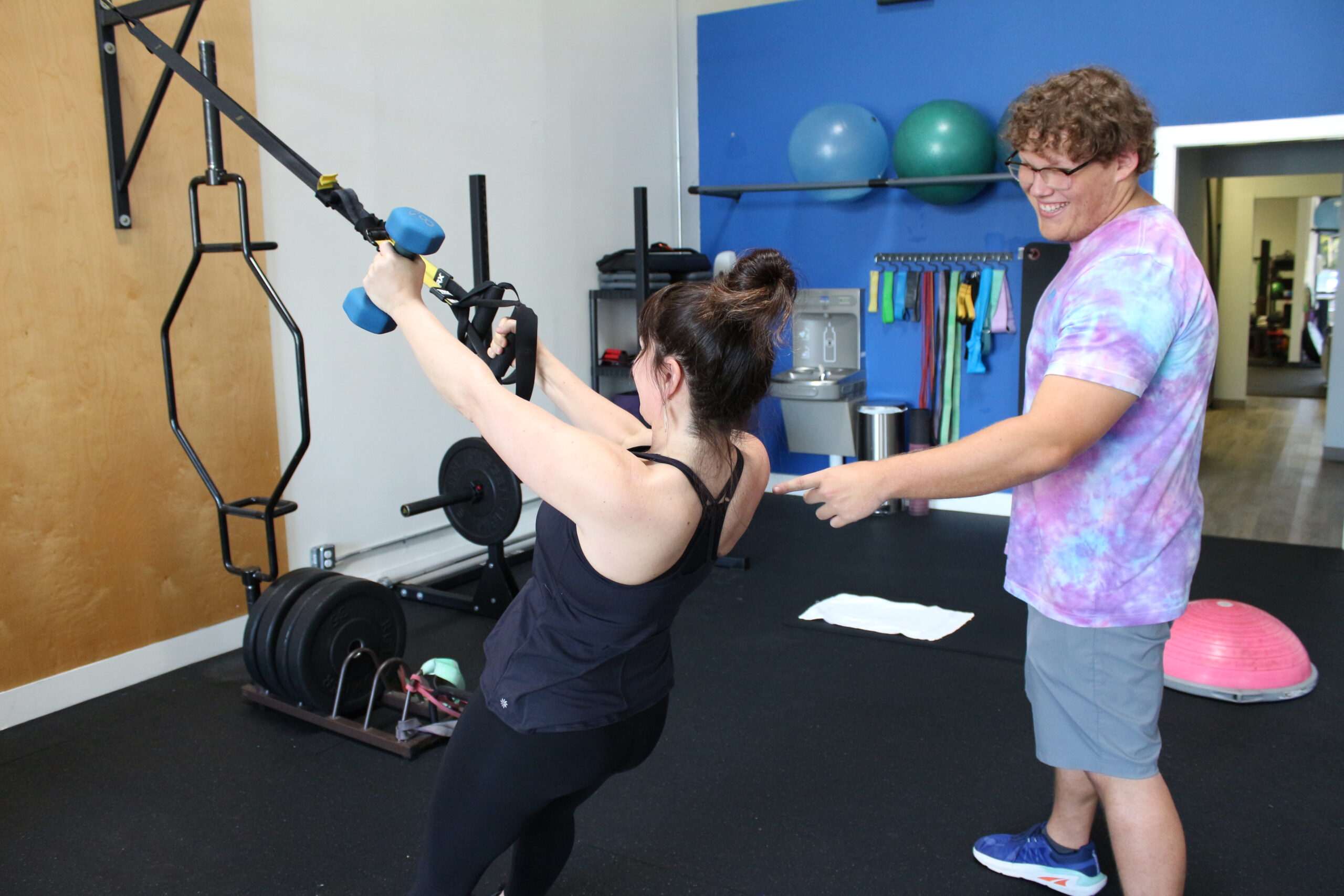
A few simple and effective movements we conduct with our personal training clients that require only the person’s body and the ground fit into the category of “body weight exercises.”  These exercises require no equipment, just the floor, the human body, and gravity.

An exercise we frequently conduct with our clients during training sessions includes squatting movements, as they target a large area of muscles in the ankles, knees, hips, and core.  Additionally, when there is a lack of resistance training equipment, focusing on lengthening the time under tension throughout repetitions can add additional force to the working muscles.  One such movement is the eccentric, or slow-lowered descent, chair squat:

Find a stable sitting surface to stand in front of, such as an exercise box or a chair.  Keep pressure on the heels and keep your feet flat on the ground.  In a slow and controlled motion, gradually sit back and down as you bend your knees at a rate of five seconds. Lower your hips to touch the surface behind you. Reverse the motion by pushing your heels into the ground and engaging your glute muscles to lift your hips until you achieve a standing position.  Repeat this movement for five to ten repetitions.

By focusing on large muscle groups and joints that we typically use during the warm, bright, and sunny months ahead, we can be prepared to resume the fun, social, and engaging outdoor activities that are put on hold throughout the winter.

Sean McCawley, the founder and owner of Napa Tenacious Fitness in Napa, CA, welcomes questions and comments. Reach him at 707-287-2727, napatenacious@gmail.com, or visit the website napatenaciousfitness.com.

Shoulder Health and the SITS Muscles

The body’s connective tissue has structurally significant properties, enabling humans to function effectively throughout their everyday lives.  Ligaments hold bones together.  Tendons attach muscles to bones.  Muscles act as motor units to move bones closer or further away from each other.  Bones act as the internal framework that allows our body to move through various ranges of motion and also protect vital organs.

Three critically important joints that commonly endure musculoskeletal injuries include the lower back, knees, and shoulders.  While the lower back and knees seem to get a little more attention, let’s not forget about the hypermobile, yet less structurally reinforced ball-and-socket joint of the shoulder.  Raising one’s arm overhead requires a substantial amount of electrical signals sent from the brain, down the spinal cord, to the muscles attached to the shoulder joints, working in a harmonious symphony of neuromuscular interaction to execute a seemingly simple movement.  Unlike its ball-and-socket cousin, the hip joint, the shoulder has a shallower socket, called the glenoid fossa, which grants an increased range of motion, but also increases the likelihood of injury if not properly strengthened and cared for.  Appreciating the composition and functions that make joints move benefits everyday human functionality in more ways than appear on the surface level.

Similar to its cousin, the hip joint, the shoulder joint consists of the connection of a convex, nob-like attachment of the proximal portion of the humerus that inserts into a concave surface of the lateral border of the shoulder blade, much like blocks fitting into each other when playing a game of Tetris.  The shoulder blade is also known as the scapula.  This triangular-shaped bone is integral to the successful movement of the shoulder joint due to its high number of muscular, tendinous, and ligamentous attachment points.   Muscles of scapular stabilization support optimal movements of the shoulder joint, enabling activities such as lifting objects overhead, reaching behind the body, or engaging in recreational athletic activities like golf, tennis, or pickleball.  However, suboptimal conditioning of the muscles involved in scapular stabilization can lead to a range of debilitating conditions.

Throughout my college studies in exercise physiology and human anatomy classes, we used a mnemonic consisting of the letters “SITS” to aid in remembering four important muscles that originate from the scapula and attach to multiple areas of the humerus.  Along with the other bones, tendons, ligaments, muscles, and an array of organs we had to memorize, remembering “SITS” was very helpful for young, easily distracted, and sleep-deprived students studying musculoskeletal anatomy during bi-weekly five-hour lab sessions.  “SITS” refers to the muscles supraspinatus (S), infraspinatus (I), teres minor (T), and subscapularis (the other “S”).

Common shoulder functional insufficiencies caused by musculoskeletal problems typically result from disruptions to the connective tissue involving these SITS muscles.  Possible symptoms of shoulder dysfunction include sharp, twingy, popping, or clicking pain when lifting the arm over the head or behind oneself.  These symptoms can occur when performing regular everyday activities such as reaching through the holes of a shirt or jacket and assembling it over the top of the torso, reaching behind oneself to retrieve a seatbelt when driving, or throwing a ball during a recreational sporting activity, such as playing fetch with a dog or playing catch with a youngster.

The first “S” of the SITS muscles is the supraspinatus, which resides on the top portion of the shoulder blade, between the neck and humerus.  The supraspinatus lifts the arm laterally away from the body, similar to a “snow angel” type motion.  The “I” is the infraspinatus.  It resides in the middle of the scapula and attaches to the back of the humerus.  Its function is to assist in the “gate hinge” movement, such as rotating the humerus backward and abducting the arms posteriorly, similar to the opposite action of hugging someone.  The “T” is the teres minor.  It originates from the lateral border of the scapula and assists with external rotation and abduction.  The second “S” is the subscapularis, which is unique due to its anterior origin and attachment points.  One wouldn’t be able to see this muscle unless the scapula were removed from the body and someone could look underneath it.  This commonly overlooked muscle is critically important for shoulder stability and mobility, particularly when internally rotating the shoulder and decelerating the shoulder as the arm is moved away from the torso.  The subscapularis has robust attachment points on the anterior surface of the scapula and inserts in the middle of the ball-like prominence of the humerus.  These muscles work in unison to hold the shoulder together and produce wide variations of upper extremity functionality.

Adhering to a strength and conditioning routine is crucial for maintaining shoulder strength, as well as the numerous physical, psychological, and emotional benefits it offers.  Delving deeper into understanding the muscles that grant us human movement, such as the “SITS” muscles of scapular stabilization, can empower a happy, healthy, and strong life.

Sean McCawley, the founder and owner of Napa Tenacious Fitness in Napa, CA, welcomes questions and comments. Reach him at 707-287-2727, napatenacious@gmail.com, or visit the website napatenaciousfitness.com.

Avoiding Pickleball Specific Injuries

“The Foundations of Playing Pickleball,” mentioned Goliath as he pulled out a book from our book collection in our Napa Tenacious Fitness library.  Included in this book collection is a shelf featuring titles that cover musculoskeletal anatomy, coaching and cueing techniques, healthy eating cookbooks, and a few other sport-specific books that coaches can reference to enhance their skill set when working with personal training clients.

Goliath is one of our newest additions to the coaching team.  On his first observation shift to determine if our gym was a good fit for him to have a job as a lifetime fitness coach, part of this invitation to observe included taking in the vibe of our day-to-day activities as coaches.  He mentioned, “Pickleball seems like a ton of fun.  But when I was working in the physical therapy clinics as part of my internship experience in college, I saw a noticeable amount of patients coming in with ankle and knee-specific injuries as a result of playing pickleball.”  Goliath received high marks during his first day of observation due to his ability to be curious about the features we had in our gym that allowed him to learn and improve his coaching skill set.  Perhaps he could stay around for a while.

Goliath made a good point of mentioning that injuries from playing a fun, seemingly simple, and less physically demanding recreational sport caused significant injuries.  He was correct.  Pickleball can cause debilitating injuries.  That is, if the participants think they can jump on the court and expect to be the Michael Jordan of the pickleball world without putting in the work to ensure their bodies can endure the stresses and demands of the sport.

The sport-specific physical demands of playing pickleball include hitting a wiffle ball over the net and working to win a point against your opponents.  The learning curve of playing pickleball is enticing to new enthusiasts looking to get into a fun and engaging recreational activity.  Understanding the game’s strategy is intuitive, and participants seem to grasp it relatively quickly.  However, a commonly overlooked component of pickleball is the need to immediately react to the various directions a ball can be hit on the court.  For example, perhaps a player sees an opening for an offensive shot and rolls it away from their opponent on the other side of the court, producing a ball with an extreme amount of top spin that shoots the ball off at a sharp angle after it hits the ground.  This scenario causes the recipient of this offensive shot to immediately move their feet in a fast manner to retrieve the ball.  These fast-twitch type of movements require the muscles, tendons, and ligaments of the ankles, knees, and hips to be able to manage this immediate and rapid production of force on lower extremity joints.

For a player unhindered by previous lower extremity injuries, this may not seem overly important.  However, after six games of pickleball and reproducing this immediate high-impact demand to chase after balls repeatedly, the stress can add up.  A substantial amount of stress can be applied to the hip, knee, and ankle joints if six games of pickleball per day are repeated two to three times per week for three months.  Over the course of a few weeks of playing pickleball multiple times per week, inflammation at the ends of joints and tendons can occur.

For new pickleball participants, it’s not uncommon for them to attend as many pickleball outings as possible due to the invigorating sense of accomplishment of improving at an athletic skill set.  However, injuries to the lower extremities have an increased likelihood to occur during these first few months of playing this new sport they love as well.  These injuries commonly occur due to the participants perceiving pickleball as something you should just be able to walk on the court and be able to run around like a golden retriever puppy chasing after a ball with reckless abandon.  However, a human body that is over the age of thirty doesn’t recover at the same rate as a golden retriever puppy.  Therefore, compliance with a strength and conditioning program to decrease the likelihood of injury in conjunction with pickleball participation can’t be overstated.

Research has repeatedly supported that engaging in fifteen to thirty minutes of resistance training one to two times per week decreases the likelihood of sport-specific injuries.  Compliance with practicing injury prevention tactics, mobility and static stretching routines, and resistance training is critically important toward reinforcing the ankle, knees, and hips when regularly engaging in recreational athletic activities.

Pickleball isn’t meant to injure people.   It’s intended to encourage physical activity, improve fitness, and laugh and smile.  Just make sure to take some time out throughout the week, alongside pickleball, to ensure the body can be strong enough to continue playing for years to come.

Sean McCawley, the founder and owner of Napa Tenacious Fitness in Napa, CA, welcomes questions and comments. Reach him at 707-287-2727, napatenacious@gmail.com, or visit the website napatenaciousfitness.com.
Sciatica and Low Back Injury Prevention Exercises

Lower back, knee, and shoulder pain rank among the top contributors to hindrances to functional movement and participating in physical activities we enjoy.  Sitting at desks all day or mustering through routines of manual labor can cause us to ignore our body’s pain points.    After logging off the work scene, physical pain from previous injuries or current musculoskeletal conditions can become a prominent presence.  An after-dinner walk with our spouse, playing a round of tennis in the afternoon ladder league, or throwing a ball with our dogs or playing catch with our children and grandkids are a few examples of recreational physical activity that many people look forward to after checking out from a day of rigorous labor at their jobs.  However, when pain presents itself in an area of the body at the end of the day, entering into another physical activity is a crossroad that people afflicted with chronic musculoskeletal maladies commonly turn away from.

Joint, muscle, or nerve pain are a few examples of the issues that affect areas that seem to see more injuries.  Along with the knees and shoulders, problems in the spine seem to be a top contender for causing debilitating pain.  Back pain can be as severe as a spinal compression fracture or a bulging disc, or as simple as sleeping in an unusual position that causes tightness in a small muscle attaching to the spine.  Both can derail a person’s daily quality of life by causing fear and anxiety that a specific movement might trigger constant, sharp, and searing immediate pain.  A symptom we see commonly with our personal training clients is sciatica, which is a true “pain in the butt,” both literally and figuratively.

To understand the cause of sciatica, it’s worthwhile to appreciate the anatomy of the area in which the problem arises.   Networks of nerves branch off each portion of the spine.  A nerve plexus is a network of nerves budding out of the lateral openings of joints in the spinal column.  The cervical plexus provides connections to the head, neck, and shoulders.  The brachial plexus innervates the chest, shoulders, arms, and hands.  The lumbar plexus innervates the back, abdomen, hips, and lower extremities.  These networks of nerves send signals to the organs of each area they innervate.  A noteworthy portion of nerves includes the group of nerves that supplies a significant amount of neuromuscular signal to the lower extremities at the lumbar plexus, the sciatic nerve.

Originating at the bottom of the lumbar and sacral spine, the sciatic nerve connects at a junction point to create one large nerve that spans down the back of the buttocks, along the hamstring, down the calf, and ends at the bottom of the feet.  Suboptimal conditions for the orientation of the vertebrae position over the spinal root nerves, where the base of the nerve buds out of the opening between the joints of the spine, can create an environment around the nerve in which the vertebrae compress the nerve.  This scenario can produce sharp, searing, or chronic dull nerve pain.  The minor variants of this type of “pinched nerve” can be considered minor and remedied with productive tactics to recover the muscles around the vertebrae so the bones reside in optimal alignment.

If the deep intrinsic core muscles attaching to the spine, such as erector spinae, multifidus, and psoas muscles, are productively strengthened via skill exercise compliance, the likelihood of the spine shifting in a position that causes nerve compression could be reduced.  By exercising the deep intrinsic core muscles holding each vertebra together and connecting the spine to the hips, the supporting muscles of the spine have the potential to bracket the spine, acting as a reinforcing feature to avoid shifting of the spine that could lead to nerve impingement.

An exercise commonly seen in physical therapy practices when treating clients reporting low back pain and sciatica includes education on the pelvic tilt exercise.  Here are a few cues we offer our personal training clients to develop competency and mastery in performing pelvic tilt exercise against a wall:

Find a stable, flat wall to lean your back against, putting about twenty to thirty percent of your weight pressing against the wall.  The knees should be slightly bent, and the shoulder blades and base of the hips should be pressed against the wall.  Perform a tilting motion with your hips by pulling the crests of the front of your hips to your ribs, pushing the arch of the lower back into the wall, and pulling the navel toward the spine.  You should feel a slight muscular contraction in the abdominal and gluteal muscles.  Repeat this movement for five to ten repetitions.

Adhering to general injury prevention exercises, such as pelvic tilts, has the potential to decrease the concentration of pain and dysfunction from current back injuries.  Similar to daily routines like taking your vitamins first thing in the morning, performing injury prevention exercises to protect the trouble spots in our bodies is critically important to helping us live happier, healthier, and stronger lives.

Sean McCawley, the founder and owner of Napa Tenacious Fitness in Napa, CA, welcomes questions and comments. Reach him at 707-287-2727, napatenacious@gmail.com, or visit the website napatenaciousfitness.com.

Youth Strength and Conditioning-Sustainable Exercise Habits Always Win

“I do ten push ups every morning after I wake up and ten push ups before I go to bed.  Is that good?”  Asked Feldo, one of our personal training clients, who was in his mid-teens.  As a human maturing through adolescence and venturing through a state of discovery in the world of dynamic social interactions in high school, Feldo impressed me with this statement.

I could easily compose a ten-page article on the benefits that the push-up exercise has on the human body in terms of developing upper body strength and how it assists in everyday functionality.  However, it wasn’t that I was intrigued by Feldo’s fascination with improving the strength of his upper body, but it was more to do with the phrase “every day after I wake up” and “before I go to bed.”  I was fascinated by his understanding that a ritualistic routine would give him success.  He didn’t really know what that success was, but he knew a ritual of exercise was going to help him.  Furthermore, Feldo demonstrated that he had a powerful advantage in refining his fitness levels.  He was already understanding the types of triggers that motivated him to establish an effective exercise routine.  Whenever he sees his bed, he performs an efficient and effective exercise that has the potential to produce positive outcomes in his fitness journey.

Increasing lean muscle requires dedication and effort, which can be achieved by committing to a regular exercise routine and making optimal dietary choices.  As muscle is stressed via exercise, the muscle cells become disturbed and break down at the microscopic level.  Similar to how skin develops a scar and heals after a flesh wound has occurred, such as when someone slices their finger on a paper cut and the wound heals the next day, muscles recover similarly following resistance training.

After an hour-long resistance training session at the gym consisting of three sets of ten repetitions in which large muscle groups, such as when muscles of the thighs, chest, shoulder blades, and core muscles, have been exercised, microscopic tears in the lean muscle will develop.  The result of such resistance training sessions introduces an adaptation in which muscle cells not only fill the gap of the tiny tears in the muscle fibers but also add a reinforcing component, making them stronger, more durable, and able to produce more force.  The results of this muscular adaptation are a pivotal component toward enhancing a person’s overall functional strength and lean muscle mass.  However, our teenage friend Feldo has developed an invaluable tool in the form of his healthy habits, which many people, twice to three times his age, can benefit from if they apply the same behaviors of instilling small, healthy rituals throughout their day.

Feldo didn’t necessarily have the understanding of how to perform a barbell back squat, bench press, or pull-up correctly.  In fact, even though push-ups were the only exercise he knew how to conduct, his exercise form could’ve used some polishing around the edges as well.  However, ten push-ups first thing in the morning and ten push-ups before he goes to bed equate to twenty total push-ups per day.  If young Feldo conducted this routine five times a week, he’s doing one hundred push-ups per week.  While ten push-ups don’t seem like a very intense bout of resistance training when compared to a seventy-five-minute personal training session, an intense yoga class, or an adrenaline-inducing small group fitness class at a local gym, those push-ups performed over time have the potential to pay massive dividends.

Did Feldo’s arms look like they lacked muscle mass?  And, did the shape of his back look like a dilapidated bridge from the chase scene in Indiana Jones because he wasn’t engaging his core correctly during his initial evaluation?  Yes, they did.  However, let’s appreciate what his small contributions of daily morning and bedtime push-ups can lead to.  Imagine if Feldo did ten push-ups first thing in the morning, and ten before he went to bed every school night throughout the year for one hundred and eighty days.  Over the school year, Feldo will have performed close to three thousand push-ups through a series of six to eight months.  Do you think these seemingly small amounts of exercise in the form of ten push-ups in the morning and ten before he hits the hay will produce microscopic stresses to his muscles to impose an adaptation that allows for muscle growth?  We know that if he follows through with his push-up practice, he’ll be doing a few thousand push-ups.  Therefore, I’ll let the audience answer that question.

Visiting the gym, hiring a personal trainer, and signing up for small group fitness classes are invaluable contributors toward making progress in someone’s fitness journey.  However, let’s not forget something as simple as establishing a small habit that can be sprinkled into our routines a few times per week.  Something as basic as doing a few pushups, holding a plank for thirty seconds, and stretching for a few seconds habitually throughout the week has the power to make massive progress in our fitness journeys.

Sean McCawley, the founder and owner of Napa Tenacious Fitness in Napa, CA, welcomes questions and comments. Reach him at 707-287-2727, napatenacious@gmail.com, or visit the website napatenaciousfitness.com.

Building Healthy Back Strengthening Routines Using Isometric Exercise Practice

Our spines are comprised of five unique sections of bones called vertebrae.  Starting from the top of the head and travelling down to the base of our hips, the sections of the vertebrae are the cervical, thoracic, lumbar, sacral, and coccyx.  These collections of uniquely shaped bones offer specific features allowing for movement in particular planes of motion.  The cervical vertebrae enable rotational, vertical, and forward and backward movement of the neck and skull.  Thoracic vertebrae have attachments to the ribs and shoulder blades, serving as a protective shield for the lungs, heart, and certain internal organs.  Lumbar vertebrae are the largest and bulkiest of the spinal bones, acting as a structural support in the center of the body.  Consisting of five fused vertebrae, the sacral section of the spine forms a portion of the pelvic girdle, a unit of fused bones that connect to our hips, allowing for the insertion of the upper body into the lower body.  The coccygeal section of the spine makes up the tailbone and consists of a few fused vertebrae.

Spinal root nerves bud out of each vertebral attachment and then form a network of peripheral nerves that attach to muscles and organs throughout the body, allowing signals from the brain and central nervous system to convey messages that instruct the body to move the skeleton in a specific way and perform autonomic functions, such as breathing or digesting food.  Ensased inside the spinal column is an elongation of the brain called the spinal cord.  Located at the top of our bodies inside the skull, the brain is equipped with a messenger system in the form of our spinal cord that transmits over a million signals throughout the body’s organs.

Maintaining the integrity of our spine can’t be overstated.  Similar to the results of downed power lines knocked over by high winds or a car crash, which can result in a telephone pole being cracked in half, causing power outages in buildings within the perimeter of that downed pole, the body reacts similarly when there is suboptimal stress in the spine.  Something as simple as an inflamed back muscle that connects one vertebra to another can cause a shift in the alignment of the bones that stack over nerves and cause a pinch in a nerve, resulting in symptoms of pain, neuropathy, or a loss of neuromuscular signaling to the muscles innervated by the afflicted network of nerves.  If there is an injury to the structural integrity and infrastructure of the bones responsible for human functions, life can change very quickly.

One of the top injuries causing dysfunction to the general population is back injuries.  While the mechanism of back injuries can occur from something as traumatic as an automobile accident or a seemingly uncontrollable event when a random tweak occurs from lifting something in an awkward position, back injuries seem to appear in situations we can’t necessarily control.  However, if skillful injury prevention tactics are consistently practiced, the appearance of random back injuries can be significantly reduced.

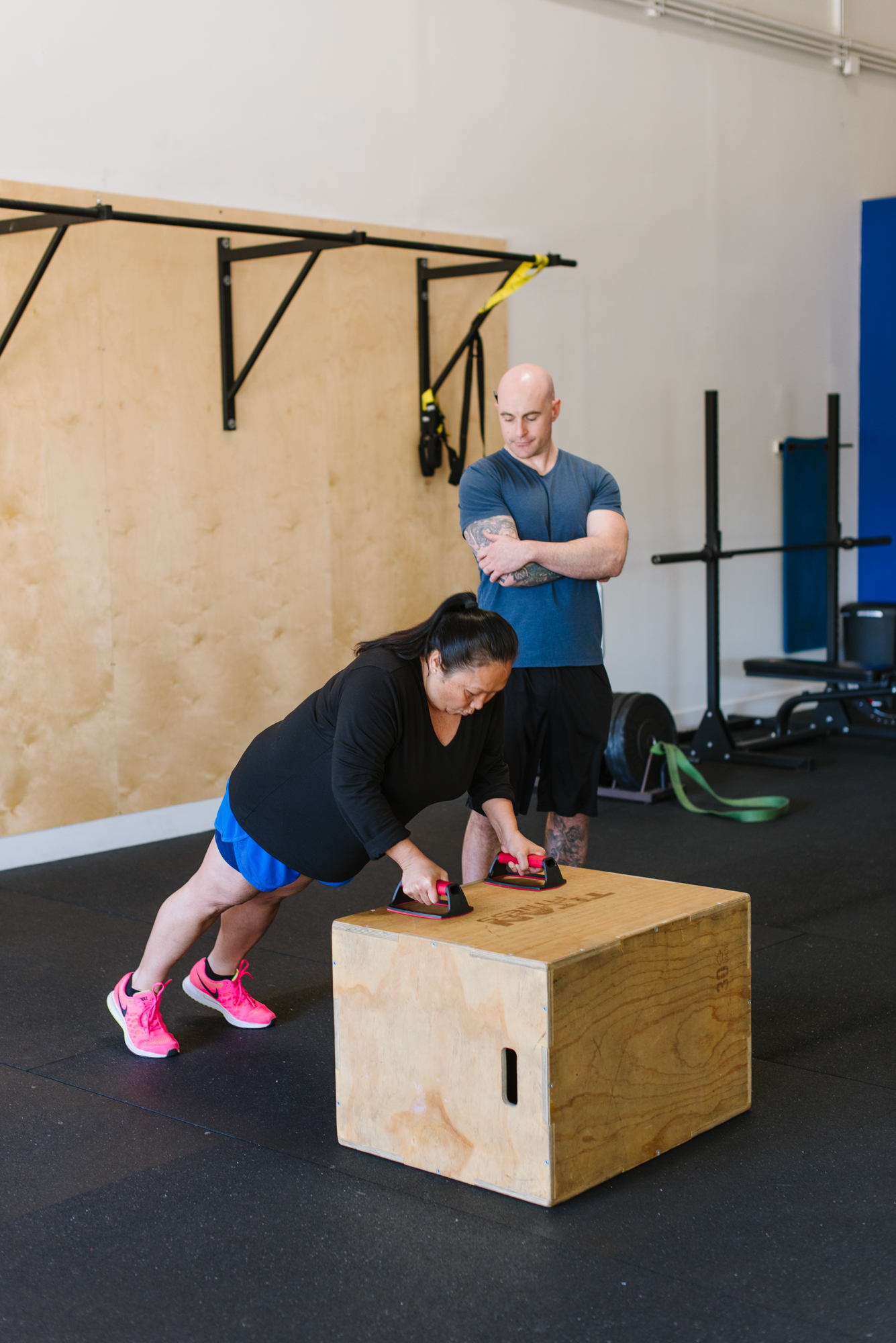
Finding solutions to remedy chronic back pain and the suboptimal circumstances resulting from a back injury rank among the top reasons people seek out physical therapy, medical interventions, or strength training in the form of personal training.  A simple and effective tactic to reinforce the core muscles and stabilize the hips, with a low learning curve, is the straight-arm plank exercise.  This isometric core exercise requires the exercise participant to face downward and hold themselves up with their arms and feet, while maintaining a structurally organized and reinforced back position for a short period.  We suggest to our personal training clients who are just starting on a strength training journey to perform their straight arm planks from an inclined position, as opposed to performing the plank on the ground.  This allows the participant to educate their body on how to conduct core strengthening tactics under a submaximal load, enabling them to master and develop competency in the technique before progressing to a more challenging position.

To perform the straight-arm plank from an incline position, place your arms on an incline surface that is about hip height, or the height of a kitchen countertop.   While keeping your arms straight and your hands just underneath your eyebrows, lean forward in a plank position.  Maintain this static position for a desired amount of time.  You should feel muscular engagement in the front of the shoulder, chest, triceps, and abdominals.  It’s essential to maintain a straight posture and avoid sagging in the lower back.  Hold this position for ten to thirty seconds.

Lower back pain can come and go, or it can remain a constant inconvenience throughout everyday life.  However, if consistent pain management exercises are practiced just as ritualistically as we check our bank accounts, we can develop healthy and strong back muscles, allowing us to maintain a happy, healthy, and strong quality of life.

Sean McCawley, the founder and owner of Napa Tenacious Fitness in Napa, CA, welcomes questions and comments. Reach him at 707-287-2727, napatenacious@gmail.com, or visit the website napatenaciousfitness.com.