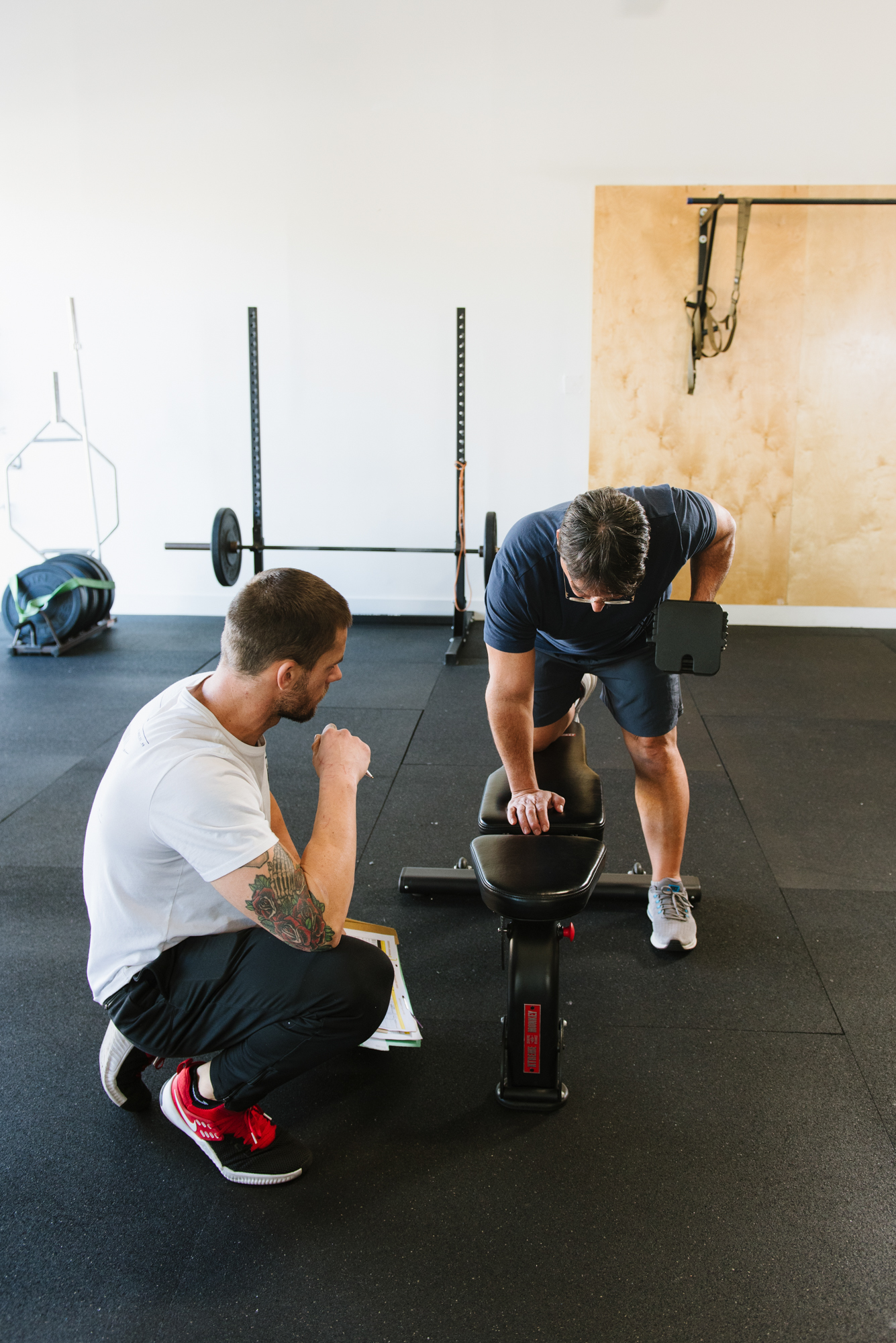
Injury Intervention: Research, Professional Help, and Movement

Just like getting a flat tire while driving down the highway, injuries can happen when you least expect them.  Unexpected injuries hurt, decrease our strength, and serve as a inconvenient distraction in our everyday activities.  Being sidelined due to injury is discouraging as well.  Injuries can occur anywhere from poor posture while sitting, unexpected accidents or falls, and overuse from recreational activities.  Sometimes we’ll hear people say, “I’m hurt.  This is just the way it is and I have to live with it.”  This explanation is congruent with throwing your hands up in the air when you can’t solve a frustrating problem and just walking away.  If there’s anything that ruffles my feathers is the phrase, “You just have to live with it.”     If you just bought a brand-new Ferrari and got a flat tire on I-5 in the middle of Taft County, would you just throw your hands up in the air and walk away?  That $200K investment would sit on the side of the dusty road.  The car would hang out with the cows and tumbleweed.  Seems like a waste of time and money to me.  If we just “live with pain” and say, “that’s just how it is,” we might as well collect dust next to that Ferrari on I-5 with the flat tire.  Why let that Ferrari go to waste?  Why let your body go to waste because of the distraction of pain from an injury?  Fortunately, the human body can be fixed.  Just like a Ferrari with a flat tire stranded on I-5 next to Button Willow, CA.  The key is patience, trust and will power.

If we get a flat tire in the middle of nowhere and we don’t know how to replace it with a spare, the first resource available is to dig the car manual out of the glove compartment and read up on how to replace the tire.  Perhaps a quick web search via Google or a YouTube instructional video could offer pointers on how to accomplish such a task.  This example is similar to one of the first steps to intervening an injury from getting worse or keeping us limited in our physical activities for too long.  When we’re hurt, we have a plethora of research around us.  Have a case of golfer’s elbow?  Research it.  Look up the source of the injury, how it was caused, what you could do to alleviate the symptoms.  While the internet doesn’t have all the answers, we can at least learn more about our specific ailments limiting our physical activity.  Conducting research is a productive first step in discovering what tactics to prioritize to put us on a road to recovery.

A more direct solution to getting the tire fixed in our Ferrari stranded on I-5 while the cows gawk at us, would be to call a tow truck or specialist, like AAA.  If we can’t find the solution through a car manual or an internet search, perhaps we should consult with a pro.  As an exercise physiologist and lifelong gym rat, I struggle with mechanical repairs.  Therefore, with an activity that would take me 2 hours to figure out, the AAA representative can switch out tires in about 5 minutes.  I’d much rather utilize his skills as resource than going into a cave of frustration.  Just like a AAA representative could switch out a tire in record time, a physical therapist can narrow down the source of injury and design a rehab routine faster than us.  Physical therapists specialize in identifying injuries and understanding what exacerbates injuries and how to expedite healing.  So, if your hurt, seek out a specialist.  A brief phone call to an injury rehab specialist is far superior to “just living with it.”

More importantly, the most useful intervention to an injury is to keep moving.  Injuries can debilitate, slow down, and ultimately emotionally depress us.  Humans are blessed with the ability to move forward.  If the upper body is hurt, walk, hike, and perform resistance training on the lower extremities.  If a part of the lower body is injured, do some pushups and planks.  By keeping the body moving while another area is temporarily in the repair shop, the mind will still progress.  By maintaining a form of physical activity during an injury, we can provide a happy, healthy, and strong environment not only for our friends and family, but most importantly ourselves.

We can’t let injuries put us on the sideline and just leave them untreated.  Just like the $200K Ferrari parked on I-5 with a flat tire, we’ll just sit around and collect dust if we don’t keep moving forward to fix the injury.  Intervene and positively influence the recovery from injuries by continuing to research, seek out professional guidance, and continue to move.


Sean McCawley, the founder and owner of Napa Tenacious Fitness in Napa, CA, welcomes questions and comments. Reach him at 707-287-2727, napatenacious@gmail.com or visit the website napatenaciousfitness.com.
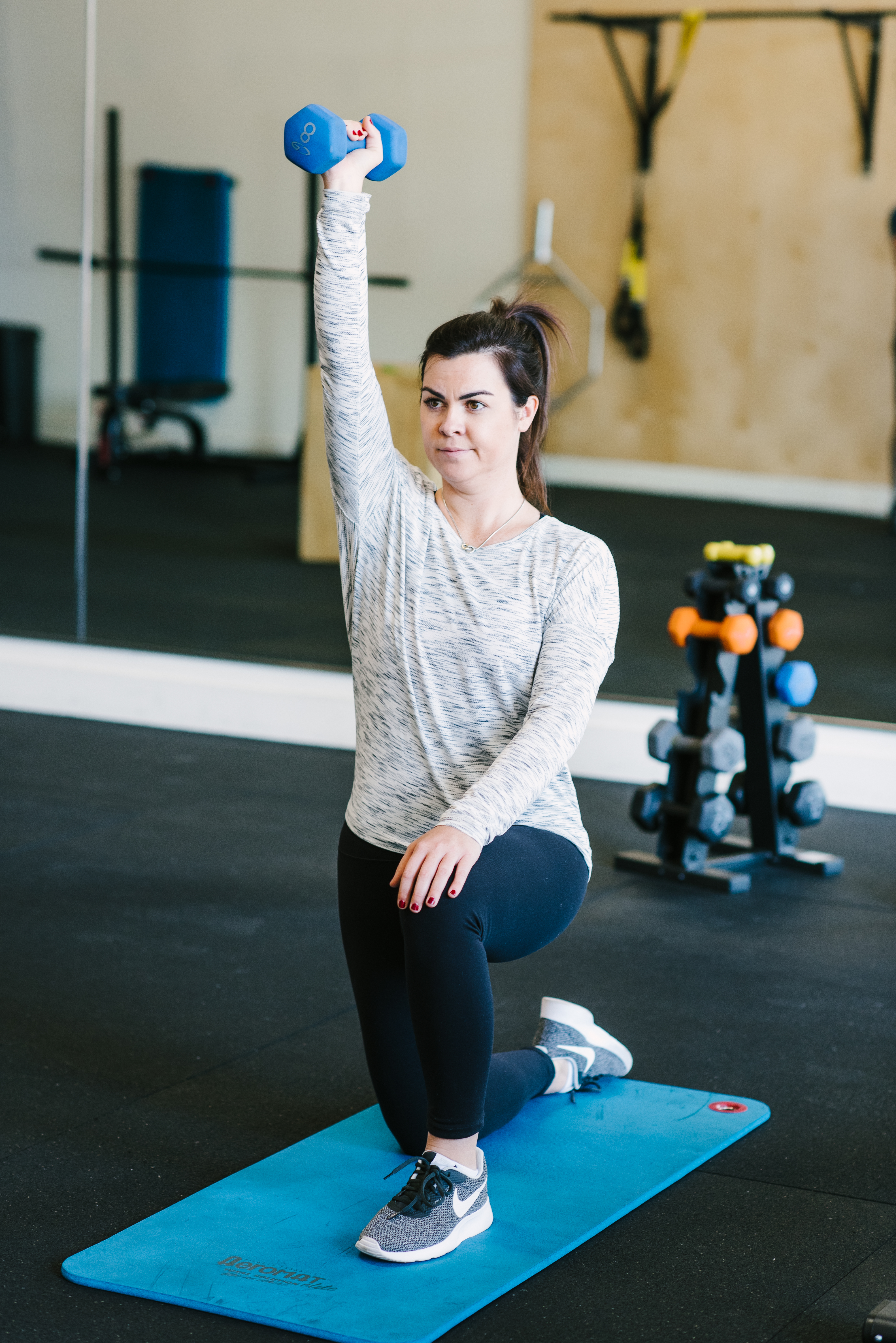
Just like turning over crops, rotate your exercises

Growing up a gym rat and studying to be an exercise physiologist, I would never consider myself a farmer.  However, I do see similarities between the two.  Driving down to Monterey recently, I noticed the abundance of artichoke orchards scattered along the side of the freeway.  To my surprise, there would be random plots of land perfectly tilled and managed with nothing but dirt.  I thought to myself, “Why wouldn’t there be any artichokes planted in this perfect piece of land.”  After a quick Google search, I learned that crop rotations are a technique used to help soil maintain and regenerate the nutrients each season.  Little did I know, artichoke farmers perform this tactic purposely throughout seasons to ensure their world-famous artichokes grow strong and beautiful.

This is like how the human body reacts to exercise and physical activity.  If the body lacks “seasons” in exercise and physical activity, the possibility to grow and adapt diminishes.  Like a plot of land that hasn’t been turned over.  Performing the same exercise routine repetitively for weeks, months, or even years can lead to staleness in the effort put into workouts and decreased motivation.  Performing the same exercise routine can also lead to a decreased amount of stress put on the muscles because the body gets used to that stress, limiting the adaptive properties muscles and bones use to regrow following a challenging workout.  Additionally, performing repetitive physical activity increases likelihood of overuse injuries on significant joints such as the shoulders, back, knees or ankles.  Similar to how the soil can get overused, our bodies can get overused from too much of the same activity.

When the body doesn’t have a sensitivity induced upon it with a variety of exercise, its ability to adapt decreases.  Repeating the same movements we are accustomed to, we don’t introduce a chance to challenge muscle and bone cells to grow.  Additionally, when the body settles into a state of comfort in an exercise routine that has been repeated for months or even years, the energy spent during comfortable exercises won’t be efficient enough to burn as much fat as with newer, more challenging exercise routines.  When artichokes have an absence of nutrients in the soil, they will produce puny artichoke buds.  Similarly, if the human body has an absence of various exercises, the muscles won’t grow, bones won’t be as strong, and fat underneath the skin won’t metabolize as well.

An example of performing too much of the same exercises could be performing Zumba 3 or more times per week.  Granted, Zumba is an enthralling and fun form of physical activity.  But performing the same routine 3 times a week or more throughout a few years can add up to overuse injuries on significant joints like the knees or ankles.  Other popular modes of exercise include group aerobics or CrossFit classes.  Granted, these are effective and productive forms of physical activity that help society become healthy and fit.  However, performing the same modes of exercise repetitively can introduce factors leading to injury.  Too much jumping, change of direction, or lateral movement can add up over time. My personal experience of playing recreation softball about 4 times a week over the years added up.  I noticed that my shoulder experienced pain like never before due to pitching 7 innings, 4 times a week.  Dabbling with too much of a good thing introduces a threat of staleness in the body, where connective tissue may stop adapting and slightly deteriorate.  These factors can lead to nagging aches, pains, and decreased interest to perform physical activity at all because it hurts.

A solution is to take a page out of the artichoke farmer’s book.   Leave and come back.  The concept of having seasons is an effective practice to stop what you’re doing, and then pick up on a new activity.  We turn over our personal training clients exercise prescriptions every 4 weeks.  Certain exercises are removed, some are kept, and there are new additions.  This gives muscle groups prone to injury a chance to regenerate and opens an opportunity to exercise specific muscles that may have not been focused on previously.  Just like the plots of land lying dormant for a season, the dirt has a chance to regrow nutrients and healthy bacteria to supercharge the world-famous artichokes.  If we treat out bodies the similarly and take a few seasons off specific activities, or slightly reduce the frequency in which we are performing the same activities we enjoy so much, we can develop a more sensitive  environment to super charge the development of our muscles and bones while increasing the amount of energy we spend to burn more fat.

It might be a good idea to take some time off the activities you like so much.  That way you’ll develop a fondness of the activity and be motivated to return better than before.  Avoid doing the same old thing.  Develop a gap in which new activities can be explored in a safe and fun environment while keeping track of how long you’re away from the activities you love so much and miss when you’re away.  Just like rotating the artichoke crops, maybe we can learn something by rotating what types of physical activities and exercises we do each season.


Sean McCawley, the founder and owner of Napa Tenacious Fitness in Napa, CA, welcomes questions and comments. Reach him at 707-287-2727, napatenacious@gmail.com or visit the website napatenaciousfitness.com.
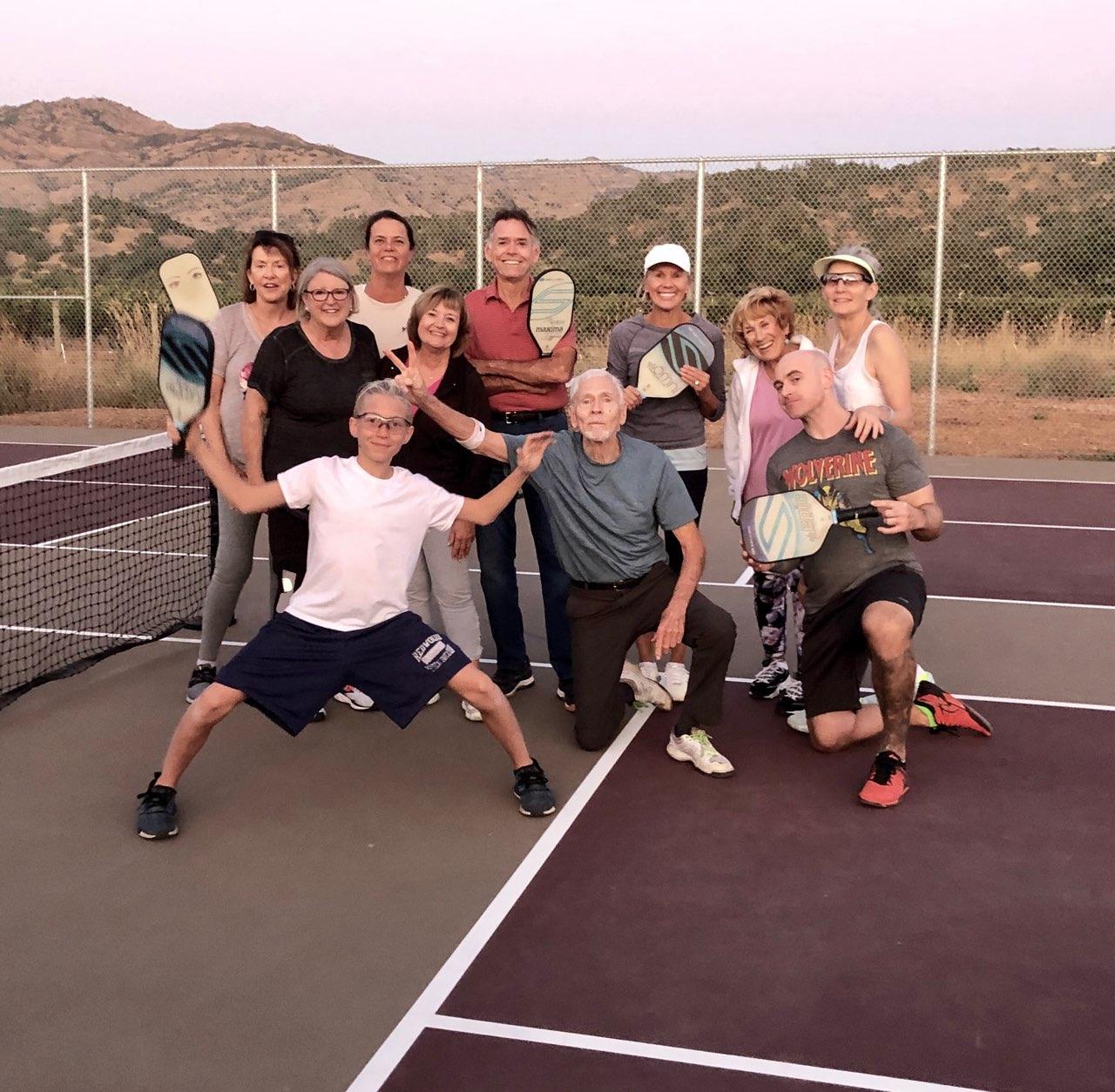
Attention to Detail: Injury Prevention

Maintaining fun and interesting physical activities are important to our everyday life.  Failing to stay active results in deterioration of the human body as father time continues tick his clock.  Optimal doses of physical activity might include hobbies and projects around the house, recreational activities, or regular exercise.  Golf, Pickleball, Tennis, or swimming are common recreational sports embraced by the general population.  Tending to a garden, cleaning the house, and tending to everyday arts and crafts are fun activities that keep our bodies in motion.  Popular exercises at local Napa gyms such as Yoga, bar classes, or Zumba classes are always a hit.

Adherence to movement keeps us going on many levels.  The increase in heart rate response from physical activity keeps blood flowing through our veins and arteries, decreasing the risk of cardiovascular disease.  Participating in opportunities for movement fend off the rust that advancements in age bring to the table, decreasing the accumulation of free radicals.  Most importantly, staying active benefits our minds to be mentally fresh, able to think clearly, and serves as a form of meditation.  As an ambassador of physical activity and exercise for all of society, seeing people participate in these forms of movement warms my heart.  However, something that is commonly overlooked are injury prevention specific exercises.

There’s nothing worse that hurting oneself from a silly accident that will leave you sidelined from your favorite form of physical activity.  Often, we have requests from new personal training clients in Napa to create an exercise design that supports a person to move past the obstacles a previous injury has inflicted upon their everyday life activities.  Our focus is centered on regenerating the previously injured area.  However, it’s important to carry out themes of injury prevention for commonly used joints that are prone to injury.  Areas such as the neck, rotator cuff of the shoulder, lower back, hips, knees and ankles are specifically targeted to in a client’s exercise prescription to future proof a client from potential injuries in the future.

In addition to our clients concentrated 1-on-1 exercise routines, we promote a form of fitness homework that is a dedicated injury prevention day.  Are you going out to golf more than twice a week?  To decrease the likelihood of Golfer’s Elbow appearing, it would be productive to maintain your performance by spending time to focus solely on the forearm and triceps muscles to prevent severe cases of Golfer’s Elbow.  Are you actively gardening, walking your dogs, or consistently cleaning your house?  Lower back pain is a common injury that prevents people from doing these activities around the house.  To prevent the low back from deterring the activities we enjoy doing around the house, a day dedicated specifically to performing a series of plank exercises and lower back stretches will strengthen the core and lower back so common activities around the house can be performed optimally.  Playing with the grand kids on the ground?  You’ll need some healthy, pain free knees to participate for at least another 5 years before they run off to team sports.  Arthritic pain in the knees and hips are common occurrences that hold individuals back from interacting with their grandkids.  Devoting a specific day once per week to strengthen the muscles surrounding the hips and thighs as well as exercises improving on balance assist us in being able be physically active and have fun with our grandkids.

Aerobics classes at the gym, Yoga classes, bar classes, and recreational sports have their place in keeping us fit, happy, and healthy for the years to come.  So please don’t stop participating in these important activities.  However, our bodies need to hold up to these forms of exercise.  We also need to be able to remain active in our everyday lives that require our bodies to be resilient without nagging injuries holding us back.  We can take one step further into our lifetime fitness efforts and spend at least one day throughout the week focusing solely on injury prevention.  Dedicating time to areas that are commonly injured will help refine our efforts to living a strong, healthy and happy life for the years to come not only in our recreational activities, but also with the ones we enjoy spending time with the most.


Sean McCawley, the founder and owner of Napa Tenacious Fitness in Napa, CA, welcomes questions and comments. Reach him at 707-287-2727, napatenacious@gmail.com or visit the website napatenaciousfitness.com.
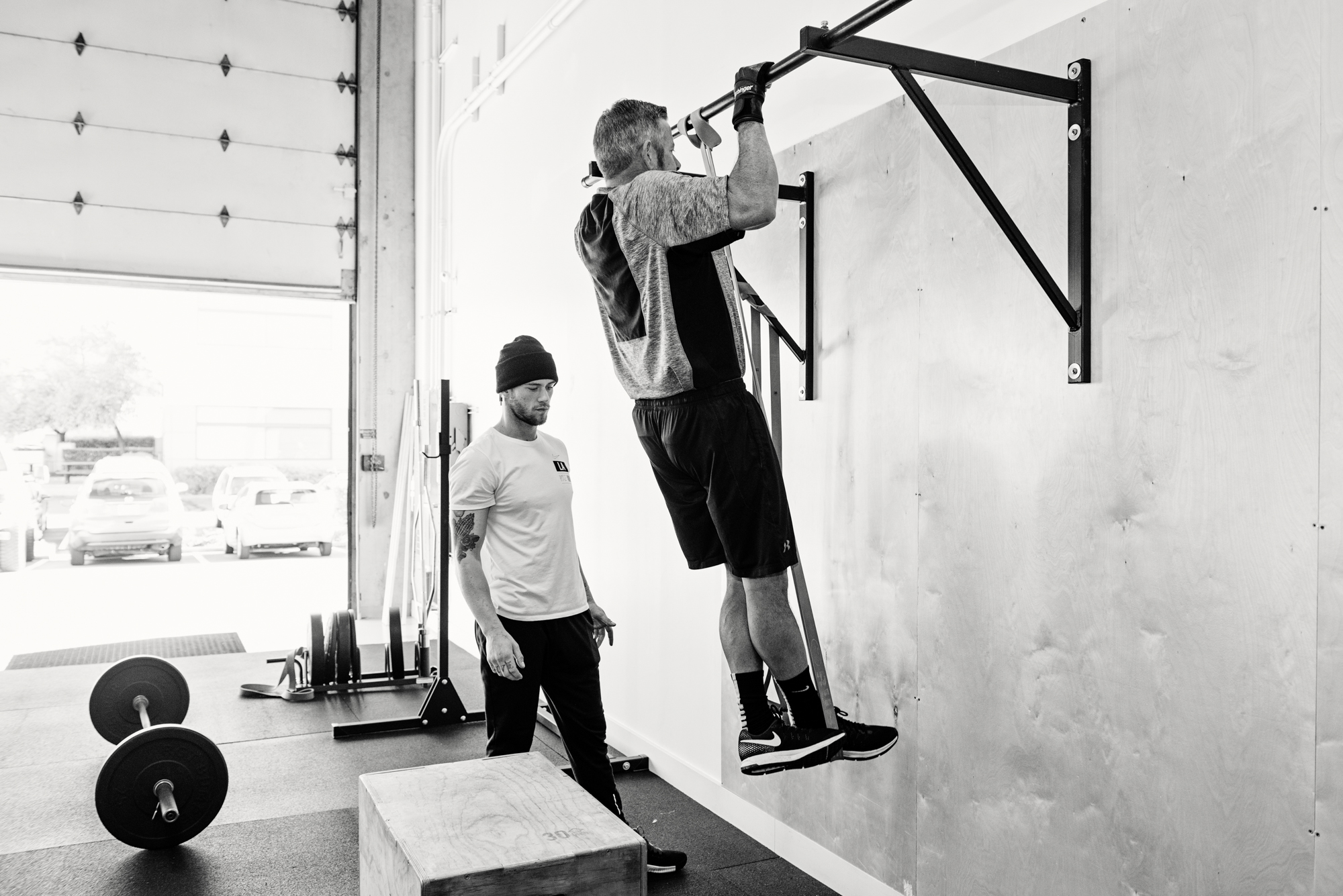
Maintaining Fitness on the Road!

For all of you who are in a routine in your lifetime fitness journey when your firing on all cylinders on your path to happy and healthful life, the fitness community of Napa salutes you.  Perhaps you’re exercising consistently at the gym or a small group fitness class 3-4 times per week.  You hit all the main body parts at the gym, using the machines in the weight room and the cardio equipment.  Your diet is in check because there is a specific day set aside to where all the veggies are chopped, proteins are portioned out and snacks are prepared for a busy week.  Veggies have been purchased and stored in the fridge for a week’s worth of healthy dinners.  This leads to losing fat mass, gaining lean muscle, decreasing likelihood of injury, and feeling overall great because of the positive benefits exercise and a planned-out diet offers.  This empowers you with a clear mindset inhibiting cravings for junk food because you’re in the zone and striving for that goal of eating clean, having a positive mental attitude, and training the body to be a fine-tuned machine.

However, what happens when you get a call from the boss with orders to head out of town for work and leave this routine that was so diligently created?  You might be staying in a hotel for 3 nights in the middle of a strip mall by an airport with sub optimal food options.  Not to mention your favorite local Napa gym could be 500 miles away.  There is an abundance of chain food restaurants that lack the healthy ingredients you have in your fridge at home.

Perhaps a business trip to the Pacific Northwest occurs in an area housing tempting gastropubs and breweries.  Some of the famed microbrews and pub food while watching ESPN at the bar could be hard to pass up.  Extra calories are waiting to be absorbed, derailing a healthy diet.   The urge to partake in some famous cuisine that veers outside of your dietary standards can leave you with the feeling not to miss out on such opportunities for legendary decadence in another town.

Then there’s the family visits.  You might have to stay in a town where you’re unfamiliar with the layout> Obtaining quality food and finding a gym could be a challenge.  Not to mention your loving relatives might reserve some of their secret family recipe pie for you.  It might seem rude not to partake, adding yet another threat of consuming foods outside of your normal healthy eating regimen at home.

When staying in places outside of your comfortable home turf, you enter a foreign exercise environment with food choices that you are not used to choosing from.  These are some of the many obstacles that appear during travel that hamper efforts to improve our lifetime fitness journey.

We offer solutions to our personal training clients in Napa when travelling occurs in their schedule. We help develop exercise routines utilizing little-to-no equipment that are stationary and require simple movement.  There are a variety of exercises that can be performed in about 9 square feet of space.  Meaning, you don’t necessarily need a gym to for a solid exercise session.  Performing stationary exercises during travel means they can be performed in a hotel room or a guest room in the dwelling you are staying at.  We prescribe fitness homework routines to our personal training clients who travel frequently focusing on simple yet effective mobility, core, lower body, upper body pushing and pulling exercise techniques.  An example of a stationary body weight routine might look like this:

  1. Warm up with a dynamic stretching routine.
  2. Perform 3 sets of 10 repetitions body weight squats
  3. Perform 3 sets of 10 repetitions pushups (can be done from the knees)
  4. Perform 3 sets of 30 seconds elbow planks.
  5. Finish with 4 sets of 25 jumping jacks or a brisk 20-minute walk.

Performing routines requiring your body weight and a small area is an innovative solution when there are no exercises facilities around or time to exercise is limited.  While such routines may not be as effective as 90 minutes at one of Napa’s local gyms, the exercise put into a stationary body weight routine can mitigate the detrimental effects of lack luster food options and the absence of a normal exercise routine that might be more comfortable.  Something is better than nothing when on the run.  Don’t let traveling throw a wrench in the spokes of your lifetime fitness momentum to healthier life.  Think dynamically and use the resources we always have available to keep active while maintaining health and fitness during travel.

Sean McCawley, the founder and owner of Napa Tenacious Fitness in Napa, CA, welcomes questions and comments. Reach him at 707-287-2727, napatenacious@gmail.com or visit the website napatenaciousfitness.com.
A “Pain in the Butt”: Alleviating Hip Pain

Activities such as sitting, doing recreational activities or just hanging out with friends and family all seem like normal activities everyone should be able to do.  However, when pain arises somewhere in the body, these activities become challenging.  A common site of pain in the body is hip tightness.  Symptoms such as sciatica creates pain that runs down the side of the hip all the way down to the knee are common triggers that lead to debilitating pain.    Limping due to pain lingering down the leg can cause a halt to every day physical activities.  The IT band is a large ligament that spans from the back of the hip to the outer portion of the knee.  When the IT band gets too tight, pain will occur in this area.  Weakness around the lower back, back of the hip and knee joint occur as well due to the distraction that pain can bring.  This can hinder our desire to be active in our normal daily activities.  This “pain in the butt” can also distract us from being happy and turn our moods upside down.

Don’t let this pain slow you down, because it is curable.  Once we know what causes this pain, the detrimental effects of this type of injury can be remedied or avoided.  We teach our personal training clients the indicators that tell us the IT band may be irritated by noticing the factors that exacerbate this injury.  Likely culprits include sitting down for too long, insufficient injury prevention awareness, and lack of exercise to strengthen the gluteal muscles.

A common mechanism of injury is simply sitting down for too long.  Commuters, desk job workers, and students all sit for long periods of time.  Picture the entire weight of the upper body of a human resting down on the IT band, the sciatic nerve and the gluteal muscles.    Now imagine bending a garden hose at a ninety-degree angle while standing on it for a few hours.  You would notice that the rubber in the hose molds to the ninety-degree position.  It would take a while for the hose to revert to its initial shape.  The same process occurs in the human body when remaining in a seated position for a prolonged period.  The muscles and ligaments of the hip become molded in a 90-degree shape and take a while to return to normal position.  This constriction of muscles and ligaments limit the delivery of oxygenated blood flow to muscles, ligaments and nerves of the lower extremities.  This can lead to nagging nerve pain and stiffness in physical activities that shouldn’t be that challenging to perform.

The first solution to preventing the hips from becoming too tight is to simply stand up from long bouts of sitting.  We encourage our personal training clients to set timers every 90 minutes to get up and walk around for 5 minutes.  This stimulates blood flow to muscles and won’t force muscles to remain in a constricted position and lock up.  More importantly, exercising the muscles that attach to the hip joint are critical to help the joints maintain mobility and strength.    Providing a healthy environment for the glutes, hamstrings, quadriceps and adductors will help to support the structure of the hip and thigh bones so compression of the sciatic nerve and IT band is less likely to occur.

Sure, pain in the hip region can be a bear.  But don’t just let it sit there and linger.  If we throw our hands up in the air and settle with the fact that we have pain, we are going to live with pain.  However, if we can identify the source of pain, we can draw a road map of how to remedy the situation.  If you have tight hips, don’t forget to train the muscles surrounding the hip joint.  Most importantly, don’t forget to get up from your seats and walk around regularly.


Sean McCawley, the founder and owner of Napa Tenacious Fitness in Napa, CA, welcomes questions and comments. Reach him at 707-287-2727, napatenacious@gmail.com or visit the website napatenaciousfitness.com.
The Almighty Knee Joint: Part 2

Last weeks from the “Fit for Life” weekly column featured 3 large muscles attached to the knee and their significance in maintaining the health and structural integrity of our critically important knee joint.  This subject received special attention because it could not be condensed into the 800-word limit for this column. As a special, let’s elaborate on exercises that improve the optimal performance of our knee joint.

To recap, we discussed how decreased physical activity and exercise increase likelihood of arthritis.  While previous corrective surgeries to damaged ligaments and supporting tissues in the knee joint is productive to get back to moving, weakness and pain causes distractions in returning to regular moving conditions.  Relatable muscles that are simple to target and improve knee health are the quadriceps, hamstrings, and adductor muscles of the thigh.

The stellar local gyms in the Napa Valley, such as Healthquest, Synergy, and Health Spa Napa Valley have resistance training equipment that are easy to understand.  These resistance training machines are created to have a participant execute movement to target the quadriceps, hamstrings, or adductors.  Instructions are listed explaining how to perform the movement.  Additionally, staff and personal trainers are ready to answer questions regarding proper usage.  Therefore, resources are available in local gyms to help us strengthen our knee joints.

The theme of lifetime fitness is to be able to continually exercise critically significant areas of the body to maintain a happy, strong, and healthful life throughout the week in any circumstance.  Even though we may not be able to attend one of the amazing local gyms in the Napa Valley due to scheduling conflicts, we can still strengthen the muscles around the knee in the comfort of our own homes.  Resistance training is optimal for lean muscle development.  Greater concentration of lean muscle surrounding the knee joint contributes to strength in the lower extremities, improved balanced, increased coordination, and decreased pain from the threat of arthritis.  To support the theme of lifetime fitness, we teach our personal training clients in the Napa Valley to target significant muscles of the knee with home exercise prescriptions.  Here are a few exercises that can be performed in most settings at home, on vacation, or on a break at work:

  1. Step up: The step up is an exercise targeting the quadriceps muscles.  The quadriceps are important because they are attached the knee cap.  Strong attachments to the kneecap ensure that the knee will does not deviate side-to-side.  To perform the step up, find a step in your home or surrounding area.  It could be a step in the stairs, threshold to your entrance of your back door, or a curb outside.  Stand in front of the step, bring one foot forward to where the heel is pressing into the step, and lift the opposite foot to meet even with the leading foot.  Step down with the first foot that led the movement, then rinse and repeat with the other foot.
  2. Supine hip bridge: This exercise targets the hamstrings and gluteal muscles.  Hamstrings are an important attachment point of the knee because this large, dense muscle attaches from the back of the hip and runs underneath the knee joint.  Strong hamstrings will help reinforce damaged knee ligaments or previously surgically repaired ligaments. This adds support by guarding the knee when stress is applied to the knee and influences it to shift front-to-back past its range of motion from.  To perform the supine hip bridge, lay down on your back.  Bend both knees and bring your heels close to your bottom, your knees should be bent at about 45 degrees.  While maintaining a perfectly flat back and driving through the heels into the ground, lift the crest of your hips toward the sky.  Ensure to squeeze the gluteal muscles.
  3. Single leg adductor balance: Strong adductors assist in ensuring the knees don’t collapse inward and aid our balance.  Perform this routine by placing both hands on a surface in front of you. Such as a wall or countertop.  Slightly bending the knees, lift one leg to the outside of the body as high as it will go.  Hold this movement at the maximum range of motion for about 5 seconds.  Repeat on the other side of the body, alternation side to side.

Performing these exercises for about 5-10 repetition each once a week will positively influence the knee health.

Adherence to exercise is critical to lifetime fitness.  Especially when referring to a strongly influential joint such as the knee.  Therefore, dedicating time to this joint throughout the week will improve the quality of life.  If you can target these muscle groups at a local gym, knock yourself out.  If you can’t make it to a local gym, utilize home exercise resources like the ones stated above.  Use the powerful tool of will power and lifetime fitness to keep the joints that allow us take one step at a time healthy and strong.

Sean McCawley, the founder and owner of Napa Tenacious Fitness in Napa, CA, welcomes questions and comments. Reach him at 707-287-2727, napatenacious@gmail.com or visit the website napatenaciousfitness.com.
Knee Health (Part 1): Future Proofing your Knees with Exercise!

The more you move, the less stiff your body will be.  The less stiff you are, the more you can move.  What happens when we’ve moved so much over the course our lives that now it’s painful to move to avoid getting stiff?  What happens when the joints and hinges holding us together begin to creak, crack, and crunch that is not only painful to you, but to people around that can hear your joints sound like Velcro when kneeling to pick something up?  The sound of two marbles rubbing together when moving your knees could be the result of more than 20 years of manual labor, the healing of injuries and surgeries, or just the amount of time spent on this earth contributing to wear and tear.  These symptoms contribute to arthritis and threats to future injuries.

A critically important joint to maintain so we can remain happy and productive in our future is the almighty knee joint.  Healthy knees joints are responsible for daily physical activities like picking things up off the ground, getting in and out of cars, or stepping up stairs and curbs.  We utilize our knees joints when interacting with our kids or grandkids, wrestling on the ground or getting down to their level to play.  One of the most common activities we do as human is sit.  Optimally functioning knees are responsible for getting in and out of chairs.  A knee that is lacking in structural integrity, strength, and coordination can hinder us from these normal daily functions.

As bipedal organisms, humans depend on putting one foot in front of the other when walking.  A car with old, rusty suspension and deteriorated wheels can’t be trusted to travel 100 miles.  Just like an unkept car, the human body can’t keep up with the demands of life with neglected knees.  Wouldn’t it be nice if we could keep the shocks and wheels of the knees functioning properly through our future years?  With regular knee strengthening exercise, this is possible. Even if father time decides to sprinkle a little age on our knees every 10 years

Significant structures of the knee joint include ligaments that protect the knee joint from going out of it’s normal side-to-side or front-to-back range of motion. The meniscus is a thick pad of cartilage responsible for absorbing force between the thigh and shin bone is also noteworthy.  Symptoms of arthritis can occur when the thigh bone and shin bone rub together due to the wearing down of the meniscus.  When arthritis is paired with inactivity, the bones lack stimulus to regrow because there is no stress or demand to move.  A vicious cycle can occur as knee pain hinders our desire to move.

A solution we offer our personal training clients in Napa is to focus on strengthening large groups of muscles in the lower extremities to reinforce the knee.  Popular muscles targeted for knee strength are the quads, hamstring and abductors of the leg.  These muscles are responsible for reinforcing the structural integrity of the knee and reducing the likelihood of pain through bone-on-bone rubbing.

Quadriceps are responsible for extending the leg and ensuring the stability of the kneecap Strong quadriceps will protect the kneecaps from shifting and scuffing the surface underneath, further decreasing arthritic pain.  Hamstrings attach on the back of the hip, through the back of the thigh bone and just below the knee joint.  Strong hamstrings not only aid efficient leg movement but are also a useful addition to reinforcing knees that have been affected by injuries to the ACL and PCL.  When the significant ligaments of the knee are affected from injuries or weakened over time due to inactivity, they don’t regenerate efficiently.  Therefore, using a strong and large muscle to reinforce the joint is a useful alternative.  Abductors are responsible for bringing the leg away from the midline of the body, lateral movement, and a contributor to correcting balance.  Similar to their cousins the quadriceps and hamstrings, the abductors serve as another reinforcing bracket of muscle that will protect the knee from injuries and also help reinforce bones from rubbing together at the knee joint.  Most importantly, performing resistance training on these muscle groups stimulate blood flow and regeneration of bone and cartilage cells in the knee joints, decreasing the detrimental effects of arthritis.

If we don’t want age to slow us down, we need to decrease joint pain over time.  We want to enjoy our hobbies, recreational sports, and hanging out with our families after we retire. Don’t let the advancement of age slow you down by worrying about previous knee injuries and arthritis.  Strengthen the muscles of the knee joint and live a strong, happy, healthful life as time passes by.

For more information on exercises that will build the hamstrings, quadriceps, and abductors of the thigh, tune in next week for “knee future proofing, part 2.”

Sean McCawley, the founder and owner of Napa Tenacious Fitness in Napa, CA, welcomes questions and comments. Reach him at 707-287-2727, napatenacious@gmail.com or visit the website napatenaciousfitness.com.
Benefits of playing in the water: Aquatic Exercise!

Summer in the Napa Valley is one of the most beautiful times one can ask for.  Morning fog rolls in, making it just warm enough to venture outdoors for a morning walk in your t-shirt.  The vineyards bearing their fruit preparing to be harvested lace the hills in majestic beauty.  Some of the finest restaurants thrive off patrons looking for world class food paired with a beautiful view of the valley’s rolling hills.  Visitors from all over the world partake in the unique Mediterranean climate that is rivaled by few other locations in the world during this gorgeous time of year.  However, once the morning fog burns off, another phenomenon occurs.  Napa can get hotter than the hinges of Hades’ gates.

What do can we do when the air that we breath gets hot enough to burn our faces?  A solution that is fun and beneficial for the body is to partake in entertaining physical activity in the water.  Swimming at a pool party, hopping on boat in Lake Berryessa, or making a quick drive out to one of the beaches of the Pacific Ocean is an innovative way to be active in the water. Not only is frolicking around in the water fun and a great release from the stressful demands of everyday life, aquatic exercise has substantial benefits to the body.

Outside of the pool parties, aquatic exercises classes don’t get the credit they deserve.  A structured exercise routine facilitated by an accredited aquatics instructor offer a unique form of resistance that doesn’t impact our joints as much as land exercise, but still offers significant resistance to muscles.  Buoyancy while moving in water takes away the effect of gravity pressing down on joints, decreasing compressive forces on popular pain areas during exercise such as the back, hips, and knees.  Additionally, the “thickness” effect that water offers while moving joints forward creates work in the muscles, offering a form of resistance humans don’t usually experience as they move on land.  A structured exercise routine in water is a great fit for participants who are just beginning a regular exercise program, people recovering from injury, or individuals who might be struggling with arthritis.  People who aren’t confident in their balance can participate in aquatic exercise to regain confidence by moving in the water in ways that might be a challenge to their equilibrium on land.  Over time, the muscles involved in stabilization and balance will regain strength and coordination for movements that might be hindered on land.

Physical activity in the water is also beneficial for increasing calories burned during exercise.  Resistance of the limbs moving through water is a relatively slow-moving activity that is different from brisk walks, hikes, or jogging on land.  While moving at lower resistances for a longer period, heart rate responses won’t increase as fast.  This promotes a steady pace of exercise for a longer period, utilizing more fat as a fuel source at a lower heart rate expenditure.  This takes the edge off the idea that exercise is excruciatingly painful and challenging.  Why do something you don’t enjoy? Perhaps splashing around in the water is a great solution for people who don’t like the gym floor scene or running on a treadmill.

Another key component that aquatic exercise offers is the conductivity of heat while performing physical activity in the water.  Water acts like an insulator when a person is submerged in it.  Similar to that of a coffee mug holding steaming hot coffee.  This ensures that heat doesn’t escape as fast compared to when a person is exercising on land, limiting the effects of over heating yet still burning calories.  If we can keep more heat in the body and limit it from leaving due to the increased energy we are producing through movement, we can literally “burn” more calories as we move in the water.  Moving in the water not only requires muscles to utilize oxygen as a fuel source during exercise more due to the resistance, but also for a longer period.  Once a high amount of oxygen has been used for a while, the “after burn” effect kicks in following completion of exercise which allows muscles to absorb more oxygen following exercise and utilize fat as a fuel source even after you finish your bout of aquatic exercise.

Take advantage of these historically hot summer months by splashing around, jumping off diving boards and getting a few laps in at the pool.  Welcome the opportunity to get back into exercise if you’ve fallen off due to injury or recovering from a surgery by partaking in aquatic exercise classes.   The water might be the perfect fit to introduce a productive and fun exercise routine to help us enjoy our lives with decreased pain, improved balance, and a calmer, productive state of mind.


Sean McCawley, the founder and owner of Napa Tenacious Fitness in Napa, CA, welcomes questions and comments. Reach him at 707-287-2727, napatenacious@gmail.com or visit the website napatenaciousfitness.com.
Improve Balance and Find your Imbalance

Walking, turning your head, stepping on and off objects.  These activities can be more challenging than we think when our sense of balance is disturbed.    The regulation of balance perpetually occurs throughout a normal day.  Take away an optimal level of balance, we have issues.  Once we take one misstep off a curb, trip over a crack, or get startled to where the feet tangle up after a we get spooked by a loud noise and fall, it’s easy to understand how important balance is to our everyday lives.  The risk of falling increases, recreational activities and sports become challenging, and working on projects around the house can be hindered by inadequate balance.

Visualize our bodies moving in a straight line during each step.  As bipedal creatures, we depend on the gate of our feet to trace an imaginary line running through the center of our bodies.  Deviating outside of the line indicates an imbalance in our path of movement.  Sturdy muscles in the core and lower extremities contribute to the stability of the midline of the body.  Coordination of these muscles acting in unison protect against the upper body from swaying away from the midline of the lower body, preventing the body from toppling over like the end of a game of Jenga.  Training the body to be mobile through balance training, strength training, and remaining active in recreational activities and sports keep the mind acute and aware to compute when imbalances might occur to automatically correct them.  Not only is it important to train the muscles responsible for balance, but it’s also important to pay attention to the visual comprehension to adjust to maneuvering around difficult objects in our way, identifying possible threats leading to falls, and recovering from unpredictable situations inducing a loss of balance.

One way we improve our Napa personal training clients’ balance is to discover where their imbalances are.  The best way to improve balance, is to discover imbalances.  From hyperathletic, to post surgery, to advances age individuals, challenges to balance and proprioception can always be introduced.  Through safe and effective training, threats to poor balance can be improved.  Here are some examples of techniques that can be performed safely in the comfort of our own homes to challenge our imbalances and improve balance when practiced regularly:

  1. Stand facing a wall with your hands resting on the wall. Lift one foot off the ground attempting to get the knee about hip height.  Hold that pose for 5 seconds.  Repeat on the opposite leg and perform 5 times each leg.  To make this movement more challenging, while one foot is lifted, remove the opposite hand off the wall and raise it in the air.  When you are ready to ramp it up more, lift both hands off the wall.
  2. Perform the old DUI test. Find a straight line to trace with your footsteps and place one foot in front of the other as you walk for about 5 yards and back.  Repeat about 3 times.  I’m sure Napa’s finest police officers would be thrilled that we are using this tactic as a strategy to improve our balance and health unhindered by the effects of debilitating substances.
  3. For an advanced form of balance training, stagger one foot in front of the other and close your eyes for 10 seconds. You’ll be surprised how challenging this may be.  Please do this in a safe environment where there aren’t many falling or tripping risks.  For an even bigger challenge, attempt to lift one foot off the group with your eyes closed and feet aligned one in front of the other.

To improve our balance, we need to improve our imbalances.  Feeling confident in balance reduces the risk and fear of falling, allowing us to enjoy our lives more.  Do you want to test your if your balance is up to par?  Then you should be able to pass the universal DUI test when you are in a sober state of mind.   More importantly, don’t be afraid to test your imbalances.  The knowledge of knowing what you lack is powerful fuel to contribute to a critically important facet of lifetime fitness that will allow us to live life confidently and safely as we move.


Sean McCawley, the founder and owner of Napa Tenacious Fitness in Napa, CA, welcomes questions and comments. Reach him at 707-287-2727, napatenacious@gmail.com or visit the website napatenaciousfitness.com.
Exercise before the day begins!

The to do list of daily chores and errands is ever evolving in our roles as responsible human beings.   Progressing in life as partners in relationships, parents, throughout careers, or when we retire, we undoubtedly get busier.  With time invested into these obligations, the and energy we invest in ourselves to be a good worker, parent, or retiree can fizzle.  40 hour per week jobs require face to face interactions, phone calls, desk work, or commutes.  Combine that with some ill-advised food decisions on the run, the lack luster results of sedentary activity and poor diet puts our bodies through the ringer.  Chauffeuring kids to school and extracurricular activities take away some much-needed opportunities for exercise.  Even in the retired population house projects, spending time with grandchildren, and errands can engulf an individual’s time to where there is no time to focus on refining the body, adding to the effects of aging.  Achievement driven individuals’ days grow long, and the hours of obligation fill up leaving little time to focus on health and fitness.  There are only so many hours in the day.  However, ensuring to get some much-needed exercise in early part of the day is a powerful technique to supercharge your day and positively contribute to life time fitness.

Accomplishing exercise early in the day benefits the human body mentally, emotionally, and physically.  Hormones such as adrenaline and dopamine are released in the body from exercise which can increase mental acuity, alertness, and serve as a natural energy booster.  Physiologically, exercising earlier in the day will increase the amount of oxygen absorbed by skeletal muscles, allowing the muscles worked by exercise to utilize fat as a fuel source more efficiently throughout the day.  Regular exercise improves strength and endurance, helping the body to be injury free and hold up to the stressful demands of the day.

Moving up in a career, managers and supervisors are likely to commend a person who takes care of their body and mind.  Why would a boss desire someone to represent their team or business with health risks?  As parents, it pays to be healthy, strong, and mentally fresh to be a good role model for our kids.  The retired community needs endurance, strength and the reduction of chronic pain to keep up the with activities and hobbies.

Achieving a workout early in the morning also decreases the likelihood of procrastination from exercise.  Accomplishing a bout of exercise earlier is a significant attribute having a good day before our busy lives take the day away from us.

We teach our personal training clients in Napa to adhere to a simple exercise routine before the demands of the day occur.  A brisk paced walk, aerobics class, or a home-based resistance training routine consisting of 10-20 minutes is enough to support exercise needs before the day starts.

An example of a short and effective exercise routine that can be performed in the comfort of your own home that we prescribe to our personal training clients in Napa might look like this:

  1. Start with a simple dynamic stretching routine
  2. Perform 3 sets of 10 body weight squat repetitions
  3. Lay down flat on your back on the ground and perform 3 sets of 10 hip bridges
  4. Turn over to where you are face down and perform 3 sets of 10 push ups (from knees if needed)
  5. Finish off with 30 seconds of elbow planks

That doesn’t seem like it would take too long.  However, a routine this simple will elicit positive adaptations of exercise that contribute to a strong, happy and alert body if done before the hustle of life envelops us.  We all have 24 hours in our day.  How we spend it is the determining factor of if we can get the most of it or not.  One thing is for sure, if you exercise early in the day before life takes you away, you will be fine tuning your performance as a parent, worker, and retiree.

Sean McCawley, the founder and owner of Napa Tenacious Fitness in Napa, CA, welcomes questions and comments. Reach him at 707-287-2727, napatenacious@gmail.com or visit the website napatenaciousfitness.com.