
Over the years, we’ve trained many clients throughout their cancer therapy and after their treatments ended. Many have told us something like, “This is one of the best things I can do for myself right now, because I always feel better after my training session.” They said this while going through all the trials and tribulations that come with cancer treatment, including long days of appointments, scans, and side effects that can leave a person feeling drained.
A cancer diagnosis affects more than the person who receives it. The people around them are affected too. For example, a spouse might take on the drives to and from appointments, adult children might rearrange their work schedules, and friends might organize meals and check in with phone calls. Caregivers, nurses, and doctors also invest their time and energy into helping that person get through treatment. These team efforts are invaluable assets in helping the people we care about progress and cope with cancer and similar conditions that change a person’s life from how they are used to living it.
Cancer treatment can feel like a long list of things that happen to a person. Exercise gives a person something they can control. Choosing to show up for a training session, take a walk around the neighborhood, or do a few minutes of stretching at home is a decision they make for themselves. That sense of control can give a cancer survivor a reason to keep going and a tool to use while persevering through challenges that seem daunting.
That sense of hope can also extend to the people around them. When friends and family see their loved one regularly visiting the gym, finishing a set of exercises, or going for a walk after a tough week of treatment, they see someone taking control of a situation with uncertain outcomes. Seeing that effort can give the people supporting a cancer survivor hope too, and it can give them a positive way to be involved.
Symptom-specific medications and treatments can cause tiredness, muscle loss, and lowered strength. When a person spends a lot of time resting during treatment, the body can become deconditioned, and everyday functional movements such as participating in recreational athletic activities, interacting with our kids or grandkids, or doing everyday activities such as going to the grocery store and hauling bags of groceries in and out of the car become more difficult. Regular exercise can reduce these effects and improve mood and sleep during and after treatment.
We like to say that exercise is medicine alongside treatment. Many physicians encourage their patients to stay physically active during and after cancer treatment when it’s safe to do so. Energy levels, the immune system, and the body’s tolerance for exercise can change from week to week during treatment, and a skilled, qualified fitness professional can adjust the session to match how the person feels that day.
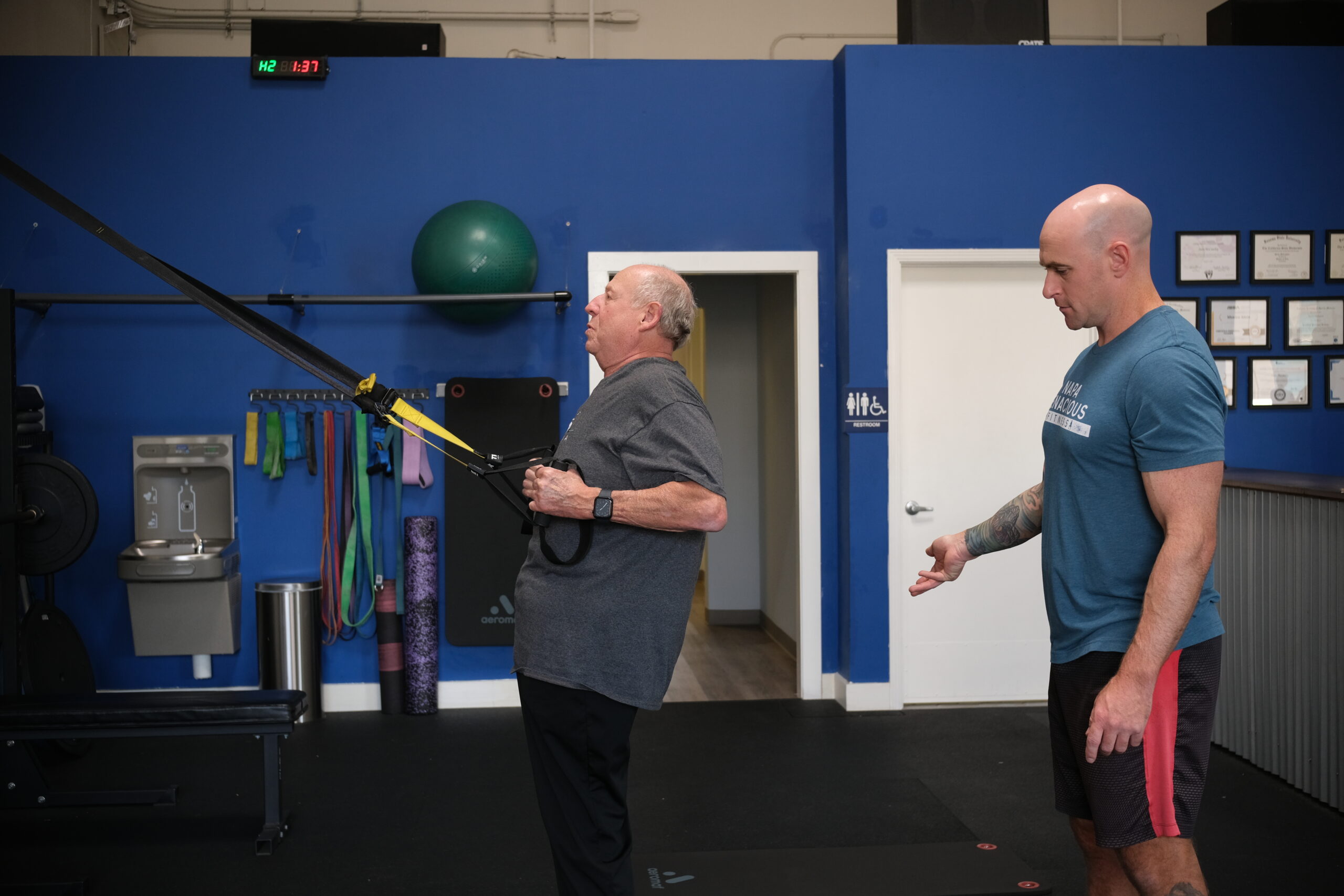
On our training floor, a session with a client going through cancer treatment might look different from one day to the next. On a good day, it might include a full-strength training session with dumbbells and resistance bands. On a harder day, it might be a more conservative approach to resistance training, including bodyweight isometric and eccentric exercises, gentle stretching, and a few balance exercises. Both sessions count, and both can help the person walk out the door feeling better than when they arrived.
One simple tactic we suggest is inviting a family member or friend to join a walk or an exercise session. A caregiver who walks alongside a cancer survivor around the neighborhood or through one of Napa’s parks also gets the benefits of physical activity. Caregivers can be under a great deal of stress, and exercise can help them manage it while spending quality time with the person they’re supporting.
Exercise can give cancer survivors a tool to take control of their health and a reason to keep persevering through treatment and recovery. It can also give the friends, family members, caregivers, and doctors around them hope. A routine built on safe, appropriate exercise can help a person feel stronger, more energetic, and more like themselves, and it gives many of our clients a reason to say, “This is one of the best things I can do for myself.”
Sean McCawley, the founder and owner of Napa Tenacious Fitness in Napa, CA, welcomes questions and comments. Reach him at 707-287-2727, napatenacious@gmail.com, or visit the website napatenaciousfitness.com.