
A walk through an airport terminal reveals the surprising truth that traveling is a strength and conditioning event. Suitcases are hoisted off luggage carousels, carry-on bags are pressed into overhead bins, backpacks are slung over shoulders, and rolling luggage is towed across long stretches of pavement. Before a single vacation photo is taken, the body has already performed dozens of lifts, presses, pulls, and carries.
Travel highlights the upper extremities, a part of the body that is commonly overlooked. Our hands, elbows, and shoulders are the tools that manage nearly every physical demand of a journey. The fingers and forearms grip handles and railings. The elbows bend and straighten to lift bags from the ground to a hotel bed. The strength, functionality, and integrity of the shoulders are important assets when we press luggage up into an overhead bin or stabilize a heavy tote during a long walk to the gate. These same structures serve us at home when we haul groceries, open stubborn jars, pull trash bins to the curb, and push ourselves up from a chair.
For those of us venturing into our upper fifties, sixties, and beyond, travel often becomes one of the most anticipated rewards of a lifetime of hard work. Visiting grandchildren across the country, touring a foreign city, or embarking on a long-awaited cruise are the experiences that fill our calendars and our conversations. However, this is also an area of life when muscle mass and grip strength naturally decline if they aren’t maintained. A sore shoulder, a flare of tennis elbow, or fingers that fatigue quickly can transform an exciting itinerary into a source of anxiety. Needing assistance to lift a carry-on into an overhead bin can feel like a small surrender of independence that many travelers would prefer to avoid.
It’s worthwhile to understand how the upper extremity operates as a connected chain. The muscles of the forearms close our fingers around objects and generate grip strength. The biceps and triceps bend and straighten the elbow to lift and press. Above them, the shoulder is stabilized by the rotator cuff, a group of four muscles that hold the ball of the upper arm bone securely in its socket. Supporting the whole operation are the muscles of scapular stabilization surrounding the shoulder blades, such as the trapezius and latissimus dorsi, which anchor the arms to the torso. When one link in this chain is weak, the neighboring links absorb extra stress, which is often how nagging musculoskeletal injuries begin.
The encouraging news is that reinforcing this chain doesn’t require heroic feats of strength. Safe, simple, and effective resistance training performed two to three times per week can pay massive dividends. Bicep curls with light dumbbells strengthen the elbows and shoulders and also increase grip strength. Rowing motions with a resistance band reinforce the shoulder blades. Consistent practice of these movements builds a reserve of strength that mitigates the likelihood of injuries interrupting the adventures we’ve worked so hard to enjoy.
Below is an exercise we use with our personal training clients to strengthen the hands, elbows, and shoulders.
The “farmer’s carry” is a simple and effective exercise that mimics everyday life activities such as carrying groceries or luggage. Start by standing tall with a dumbbell, kettlebell, or even a jug of water in each hand, positioned at your sides. Choose a weight that feels challenging but manageable, such as five to fifteen pounds per hand. Ensure your shoulder blades are pulled down and back, as if tucking them into your back pockets. Ensure your spine remains rigid and your gaze faces forward rather than down at the ground. Grip the weights firmly and walk twenty to thirty steps at a controlled pace, then turn around and walk back. Ensure your shoulders stay level and avoid leaning to either side throughout the movement. You should experience muscular activation in your fingers, forearms, shoulders, and the muscles between your shoulder blades. Repeat this walk for three to five rounds, resting as needed.
Strong hands, durable elbows, and resilient shoulders are invaluable assets for lifetime fitness. Whether the destination is an overseas adventure, a grandchild’s graduation, or simply the grocery store across town, our upper extremities determine how confidently we move through the journey. Perhaps we can dedicate a few minutes in our weekly routines to reinforce these hardworking muscles so we can keep lifting, carrying, and exploring for years to come.
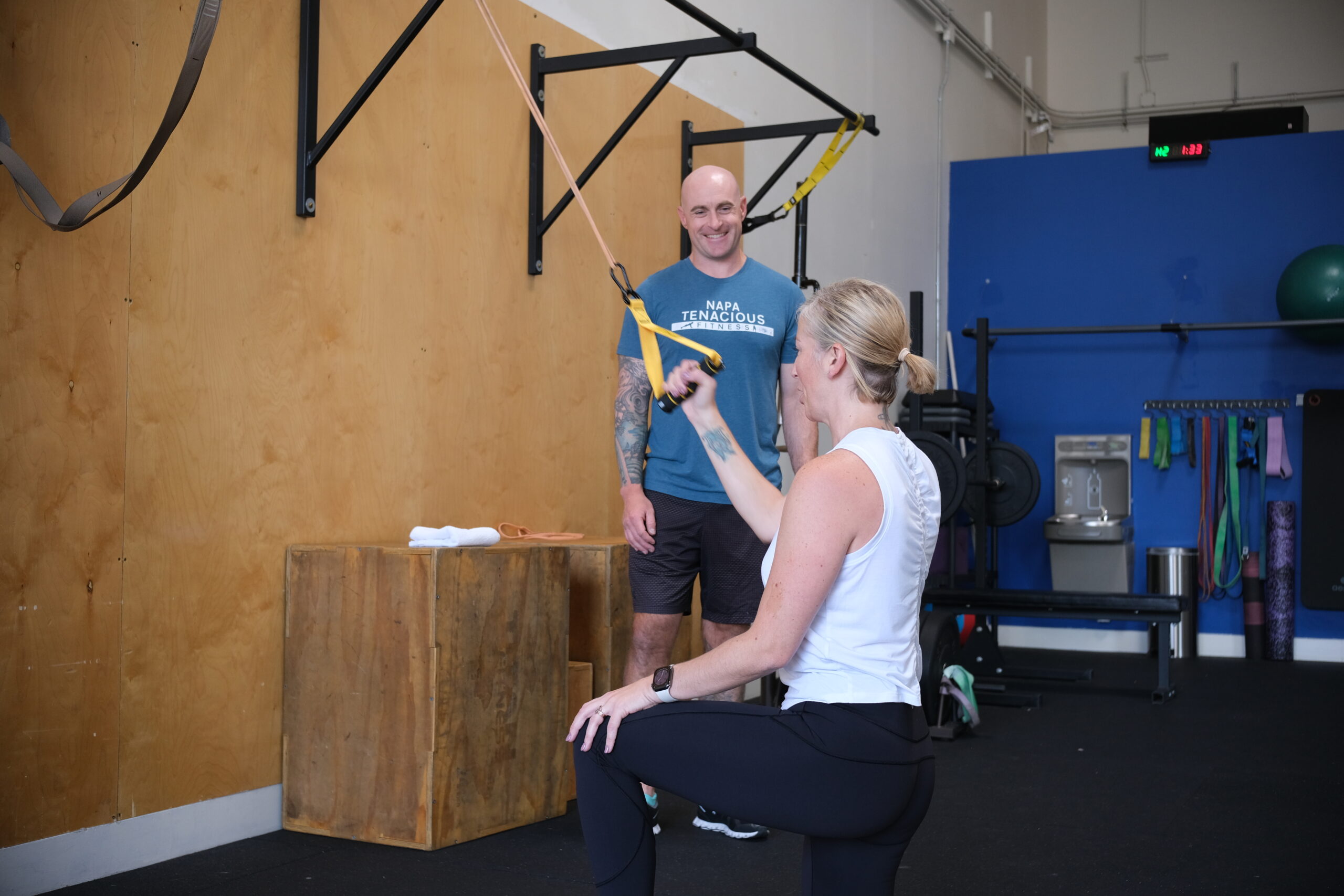
Sean McCawley, the founder and owner of Napa Tenacious Fitness in Napa, CA, welcomes questions and comments. Reach him at 707-287-2727, napatenacious@gmail.com, or visit the website napatenaciousfitness.com.