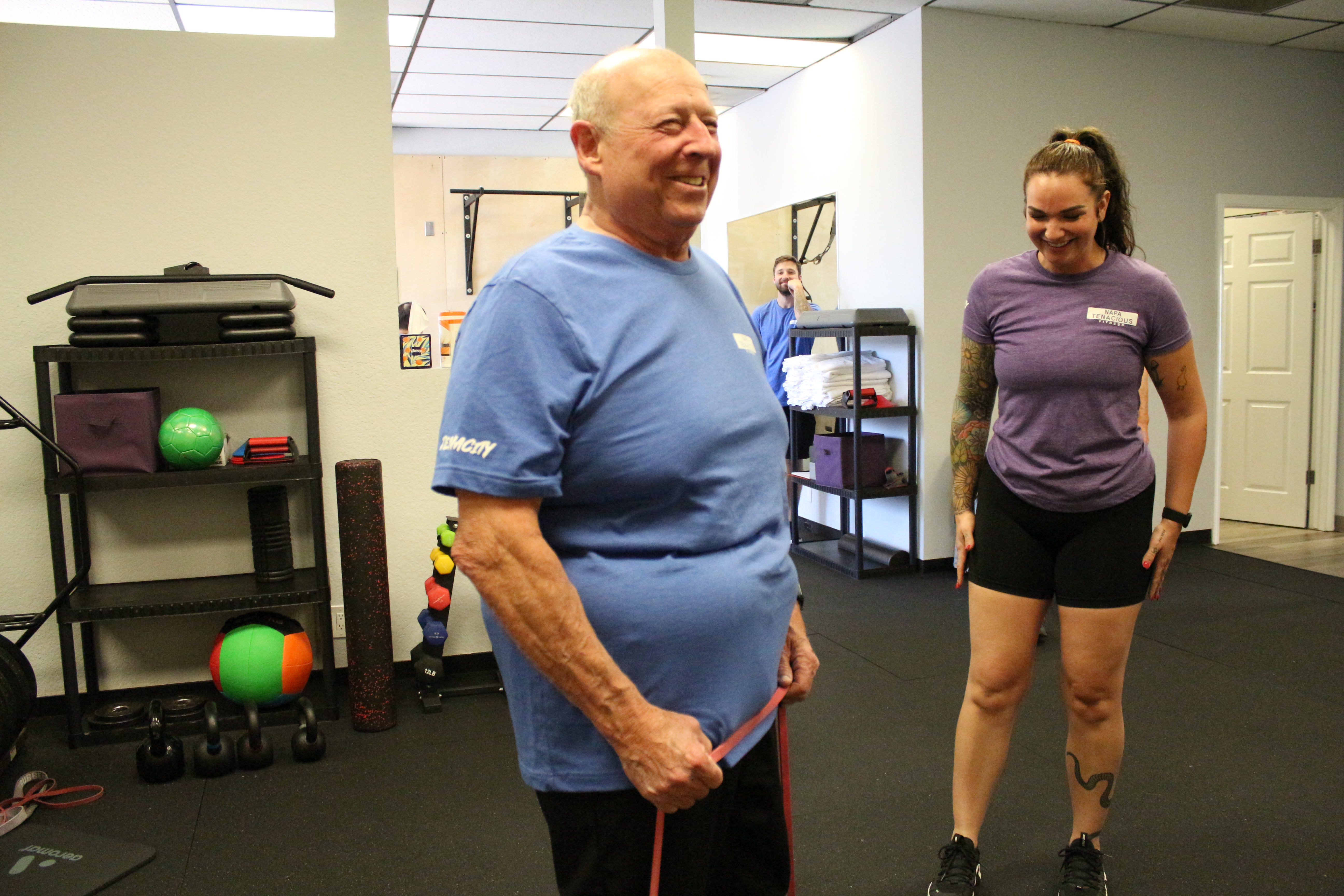
Healthy Shoulders Make us Successful Humans

Reaching back to slide your arm into a zip-up hoodie, fixing a bun or ponytail in your hair, or simply lying on your side while sleeping in your bed shouldn’t be too challenging.  However, for those of us who have endured an injury to one or both of the shoulders, a seemingly simple everyday life action can seem like a complex and challenging decision on whether or not to make a movement that causes pain or discomfort.

Comprised of a network of unique bony attachments, ligaments, tendons, muscles, and nerves, the shoulder has unique capabilities that differentiate it from other joints.  The attachment of the humerus to the scapula and clavicle enables a full range of motion, which sets humans apart from other creatures.  Imagine if we had the shoulder design of a crab, cat, or lizard.  We wouldn’t be able to engage in the activities that have enabled us to become the most advanced organism on Earth.  However, it’s worthwhile to appreciate the differences our shoulders have when compared to other phyla in the world.

Our crustacean friends have shoulder joints that attach to their arms, equipped with little pinchers that grab onto food and transport it to their mouths.  If you’ve picked up a live crayfish and seen that they can only pinch something that’s in front of them, you can see the limitations of their shoulder joint.  Cats are one of the most agile and athletic species of land-dwelling mammals in the world.  However, they have similar limitations to those of Mr. Crabs.  They can’t reach behind their body.  Lizards have unique abilities to stay close to the ground and skitter along walls and crawl into narrow cracks. A lizard can abduct its arms out wide, but it can’t reach its arms up over its head or behind its body to touch its back.  We have quite the privilege of being able to move our arms in various planes of motion that grant us the ability to do something as simple as reach out in front of us and bring a cup of coffee to our mouths, to something as sophisticated as practicing and refining our ability to throw a football ten to thirty yards to a moving target.

So, why would we want to compare our shoulder joints to crustaceans, felines, or reptiles?  While we are the top of the food chain and the most successful species on Earth, if we don’t tend to our shoulders and ensure they are strong and able to move in optimal range of motion, our shoulders will devolve into the same shoulder limitations as crustaceans, reptiles, and felines.

Our personal training clients sometimes present a plethora of musculoskeletal injuries that may have been caused by using a dominant hand more than the other, a previous traumatic event such as a car crash, or the development of a degenerative connective tissue condition.   Shoulders that have endured unfortunate afflictions that affect a persons range of motion, strength, and structural integrity of the connective tissue within the joint that haven’t been properly managed via skillfull exercise decisions create scenarios in which the arm starts to move in the same manner as that of a crab with a pincher bringing a piece of debree from the bottom of the ocean to their mouths.

At the beginning of our client’s training sessions, exercise participants are required to perform a series of dynamic stretching movements that prepare the body for exercise.  Included in this routine are over ten tactics that pertain to shoulder muscular activation, range of motion practice, and education on how to move the shoulder correctly through various planes of motion.  One such technique that makes a big difference in a person’s fitness journey is shoulder protraction and retraction:

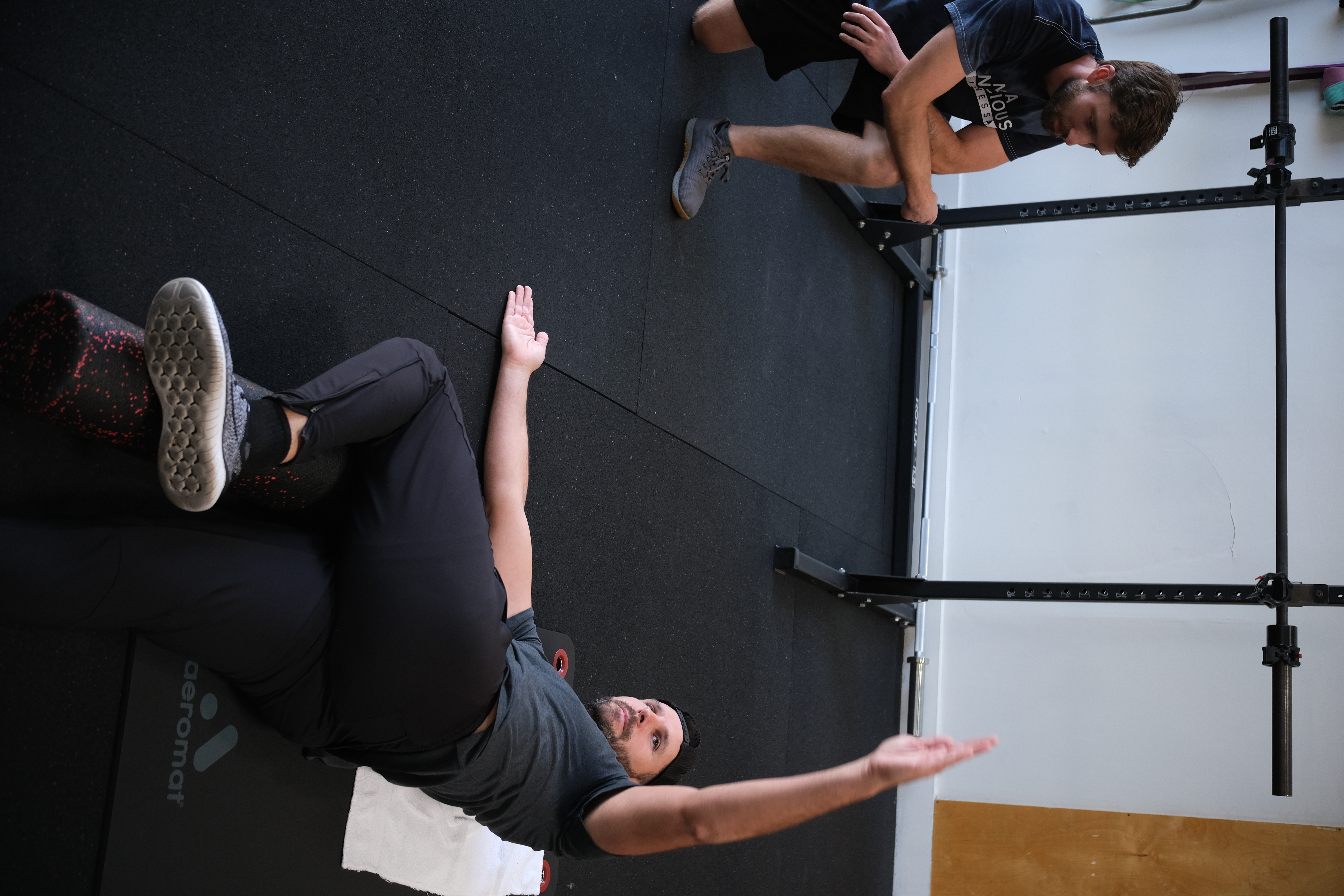
To perform scapular protraction and retraction, lift your arms and bend the elbows at about a ninety-degree angle, and elevate them until they are in line with your armpits.  While maintaining your elbows at a ninety-degree angle and keeping your fingertips facing forward, glide your shoulder blades forward along your rib cage until you feel a stretch in the upper back and a muscular sensation in your pectoral region.  Reverse the motion and glide your shoulder blades backward against your ribs.  You should feel a muscular sensation in the muscles surrounding your shoulder blades.   Repeat this movement for five to ten repetitions.

Equipped with the ability to reach the arm in front, across the midline of the torso, to the side, overhead, and even behind the body, the shoulder is an invaluable asset allowing humans to interact successfully in their careers, recreational sporting activities, and even simple everyday functions such as using our phone, working on computers, cooking, shopping, or driving.  Understanding and appreciating the range of motions of the shoulder is critical for successful and efficient functionality in everyday human life.
Sean McCawley, the founder and owner of Napa Tenacious Fitness in Napa, CA, welcomes questions and comments. Reach him at 707-287-2727, napatenacious@gmail.com, or visit the website napatenaciousfitness.com.
Using Exercise to Adapt to Changes in an Aging Body

After a three-hour competitive pickleball session with a few of my pickleball peers, we sat on the bleachers outside Vineyard Park in Yountville. Covered in a fine coat of sweat and sunscreen, we admired the picturesque landscape to the east.  Miles of trellised grape vines paved a vibrant green blanket of grape leaves and native California foliage across the land, leading up to the hills and mountain ranges that were speckled with patches of vineyards, rustic-looking buildings, and rocky protrusions as the line of sight traveled upward to the tip of the mountains.  One of my favorite views is the summit of a hill that can be reached by hiking to the legendary Stag’s Leap site, starting at the Rector Creek Reservoir trail.  That site brings back a sense of nostalgia from when I took a four-hour hike with one of my best friends.  He shared that the area we hiked to was named after a legend of a stag that the indigenous people of Napa were said to be hunting.  The tale has it that the stag evaded the hunters and cleared a rocky formation over ten feet high.  This glorious landscape, along with stories of the hikes I’ve taken in the mountains to the east of the pickleball courts, brings a sense of joy after concluding a heart-pounding, sweat-filled, and adrenaline-inducing session of smashing a wiffle ball at my opponents for three straight hours.

One of my fellow pickleball peers shared with me that pickleball was his favorite way to exercise.  I can relate, as I’m not fond of staying on a treadmill, staring at an electronic device, to burn the same amount of calories as I would engaging in one of my favorite recreational physical activities.  The thought of staying on a treadmill for anywhere over five minutes chills me to the bone.  He also added, “I haven’t felt knee pain until I started to play pickleball, though.”  He said, “I played tennis for years. Pickleball quickly became my new point of interest because it was new, fun, and gave me something different to work on.  But, after getting to age forty-five, and picking up a new sport, my knees ache after playing so much pickleball.”

It shouldn’t be a surprise that, along with the advancement of age, maladies in our joints can appear in new spots that we’ve never had before.  My grandfather and dad were physical specimens when they were my age.  They woke up earlier than I and any rooster that “cock a doodle doed” before the break of dawn, worked their hands to the bone, got home later than everyone else in the house, and went to bed after everyone else was safely asleep.  However, after they retired, they would occasionally experience back pain, knee pain, or a crick in their neck.  After observing firsthand that joint pain can occur in the most roughnecked, knuckle-dragging, and hard-nosed people like my dad and grandpa, I realized that investing in learning tactics to manage age-induced joint pain was a crucial part of being able to enjoy my life to the fullest.

Aging and the appearance of joint pain are usually an inevitable part of life’s progression.  Cartilage surrounding the ends of bones undergoes general age-related breakdown. Muscles aren’t the same as they were in our youth.  Previous injuries that didn’t seem so bad in the past might unmask themselves and re-appear in certain areas ten to twenty years later.  However, exercise is one of the most effective ways to reduce the likelihood of unexpected and severe joint pain.

Age-related joint pain can occur in various areas of the body.  Some of the most common sites of joint pain we observe in our personal training clients are in the knees, lower back, and shoulder joints.  These areas often emerge as pain points after years of manual labor or previous injuries.  To mitigate joint pain, the last thing we want to do is avoid moving.  Lack of physical activity triggers muscles to stop growing and adapting to the demands of everyday life.  Therefore, discovering safe and effective exercises that target strengthening the knees, lower back, and shoulders is critically important for managing age-related joint pain.

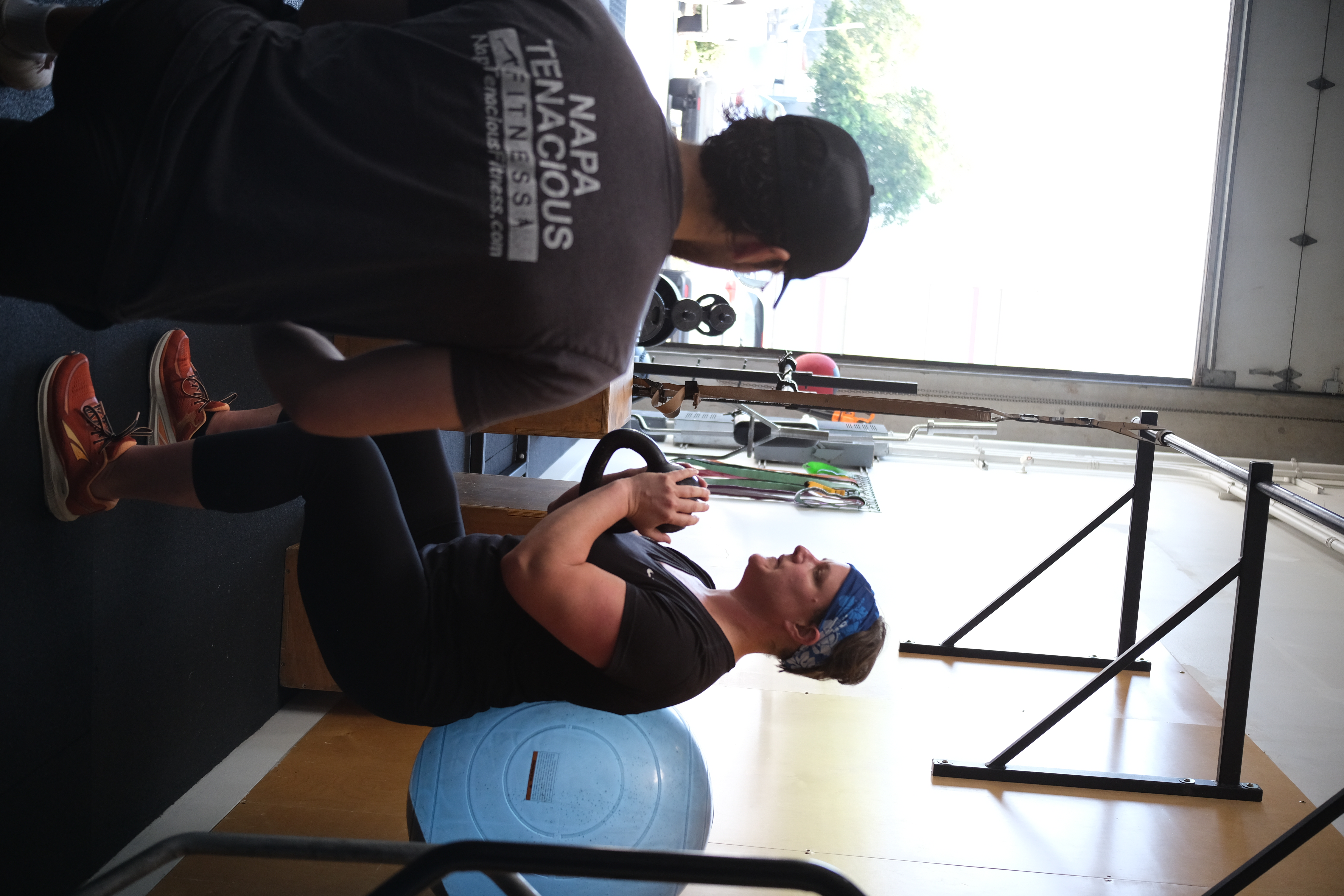
An effective index of exercises we prescribe for our personal training clients, to reduce joint pain, is to prioritize the muscles of the knee, lower back, and thoracic spine.  These portions of the body contain muscles that serve as the base of support for common areas of joint pain.  Learning how to engage the scapular and core muscles that surround the ribs and thoracic spine helps reinforce the neck, upper back, and lower back.  Consistently practicing movements that increase the range of motion of the hips and ankles helps the lower extremities take on the brunt of the load when engaging in physical activities that involve lifting and recreational athletics.  Exploring exercises that are enjoyable, safe, and supported by research to help alleviate joint-related pain has the potential to support a happy life while reducing joint pain.

Sean McCawley, the founder and owner of Napa Tenacious Fitness in Napa, CA, welcomes questions and comments. Reach him at 707-287-2727, napatenacious@gmail.com, or visit the website napatenaciousfitness.com.
Simple Exercises to Improve Life as we Age

As humans circle the sun, adding another year to their lives, some things remain the same, while others change. Thanks to the discovery of our buddy Isaac Newton in the late 1600s, we know that the presence of gravity remains constant.  Until our sun goes into a supernova a few million years from now, we’re pretty much guaranteed to have gravity pressing down on our bodies and adhering us to Earth’s surface.  In contrast, something that always changes as we circle the Earth is our age.  Unless we figure out how to hop in a DeLorean with Michael J. Fox and travel back in time in a blaze of 1980s cinematic glory, we’re more than likely not going to travel back in time, let alone reverse the effects of aging as we have more birthdays.

The gradual effects of aging include a few things we may not want to hear about that happen to our bodies, including the addition of some wrinkles on our skin, discomfort around our knee joints, and a symphony of exciting popping and cracking sounds after getting out of bed in the morning.  At certain periods in life, we may discover that we are no longer the vibrant, late-teen masterpiece of a human we were in our youth.  Things slow down with age, and we may not be as strong, fast, or mobile. However, something that is always within our reach and that we can improve is the ability to sharpen our mind, body, and spirit by utilizing the gift of exercise.  More often than not, people usually feel better following an exercise session.  Similar to the fact that gravity is always present, the ability to feel good after a workout is also always available.

A potential obstacle that can arise when starting on a fitness journey is finding a place to start.  Should an exercise newbie begin with a few classes at Orange Theory, acquire a few packages at a local Yoga or Pilates studio, or hire one of Napa’s finest personal trainers?  These are critically important factors in improving the overall quality of life as humans age.  However, starting on a new fitness journey can be a daunting task to pursue because people often don’t know where to begin.

A key theme in our personal training program for new clients is to focus on mastering movements that don’t require any resistance training equipment.  Techniques that shift the body’s position to hold the mass of the body resisting against gravity create a rigorous environment in which the body must use its muscles to resist against gravity.  These movements, which don’t require resistance training equipment like exercise bikes, treadmills, dumbbells, or fancy cable apparatuses, offer a lower learning curve, making them a welcoming entry-level and conservative approach to integrating exercise into a person’s lifestyle.  Below are two examples of upper and lower extremity body weight exercises we regularly program into our newer exercise participants’ exercise prescriptions to develop a sense of mastery and competency in their exercise performance:

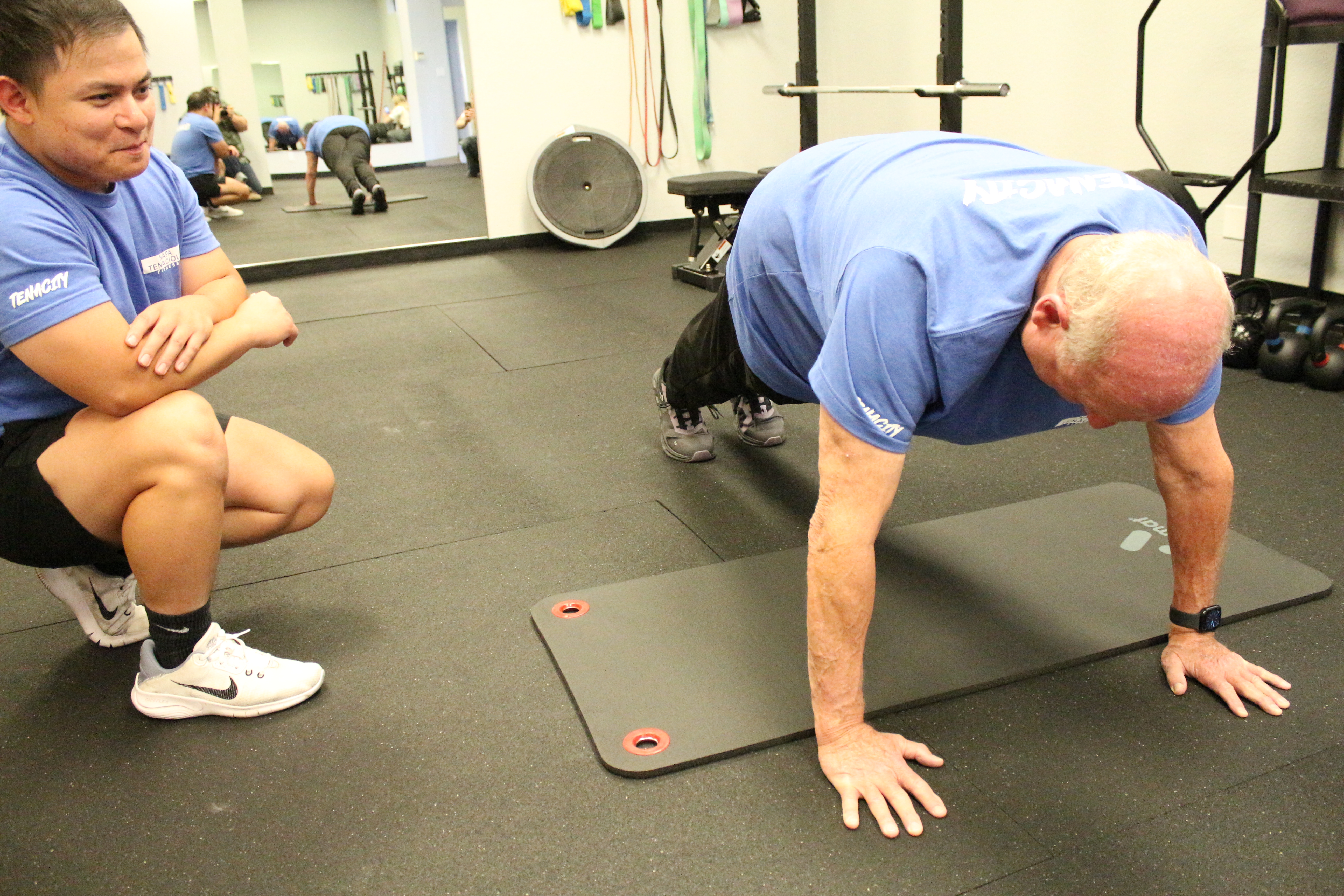
To perform the incline push-up, place your arms on an incline surface that is approximately hip height.  While keeping your arms straight and your hands just underneath your eyebrows, lean forward in a plank position.  Gradually bend at your elbows to lower your torso toward the inclined surface.  Descend to the point at which your elbows meet your ribs.  Once the torso has achieved its targeted depth, reverse the motion and push yourself up to your initial position.  You should feel muscular engagement in the front of the shoulder, chest, triceps, and abdominals.   Repeat this movement for five to ten repetitions.

To perform the lateral split squat, take a large, lunge-like step to the outside of the body to where your legs are abducted away from each other.   Ensure both toes are facing forward and the feet are flat on the ground. Bend one knee and shift your hips laterally to one side of the body while straightening the trailing leg.  You should feel a muscular sensation in the glutes, quads, and inner thigh muscles.  Pay special attention to making sure the trailing foot remains flat on the ground.  Simultaneously pull in with the extended leg until you return to your initial position.  Maintain the “lateral split stance” position throughout the exercise, repeating the same movement until the desired number of repetitions is completed.  Repeat this movement for three to five repetitions with each leg in both the leading and trailing positions.

Simple and effective tactics stimulate mastery and competency throughout our exercise efforts. As we live longer, challenges present themselves at unexpected times, and physical activity may not necessarily seem like it gets easier. However, by reinforcing our bodies with the gift of exercise, we can always make efforts to make life better for the next day with a stronger, happier, and healthier lifestyle.

Sean McCawley, the founder and owner of Napa Tenacious Fitness in Napa, CA, welcomes questions and comments. Reach him at 707-287-2727, napatenacious@gmail.com, or visit the website napatenaciousfitness.com.
Regaining Confidence after a Knee Injury

Our knees are one of the most critically important components of our bodies, allowing us to perform a vast number of human functions throughout the experiences we participate in while we exist on Earth.  Along with the ability to eat, breathe, see, and hear, humans are granted an ability that we depend on more than we often consider, the ability to walk.  Ever since we took our first steps as toddlers, humans have been granted the unique ability to travel from one place to another using our lower extremities.  If we couldn’t walk, we’d have a hard time performing simple tasks, such as using the bathroom, going to the kitchen to make a sandwich, or getting to our cars, which we depend on so much.  Along with breathing, the topic of walking seems like something that isn’t necessarily given much thought.  However, after an injury profound enough to impede the ability to walk normally hits someone, it’s easy to understand how the seemingly simple action of walking can be taken for granted.

Any injury that affects a person’s ability to operate efficiently throughout their days isn’t wished upon by anyone.  One of the most debilitating injuries that affects a significant human function, such as walking, occurs in the knee joint.  A few examples include sprained or torn cruciate ligaments, tears in the meniscus, or fractures to the thigh, shin, or kneecap following a fall.  Once such injuries occur, walking can become quite a task, requiring a person to think in advance about their usual activities.

Following an injury to the knee, people may need to walk with a cast, a walking boot, crutches, a wheelchair, or a motorized wheelchair.  These mechanisms aid people in their recovery by keeping weight off the affected joint, which requires passive healing following surgery or immobilization.  This period, during which as much pressure as possible is taken off the joint in the first month or so following the injury, is crucial for the successful recovery of the tissue damaged by the injury.  Initiating meetings with a physical therapist can’t be overstated in terms of the importance of recovering and getting back to everyday working capacity.  However, even after recovery and clearance from physical therapy have been achieved, a sense of uncertainty and thoughts about how the joint was injured can impact confidence in participating in normal physical activity.

Traversing a set of stairs, getting in and out of the car, or simply bending down to pick up an object can produce shooting pain in the knee throughout the acute stages of recovery following a knee injury or corrective surgery procedure.  The pressure on bruised bone, cartilage, and connective tissue affected by a traumatic strain or tear, or the healing of a reattached tendon or ligament, can send enough signals of pain to make some individuals tear up and vocalize obscenities to the nearby public audience.  Any torquing rotational force, such as turning and planting the left foot to exit the driver’s side of a car, may feel unstable and weak.  These examples of potential post-knee recovery circumstances illustrate common scenarios that can make a person apprehensive about their usual daily movements during knee recovery.

To assist in reestablishing a sense of confidence throughout movement after a knee injury, strength training has the power to significantly increase the structural integrity of the knee.  Fortunately, the human body is equipped with the ability to adapt to exercise-induced stress by creating lean muscle mass.  Along with understanding the mechanisms of injury that might re-injure the knee joint, educating oneself in exercises that strengthen the muscles crossing the knee joint is invaluable for regaining confidence in knee strength and ability.

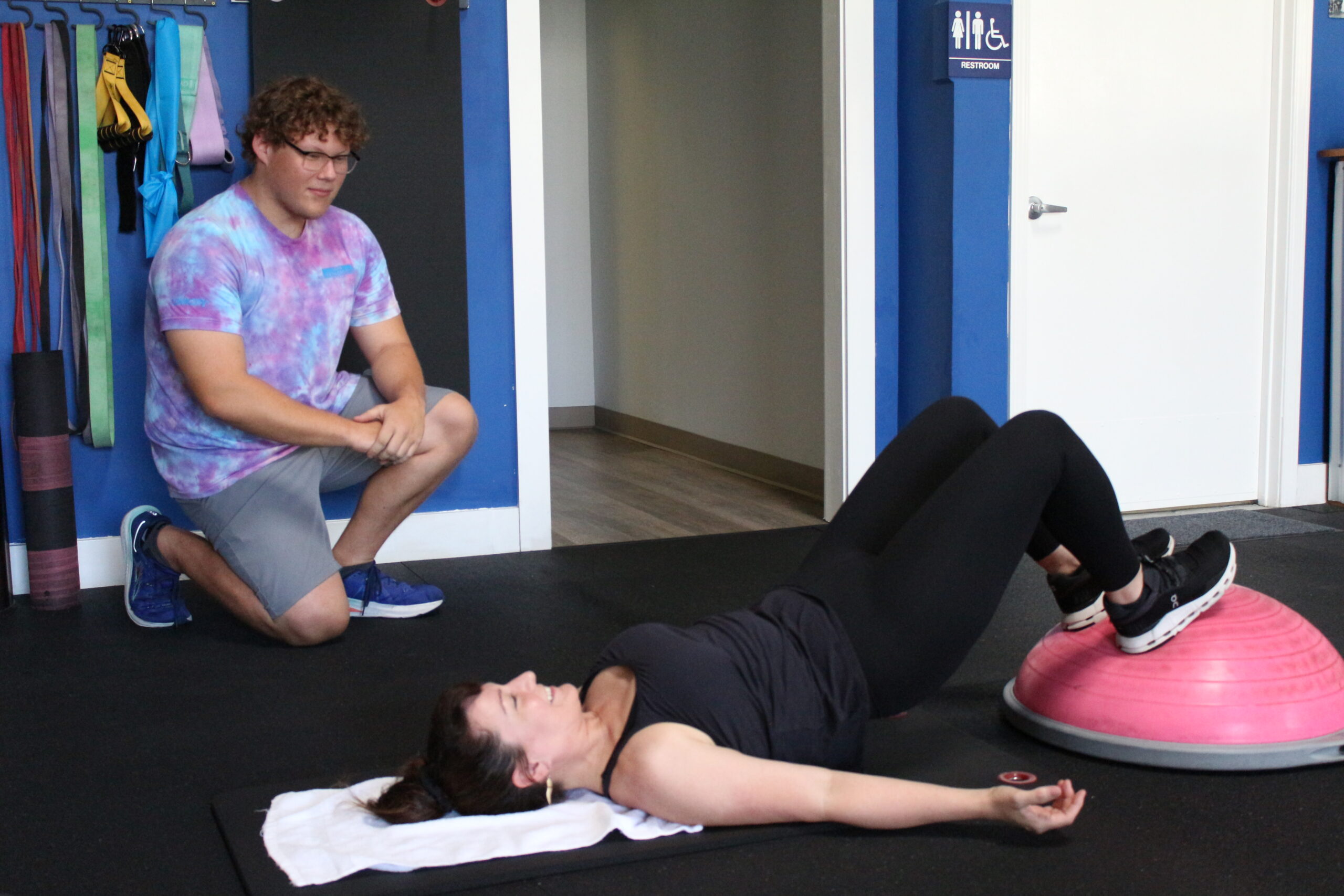
The hamstrings, quads, hip abductors, hip adductors, hip internal and external rotators, calves, and ankle muscles play a crucial role in stabilizing the knee.  When starting a strengthening routine for the knees following a successful physical therapy and passive recovery plan, simple, safe, and effective exercises may include supine hamstring and glute-specific exercises.  The supine position refers to the body position of lying flat on one’s back.  Lying down supine and exercising the lower extremities produces less compressive forces on the knee than conducting standing exercises.  Additionally, keeping the repetition amount lower is also useful during this period to decrease the number of repetitions on the injured joint.  A low-impact, safe, and effective supine exercise we conduct with our personal training clients who might be afflicted with knee pain includes the isometric supine hip extension. This exercise is commonly known as a “bridging” technique.  Here’s a brief explanation of how to perform it:

To perform the supine isometric hip extension, start by positioning yourself flat on your back on the ground with your arms extended and your knees bent.   Press your feet into the ground and lift the hips upward until a brief muscular sensation is experienced in the hamstrings and glutes.  Once your hips are extended upward, hold this position utilizing your glutes and hamstrings to stabilize the hips in an extended position for ten to thirty seconds.

Identifying movements that may exacerbate knee pain from a previous injury is crucial for mitigating knee pain.  However, it’s essential to educate oneself on the muscles and connective tissue that provide the knee with its reinforcing capabilities to prevent future injury.  After a presentation of injury has occurred, whether it be a minor scare or a life-changing event, taking time out to understand what muscles promote future injury prevention has the power to help us avoid future injuries and proceed to a healthy, happy, and strong quality of life.

Sean McCawley, the founder and owner of Napa Tenacious Fitness in Napa, CA, welcomes questions and comments. Reach him at 707-287-2727, napatenacious@gmail.com, or visit the website napatenaciousfitness.com.
Progressing toward challenging exercises safely and appropriately

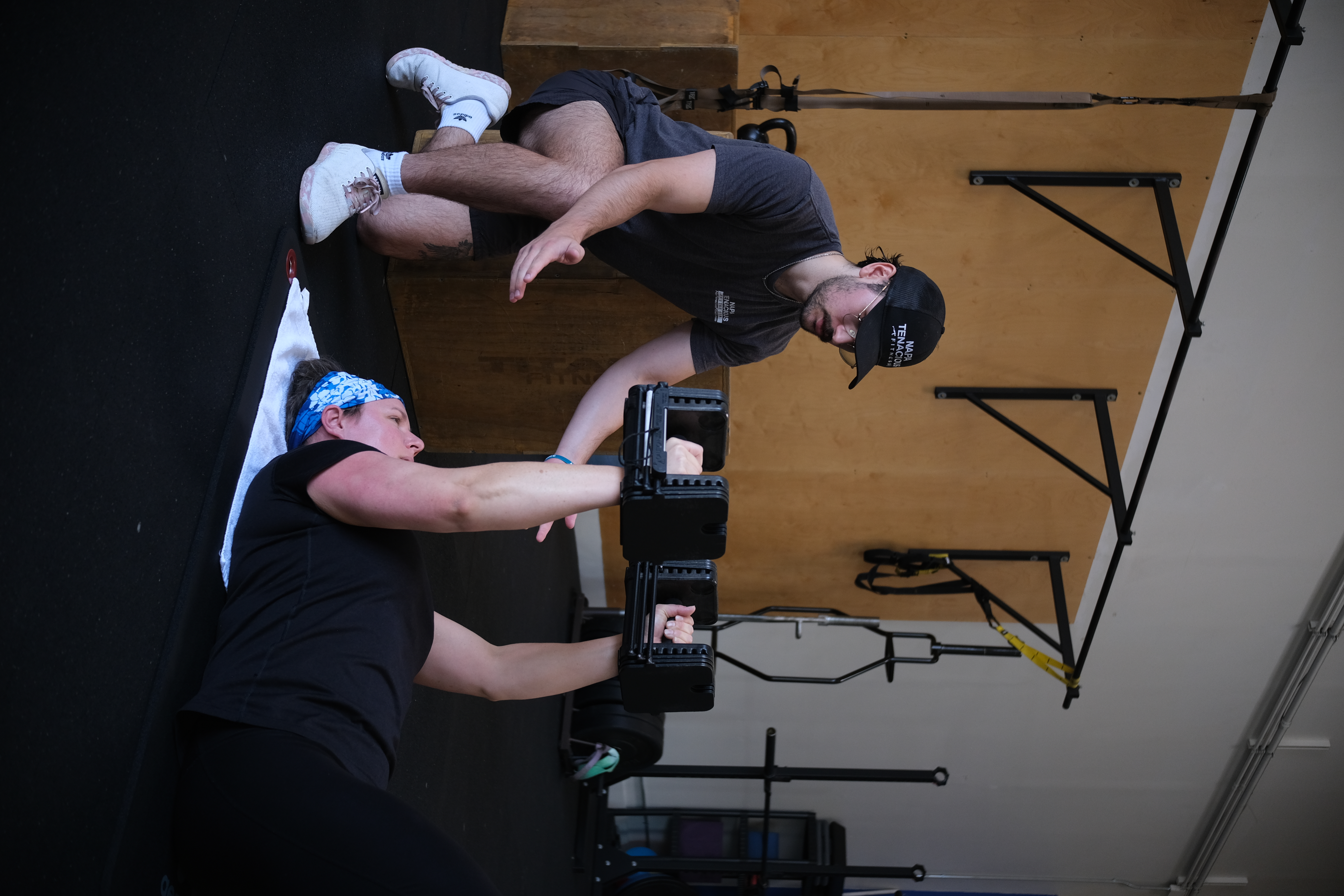
“So, when do I get to use the dumbbells?” said Blaze, as she passed by me in between her sets of completing a round of step-up exercises.  Caught off guard slightly by this question as I was attempting to avoid electrocution during some maintenance work in the gym as I was doing my best impression of an electrician changing a light switch, I replied, “I suppose we can look into the previous exercises you’ve completed these past few months and evaluate what the most appropriate next steps of exercise progression would be for you during future workouts.”  Blaze paused, making eye contact and absorbing the conversation.  I added, “It’s important that you demonstrate mastery and competency in the techniques the coaches have prescribed to you.” Blaze nodded as I continued, “For example, once those step-up exercises you’re performing on a fourteen-inch step look absolutely flawless, we’ll put some dumbbells in your hands.”

Blaze has been an exercise participant who has engaged in our services for over six months.  As a busy executive at the peak of her career, preparing to retire in her mid-fifties, she utilizes our services to schedule appointments that can’t be interrupted by her busy schedule.  She shows up on time, has a flawless attendance record, and even though she travels throughout the states and internationally for business endeavors, she always communicates with the coaching crew to ensure she attends her twice-weekly training sessions.  Equipped with a few musculoskeletal maladies that have resulted from previous sporting injuries, the development of lower back, hip, and knee arthritis, and a schedule that creates enough stress-induced pressure to make a rice cooker explode, Blaze has a flawless compliance record when following her coaches’ instructions throughout her training sessions.

So, why haven’t we put dumbbells in Blaze’s hands yet?  She’s a stud muffin of a personal training client, and she pretty much has a 4.5 GPA when it comes to listening to the coach’s instructions and cues, which reinforces that showing up is a critically important component of achieving successful outcomes throughout a fitness journey.  As much as I emphasize the importance of compliance, adherence, and consistency in an exercise program for achieving positive outcomes in a person’s life, quality of exercise performance is a key component in advancing toward more sophisticated and challenging exercises.

The idea that challenging the body through safe and effective rigorous forms of physical activity induces a positive adaptation in muscular size and strength development is a commonly understood principle that people usually don’t need to be reminded of.  However, exercise is a very risky activity to participate in.  In other words, entering any exercise arena, whether it is self-led, in a small group fitness class setting following the lead of a fitness instructor, or under the supervision of a certified and experienced personal trainer, needs to be approached with caution.   A thorough review of potential exercise-induced risk factors is necessary.  Unfortunately, it’s not uncommon for exercise participants to endure injuries from a training session.  Exercise-induced injuries are the last place anyone should experience a strain, sprain, tear, or, at worst, a traumatic injury in which someone falls or has something fall on top of them.

If there could be a takeaway message for reinforcing the importance of participating in more challenging exercises, it would be to understand that form, technique, and focus are just as, if not more important, than paying your taxes on time.  Using Blaze’s step-up exercise as an example, the optimal form of a step-up involves standing in front of an inclined surface, such as an aerobic step, curb, or stairs with a height ranging from three to twelve inches, while being mindful of the body’s starting position.  Feet should be forward, with the toes perpendicular to the inclined surface, hips underneath the rib cage with the gluteal and core muscles engaged, armpits should be over the hips, and the neck should be aligned by ensuring the ears are lined up over the armpits.  After an organized posture has been established, one foot needs to stride forward onto the step, ensuring the heel and balls of the feet are placed on top of the box and pressure is evenly distributed between those points.  Additionally, the shin should be slightly glided forward before doing any stepping-up movement.  After establishing the position of bringing the foot to the inclined surface, the pressure distributed on the heel and ball of the foot should be “pressing through the floor” as the body steps up onto the inclined surface, ensuring an organized posture is efficiently established throughout the movement.  This may seem like an earful to comprehend the dynamics of a seemingly simple movement, such as stepping up onto a surface that is only a few inches high.  However, if an exercise participant in our fitness center doesn’t demonstrate they can do these movements, there is no way any of the coaches are going to put a weight in the exercise participant’s hands.

If a simple step up is performed without following protocols of demonstrating optimal posture and foot pressure placement, potential compressive forces occurring throughout the spine, knee, ankle, along with many other risk factors, are more likely to occur.  We enter into a situation akin to walking through a warehouse full of kerosene while smoking a cigarette if we add two ten-pound dumbbells to the exercise participants’ hands while they are performing the exercise incorrectly.  If the neck, thoracic, and lumbar spine are bent forward when they should be aligned in a rigid-rod-like position without weights in the exercise participants’ hands, an additional forward force from the dumbbells will cause the spine to bend forward even more.  If the heel is not pressing through the inclined surface and only the front of the foot is producing the pressing motion, overly compressive forces are applied to the knee joint, producing suboptimal friction throughout the knee joint and hindering balance while stepping up and down.

Conducting resistance training effectively can’t be overstated.  Before grabbing a set of dumbbells, take a few weeks to practice exercise tactics to ensure the exercise can be performed safely, efficiently, and effectively.  After feeling like you’ve gotten the “gold star” sticker on your performance, maybe it’s time to grab a set of dumbbells.

Sean McCawley, the founder and owner of Napa Tenacious Fitness in Napa, CA, welcomes questions and comments. Reach him at 707-287-2727, napatenacious@gmail.com, or visit the website napatenaciousfitness.com.

Bend, But Don’t Break-Maintaining Knee Strength for Longevity

A list of benefits of maintaining a consistent fitness routine and adhering to physical activity can fill the remaining space on the front and back of this page.  A commonly understood example that might appear on the list could include shunting the effects arthritis has on joints when bone-on-bone contact occurs in its advanced stages.  Another reason people prioritize exercise to improve joint health is to avoid living with constant pain.  The appeal to interact with the physical activities that define who we are trigger us to pursue remedies to joint pain, such as having adequate endurance to play a few rounds of pickleball with friends, having the capacity to walk a golf course getting a full round of eighteen holes in, or not worrying about our strength when picking up our kids or grandkids after they take a digger at the park while chasing after a pigeon.  It should come as no surprise that exercise is a medicine for the maladies that occur as we age.  Along with other age-related surprises that occur throughout the body, knee pain tends to make its presence known from time to time.

Knee pain, whether caused by arthritis, a previous injury, or deconditioned muscles, is one of the most prevalent topics we address with our personal training clients.  Dysfunction in the knees could be caused by a lack of activity, the byproducts of a significant injury, or a genetic disposition that causes an imbalance to the structural architecture of the knee joint.  Even though a damaged knee may not possess the same flexibility and strength as it did ten, twenty, or forty years ago, tactics to improve its performance and functionality can be applied to ensure this important joint doesn’t give out completely.

The knee joint resides in the middle of the lower extremities, between the hip and ankle joints.  The joints of the hip, knee, and ankle work in unison to create coordinated movements in walking, stepping up stairs, stepping over obstacles, and a multitude of other functions that we don’t even notice occur thousands of times per day as we interact with our everyday environment.  Sometimes we don’t notice how important our knees are until the ability to bend and extend the knee or plant the foot to push off produces enough pain that thinking about performing a simple movement, such as stepping up a curb, needs to be considered and prepared for.

The muscles crossing the knee joint and attaching to the femur, tibia, and fibula are designed not only to help with moving the knee joint to flex and extend, but also act as reinforcing brackets to aid in the management of the bones shifting past their maximum range of motion through the various planes of motion we operate in.  Focusing on exercises that build muscular strength, promote collagen production, and enhance neuromuscular coordination helps ensure the knee doesn’t exceed its limits.  The optimal strength of the muscles surrounding the knee joint helps mitigate strains, decreases the likelihood of advancing bone-on-bone contact, and enables the knee to function properly when walking, stepping up, or getting up and down from the floor.  Therefore, understanding the muscles that cross the knee joint and ensuring to exercise those muscles shouldn’t be understated.

The hamstring is a muscle that is easily identifiable.  Every human with two legs has two hamstrings.  Located on the back of the leg, the hamstring originates from the area underneath the gluteal crease and spans down the back of the leg to attach to the inside, center, and back of the shin bones.   This dense and long muscle performs two primary actions: extending the hip and flexing the knee.  The primary muscle of hip extension is the gluteus maximus. However, the hamstrings also aid in the posterior lifting of the femur during the follow-through movement of walking and stepping up an inclined surface.  Knee flexion can be defined as the posterior bending of the leg where the shin and heel move closer to the femur.

The simple act of walking requires the participation of the hamstrings in forward stride and follow-through when walking forward.  As the femur moves forward, hip flexion occurs.  This means the thigh is being pulled forward by the hip flexor muscles that originate at the core and hip girdle and attach to the thigh.  An automatic engagement of knee flexion occurs during this forward striding movement.  The hamstrings are responsible for this bending movement of the knee when the thigh strides forward and elevates to produce forward movement.   After a forward stride has occurred and the foot lands, the follow-through stride occurs when the foot pushes off the ground, causing the entire leg to move backward.  This simultaneous alternating movement enables the forward movement of our bodies, allowing humans to move forward and walk.

If the hamstrings perform suboptimally due to deconditioned muscles, the lifting movement during forward walking can be hindered.  Imagine what our legs would look like if we didn’t have a knee joint and only a hip joint.  We would be stepping forward like we had a full-length cast on our legs.  This is what can happen if the hamstring muscle is deconditioned.  The follow-through movement of walking can also be hindered if the hamstring muscles are weak.  After the forward stride portion of walking is complete and the foot is planted, the hamstring propels the thigh backwards.  If the hamstrings can’t support the backward action for the follow-through movements of walking, the leg won’t move backward, and strides will become shorter, resembling a shuffle rather than a normal walk.

Another important factor is that if these muscles that produce the bending action of the knee don’t occur regularly, the body has no reason to adapt to the demand of walking.  When mechanical movement around the joint is lacking, the ends of the bones can become more brittle, and the cartilage surrounding them can deteriorate at an accelerated rate.  If the body is in motion, it will adapt to stay in motion.  However, if the body doesn’t move, it will adapt to being immobile.

The ability to bend the knee and move the legs forward and backward contributes to our ability to move ourselves around to function in our everyday lives.  If we can be mindful of what muscles are located around the knee and support the simple acts of walking, stepping, and getting up from the ground by practicing consistent safe and effective exercise routines, we can equip ourselves with a set of knees that will support us to live happier, healthier, and stronger lives.

Sean McCawley, the founder and owner of Napa Tenacious Fitness in Napa, CA, welcomes questions and comments. Reach him at 707-287-2727, napatenacious@gmail.com, or visit the website napatenaciousfitness.com.

Managing Stress Outside Your Comfort Zone

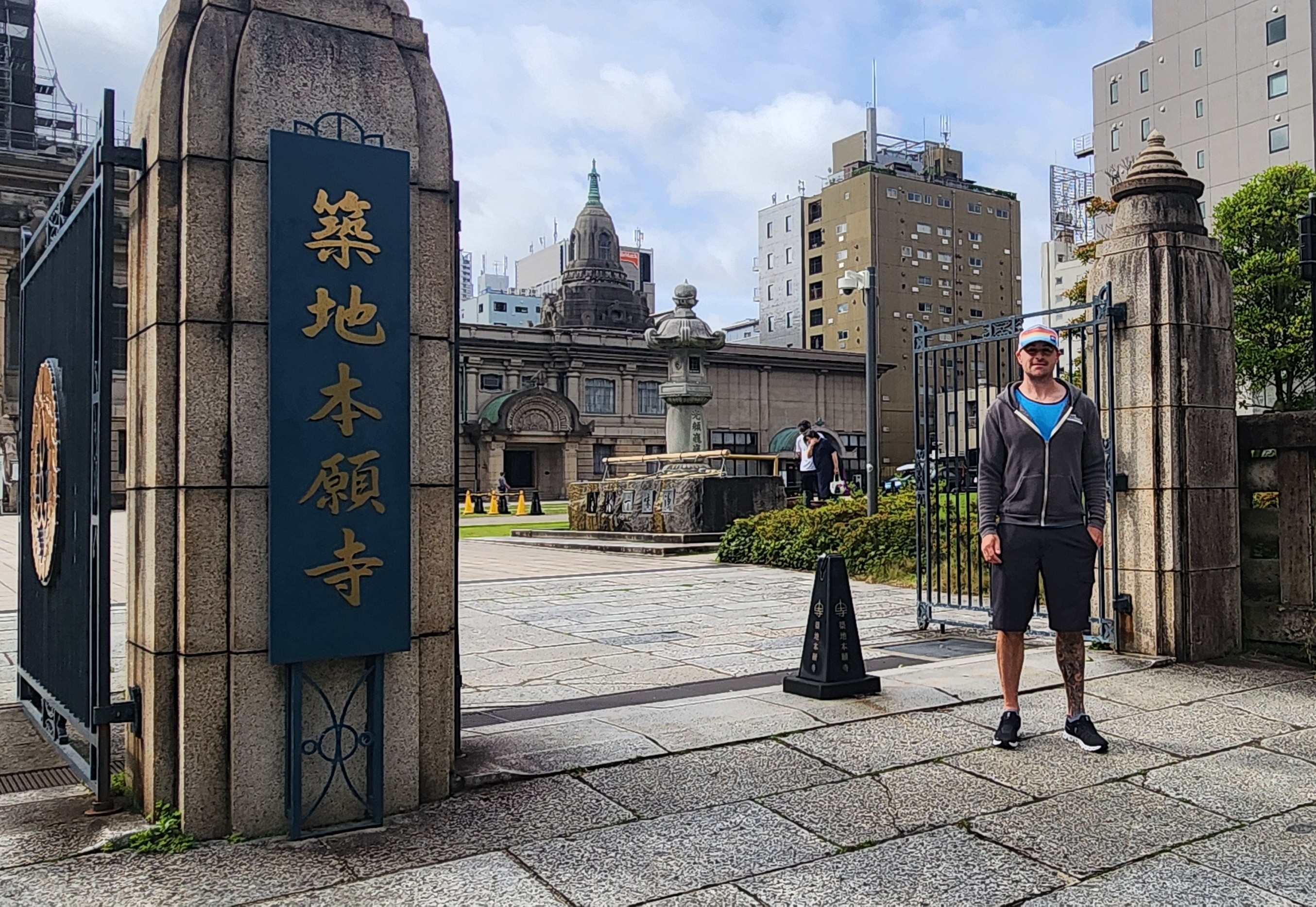
A mad dash from the Narita airport, figuring out how to turn on the network and Wifi connection on my phone, and hoping that we don’t get lost on the way out to find our private driver to our hotel triggerd my body to produce a bit of stress hormone to circulate throughout my blood stream.  Needless to say, an increased heart rate, shaky hands, and a minor indication that I was hyperventilating, due to the small micro-quivers of my body, led me to believe I was feeling a little anxious as my wife and I stepped foot into a new world.

Fortunately, things weren’t as bad as I made them out to be.  The driver hunted us down and ensured we were on our way to our hotel.  Additionally, it appeared that my phone had connected to our out-of-country phone plan, and my test text messages, sent to my friends to let them know we had arrived in Japan, were successful.  My apprehension of being lost in a place where no one spoke my language, my peripheral brain in the form of my phone not working, and us being deserted in the middle of nowhere slowly dissipated.  We could not have enjoyed our two-week vacation to Japan more. We experienced the splendors of the picturesque country, ate food that we don’t usually see in the States, and took in the accommodating, organized, and uniquely intricate and rich culture of Japan.

After arriving at our hotel around midnight Japan time and “who knows what time it was” our time, I finally tapped the key card to our hotel room and stashed my suitcase in the nearest corner I could find.  As I sat down to decompress from a full day of getting to the airport, taking a twelve-hour flight, and overcoming the anxiety experienced similar to what Tom Hanks felt when he was deserted on an island in Cast Away, I noticed I was wide awake in a time when my intuition was telling me that I should probably be tired after being awake for close to twenty four hours of enduring travelling logistics.

Could it have been jet lag?  Being present in a different time zone in which my nocturnal and diurnal sleep-wake cycles were disturbed due to the lack of sunlight at a time when my body was used to seeing the light of day, when it was nighttime?  Or, could it have been the leftover amount of adrenaline, epinephrine, and other catecholamines that caused my heart rate and blood pressure to increase from my mini panic attack earlier in the evening?  Hard to say.  It could have been one of those things, a combination of events, or I could have just been triggering my inner hypochondriac and looking too far into things.  One thing I did know was that I was off.  And I knew that to tame the psychological and emotional stress induced by travel, taking some time out to care for my body was a pivotal next step in establishing a sense of homeostasis to manage stress throughout my monumental travel experience in Japan.

Throughout my studies in exercise physiology in college, various mentorships, and therapy sessions, I found that one of the most effective tactics for relieving stressful situations was to focus on what was immediately in front of me.  I tapped into the lessons my martial arts instructors and therapists taught me, a style of meditation that I’ve held onto for years, to alleviate situations similar to the fiasco of physiological, psychological, and emotional stress I was experiencing in my first few days in Japan.  These lessons were simple and focused on something every human has in front of them and must do to function in any environment: breathe.  To recalibrate my body and reduce the noise that causes me to worry, I made sure to take time out every morning to meditate and focus on my breathing.

Otherwise known as a breathing exercise to calm someone down, my breathing exercise consisted of closing my eyes and breathing through my nose ten times.  I focused on long yet shallow breaths.  There wasn’t a time limit on my breathing.  I was the one who called the shots on my breathing.  How long did it take?  Who knows, who cares?  Aberrant thoughts of how work was going at home, what our next travel plans were, or why I felt shaky didn’t seem to matter at the moment. I was working on my breathing because I knew that if I could breathe properly, I was in control.  And if I were in control, I would be safe.  That calmed me down.  I dipped into this breathing tactic to temper the spikes of anxiety and stress I felt throughout my trip while I was away from home.

Sometimes, traveling can take the form of business, family visits, or venturing into unknown lands, like my epic journey to Japan.  Being away from home base for a few days, or in my case, weeks, can produce feelings of separation anxiety from what is familiar at home.  At home, I know my alarm clock is set for the times I prefer every morning, my phone always works, I have a car that’s right outside my door that can get me from point A to point B in a moments notice, and I can have the foods I want stored around me for me to summon at the snap of my fingers.  Being away from home can evoke feelings that these things might no longer be there.  These feelings of anxiety might not only be triggered by travel, but by undesirable news we might see or hear on social media, the newspaper, or from our friends.  Additionally, the interactions in our careers might pose a challenge that triggers stress.  However, like many things in life, this stress passes.  Reflecting on my “welcome to Japan” panic attack, I’ve learned that stressful moments when travelling pass.  One thing that we can control right away during anxiety-ridden moments is to focus on our breathing.  Once we know we can breathe, oxygen nourishes our brain, heart, and skeletal muscles, allowing us to function like normal humans.

Sean McCawley, the founder and owner of Napa Tenacious Fitness in Napa, CA, welcomes questions and comments. Reach him at 707-287-2727, napatenacious@gmail.com, or visit the website napatenaciousfitness.com.
Keeping Fit in a Foreign Land

A few months of telling clients, fellow coaches, and friends that I’d be leaving the continent for three weeks to embark on a much-desired trip to a faraway land have finally come to fruition.  Being fortunate enough to be able to travel and take a hiatus from my normal daily work life has been a plan that’s taken two years to formulate.  I finally reached a place I’ve been thinking about visiting since childhood.  My voyage to Japan began last week.  I’m right in the thick of a fairy tale come to life as I venture through the train systems of Tokyo, where the locals switch trains at breakneck pace, hike through the bamboo forests in Kyoto, and rifle through the ocean of food stalls and iconic restaurants in Osaka.

My experience in Tokyo felt like I was on a roller coaster ride the moment I stepped out of my hotel.  The early morning commute consisted of locals in their business attire power walking to one of the subway train entries.  I was told the best way to get around and experience Tokyo was to use the innovative and hyper-efficient train system.  Being uninformed about the pace at which people engaged in using the train was a shocking experience.  The sports blazer-wearing, suitcase-carrying businessman and the well put-together businesswoman in high heels all moved at the pace and mindset of ants in an assembly line, traversing the tunnels of the train station.  They all moved in an intensely organized rhythm as if they had a specific task to ensure the integrity of the nest was supported by their mission to get to their job.  The organization and efficiency of movement utilizing the train system were impressive.  My wife and I could keep up with the intense tempo of hopping on the train, waiting a few stops, and then being transported into a new set of stimulating and exciting environments of the Tokyo neighborhoods.

As surprised as I was by Tokyo’s heart-pounding, adrenaline-inducing train environment, I felt I had a slight advantage due to my adherence and compliance with my fitness routine, which I practiced at home.  Without a foundation of fitness and healthy lifestyle habits, I could see how I would have quite a challenge keeping up with the ferocious tempo of movement in the Tokyo train systems.  It was also motivating and refreshing to see the advanced age population who appear to have suffered from a form of degenerative disc disease with their back hunched over and using a cane to hold themselves up were able to keep up with the pace of the busy hive of workers needing to get to their location on time.  My fear quickly subsided after the shock of entering the train system, making me feel like I was in a mosh pit at a Swedish death metal show. I adapted my mindset to match the pace of movement required to efficiently function in this form of transportation throughout one of the most densely populated metropolises in the world.   The last thing I wanted was to have one of the most athletic grannies honed by the school of hard knocks of riding on the Tokyo subway system their entire life run me over from behind and trample me while pushing their cane into my backside while they caught the next train.  I was amazed at how people perform their best work when they are kept busy, despite their age and physical limitations.

A theme we discuss regularly with our personal training clients is adopting a form of fitness meant to reinforce our ability to manage the demands of stress and challenges we endure in our everyday lives. Whether it be waking up in the morning, making breakfast, or getting out of the front door to drive across town to work on time, having a suitable form of health and fitness is a pivotal component to supporting such lifestyles.

My three weeks in Japan became a type of lifestyle I needed to learn how to adapt to.  Living in four different hotels in three weeks and acclimating to different paces and cultures of other areas was a new type of stress and challenge I was exposed to.  Even though I have a relatively solid foundation in maintaining optimal parameters of health and fitness that counteract joint pain, fatigue, and psychological and emotional distress, the new stimulus of being in a foreign land introduced a set of challenges.

There wasn’t any time to get to the hotel fitness center, acquire a temporary gym pass, or attend a small group fitness class. We had things to see and amazing food to eat, and we had to plan for the next few days, all while matching the pace of the Japanese culture of human interaction we weren’t accustomed to.  Travelling and being away from home for business or pleasure offers new sources of stress in ways we can’t necessarily prepare for.  However, if we consistently practice staying healthy and fit before we venture out on a trip for a while, we’ll have a set of tools in the form of lifetime fitness that offer us invaluable assets to get the most out of travelling successfully.

Sean McCawley, the founder and owner of Napa Tenacious Fitness in Napa, CA, welcomes questions and comments. Reach him at 707-287-2727, napatenacious@gmail.com, or visit the website napatenaciousfitness.com.
More Like a Gift, Less Like a Chore: Sustainable Cycles of Exercise

Eating healthier, getting more sleep, being more productive, and reducing stress in all aspects of life, including family, professional, and recreational sectors, are essential components that support our most cherished goals and responsibilities.  Health-related goals, such as maintaining a reasonable body weight and regulating metabolic parameters, including optimal insulin and cholesterol levels, help support people’s ability to live longer and happier.  Practicing and adhering to themes of staying physically active and eating beneficial foods, while avoiding fattening, sugary, and inflammatory foods has been supported by scientific research to promote an enhanced quality of life by increasing energy, mitigating psychological and emotional stress, and improving behavior to support people’s ablility to thrive in their family life, work life, and have more fun in their usual daily interactions with the world.

Reinforcing health is valuable because, without it, people can lack energy and vitality, as well as happiness and the ability to fulfill their daily roles.  These things support health and contribute to a happier, healthier, and stronger quality of life, but they can become neglected.    However, family events, professional endeavors, and the activities we enjoy can be hindered if a sense of well-being and self-regulation aren’t at the top of our priorities.  Normal daily tasks such as getting to work on time, meeting deadlines, and fulfilling family obligations commonly compete with factors that improve health. In such cases, people can enter a vicious cycle of putting rituals for practicing healthy habits on the back burner.  The result may be a decrease in muscle tone, an increase in fat mass, elevated concentrations of stress hormones, and lower energy levels.

When people make decisions to enhance their well-being, they often experience immediate benefits, such as increased energy, improved mood, and enhanced productivity.  For example, following a week of attending two days of a beginning Yoga class could produce feelings of increased strength, decreased joint pain, enhanced ability to bend down and pick up objects from the ground with less restriction, and waking up with more energy.  So why is feeling stronger, having more energy, and simply being in a better mood sometimes avoided when the word “exercise” is entered as a key to this equation?

Sometimes, recommendations to exercise more can be seen as an order from a college teacher who assigns a task to write a thousand-word paper about a bland and mind-numbingly boring topic, or when our parents told us to wash behind our ears every time we took a bath.  People can get a little annoyed when persistent messages from their doctor recommend one hundred and fifty minutes of exercise per week, ten thousand steps a day, or the suggestion that if ten pounds of weight isn’t lost, then hell is going to freeze over.   Motivation to exercise can turn into feelings of withdrawal and disdain for a healthy recommendation, much like a student might feel when a seemingly pointless assignment is assigned or when a twelve-year-old pre-pubescent individual who thinks they know everything receives a nagging reminder from their parents to complete a chore.  While the messages from health care providers to exercise more are meant to be supportive and encouraging, people sometimes don’t want to be told what to do.

Viewing Exercise as medicine is good, but how about thinking of exercise as fuel that ignites the ignition for a vehicle that excels you directly toward your goals of daily success, well-being, and fulfillment?  Looking down at the scale every morning and waiting for the digital representation of a person’s weight to decrease creates an erratic situation in which weight can fluctuate up and down.  If people don’t see a significant weight decrease immediately, it’s hard for them to continue investing effort in factors that contribute to weight loss.  This can create a potential drop-off in motivation due to the pressure of losing weight and becoming healthier if immediate results aren’t perceived.  As a possible solution to create sustainable cycles of exercise, finding ways to enjoy incorporating healthy eating, finding an enjoyable environment for physical activity to reinforce exercise adherence, and engaging in fun and invigorating physical activities can make these activities more of a gift and less of a chore. This approach can foster healthy habits that can be enjoyed and repeated consistently.

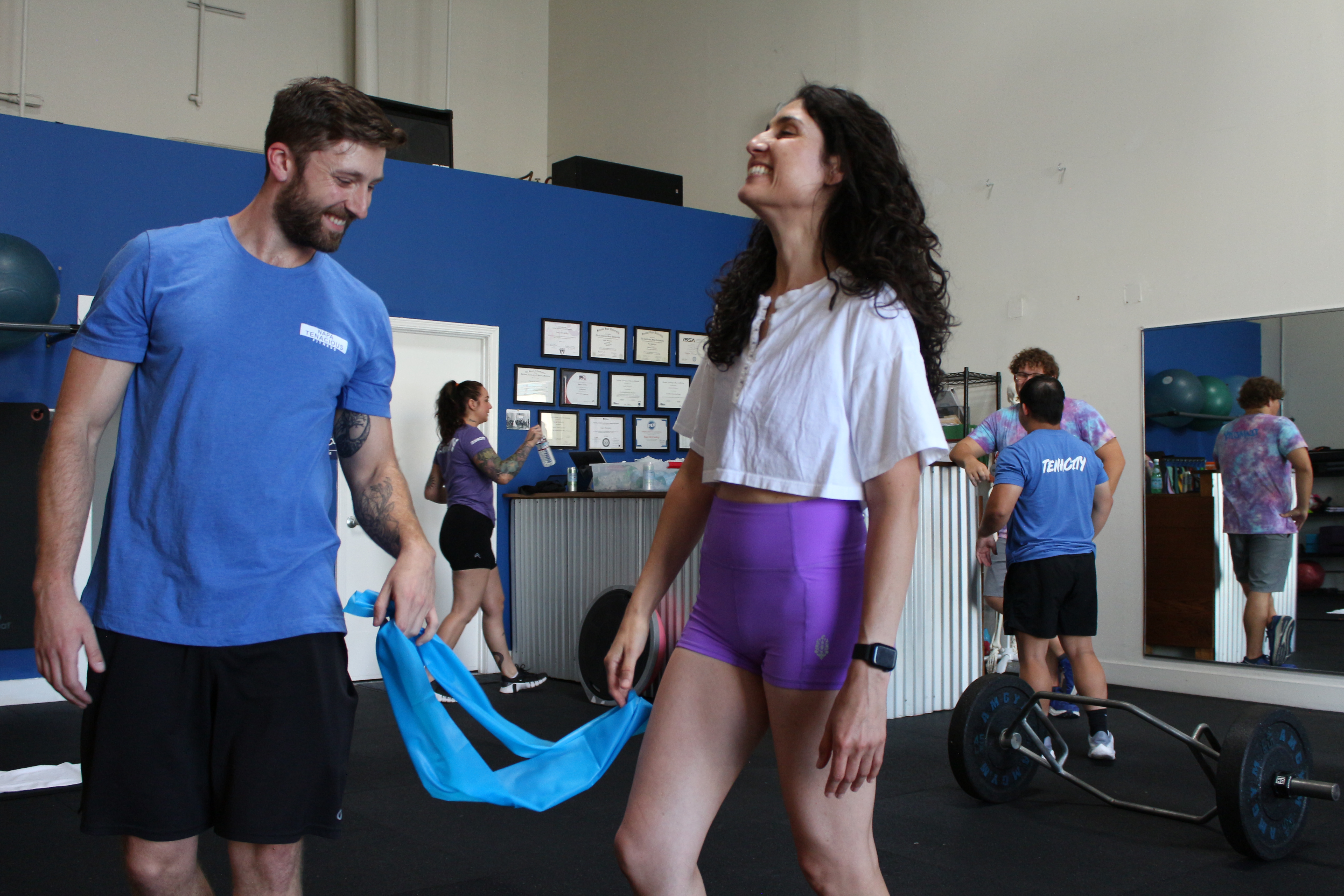
So, how can we view practicing healthy habits as a gift, rather than a chore?  As part of developing exercise prescriptions for our personal training clients, we check in every four weeks to see how they’re feeling about the current list of exercises they cover throughout their training sessions.  For example, we ask, “What specific results have you experienced so far?  What exercises did you enjoy doing?” and, “What exercises did you not enjoy doing, or would you like us to omit from your next four-week exercise prescription?”    Simple questions like these give a sense of ownership to the person who takes the time out of their day to devote to exercise.

Having a sense of ownership can produce a culture of creativity and enjoyment.  Dare I say, something fun?  Exercise and fun?  Looking forward to something that offers more energy, helps lose subcutaneous fat mass, and makes you happier?  That doesn’t sound too bad to me.  Finding a way to incorporate exercise and adopting other healthy habits to support one’s vision of feeling stronger, lighter on their feet, and happier is powerful fuel to view exercise as an irreplaceable gift, allowing us to thrive throughout our everyday lives.


Sean McCawley, the founder and owner of Napa Tenacious Fitness in Napa, CA, welcomes questions and comments. Reach him at 707-287-2727, napatenacious@gmail.com, or visit the website napatenaciousfitness.com.
Exercise Adherence: The Natural Brainwash

Stress occurs from multiple angles throughout our everyday lives.  Sometimes, forms of psychological and emotional stress can manifest as worrying about future events, irritability due to fatigue from social interactions that may have occurred at work, or a recurring thought from a past event that we can’t seem to shake.  These examples of stress-related conditions are undesirable states to be in.  Anxiety, fear of the unknown, or depression can potentially debilitate a person’s ability to achieve optimal experiences and interactions throughout everyday life.  While presentations of stress can occur in various forms and be detrimental to a person’s health and functionality, understanding tactics to mitigate the effects of stress can be managed by practicing mindfulness, taking time away from stress-generating environments, and engaging in psychological, mental, and emotional therapy.  A useful tactic that builds a buffer and assists in stress management is the gift of exercise.  Consistent adherence to a form of physical activity and exercise has potently effective properties that aid in stress mitigation by acting as a “natural brain wash.”  Putting the demands of life on hold and rinsing stressful thoughts away can create pathways to bring in positive and productive thoughts, emotions, and feelings.

Family, friends, and work colleagues are influenced by how a person might feel, their ability to focus, and how much they remember about meaningful interactions they have had with others.  For example, a friend who is happy to see someone and enjoys meeting with friends during a weekend group hike or golf outing is a desirable and pleasurable person to be around.  However, if someone shows up to a hike and can’t stop complaining about work-related events that pour a waterfall of dread and unhappiness throughout a conversation, that person may not be the most enjoyable to be around.  Mood plays a significant role in enjoying and having positive social interactions.

Recurring thoughts can run rampant through the mind, akin to the rapid sprinting of a hamster’s legs as they turn their hamster exercise wheel.  Memories spanning anywhere from years ago to a few hours ago, perhaps about a heated conversation with a friend, family member, or colleague, can recur like the repeat episodes of Happy Days on Nick at Nite.  This situation of automated re-runs of old sitcoms isn’t much different than thinking about an argument with a friend, work colleague, or loved one that occurred a few weeks ago. Becoming stuck on past experiences can hinder a person’s ability to generate new ideas and engage fully with what is happening in front of them.

Taking time out to exercise can help manage mood, recharge creative energy, and move past mundane, repetitive thoughts.  Entering one of the local gyms, attending a Yoga class, or meeting with a personal trainer once a week applies a different stimulus than everyday life activities.  While being an elite performer in our careers, as well as a dependable and supportive spouse or parent, are critically important factors, taking time out for oneself to decompress shouldn’t be understated.  When entering a Yoga class, our electronic devices, such as phones and wearable technology, which send us phone calls, text messages, and deliver electronic mail on iPhones or Apple Watches, are usually set to silent and can’t be viewed until after the class.  This temporary disengagement from our daily obligations and demands on our commitments is a good thing.  When paired with exercise, we can not only reinforce the physical architecture of our body’s connective tissue and organs, but we also have the potential to expand our bandwidth, manage stress, and become an elite performer for our family, loved ones, and careers.

Exercise not only produces positive endorphins and hormones that increase our ability to feel accomplished, happy, and energetic, but it is also tied to sharper thinking, resistance to stressful and tense environments, enhanced memory, and improved focus.  Participating in a consistent exercise routine two to three times a week can create a buffer against stress, in which an overabundance of stress hormones, such as cortisol, can be mitigated to allow for an increased sense of focus and level-headed thinking.

We remind our personal training clients that the goal outcome of a productive training session is to feel better walking out of the gym than when they walked in.  Similar to the refreshed feeling experienced after waking up from a restful night’s sleep, finishing an exercise session promotes increased energy and the motivation to be the best version of ourselves by operating at full capacity throughout the things we enjoy doing and supporting the people we love.

Sean McCawley, the founder and owner of Napa Tenacious Fitness in Napa, CA, welcomes questions and comments. Reach him at 707-287-2727, napatenacious@gmail.com, or visit the website napatenaciousfitness.com.