
“I had a rough day, and I’m not sure I want to be here today,” a client told me recently as they set down a gym bag. Something had happened at work that morning, and the drive over hadn’t shaken it loose. “Okay, I understand,” I said. We talked about it for a few minutes. Then I said what I say to just about everyone who walks in and might have had a bad day before their training session, “We’re both here right now, we have a fun and invigorating session on the schedule, and the dumbbells have no opinion about anybody’s morning. Let’s go work out.”
Fifty minutes later, that same person was laughing at a story about how we both burnt a set of cookies last weekend and asking whether we had time for another set of squats. On the way out, I heard a sentence I hear nine times out of ten. “Thank you. I feel better than when I walked in.”
That sentence describes one of the most powerful outcomes of taking some time out of your day to work out. Exercise commonly gets filed under losing weight and building lean muscle. Ask a room full of people why they want to join a gym, and those two answers cover most of the hands in the air. Stress relief rarely gets mentioned.
This time of year in Napa seems to pile it on. Harvest has everyone working long hours, the evenings get dark before dinner is finished, and the runway toward the holidays starts to feel short. Add a difficult conversation at work, a week of family logistics complicated enough to challenge an air traffic controller, and whatever showed up on the television, one of the slew of social media apps crammed into the phone, or the front page of this newspaper, and the result is probably feeling a sense of anxiety. Many of us arrive at the end of the day feeling wrung out.
Our bodies respond to these stressors by releasing stress hormones into the bloodstream. These chemical messengers have earned a rough reputation. However, stress hormones can be beneficial throughout exercise. They raise the heart rate, sharpen the senses, and prepare the muscles to move with urgency. When you perform a set of exercises holding a weight over your head, such as a dumbbell chest press, it’s good to be mentally alert and highly focused. This is where stress hormones benefit exercise.
Stress hormones can also be produced from extrinsic input we get in our everyday lives. For example, a tense work meeting or an unsettling news headline can trigger a release of stress hormones while the body stays seated in a chair. The hormones arrive, the muscles receive the message, and the movement they were prepared for never happens. A person can finish a day like that feeling physically exhausted and jittery after an afternoon of thinking, without moving at all.
An exercise session raises stress hormones on purpose. That elevated heart rate lets someone get through a challenging set of squats or a few minutes on a rowing machine. Exercise might be one of the most potent stress-reducing medicines available to us without a prescription.
One additional push-up, ten more seconds of holding a plank, or five more repetitions on a set of squats can give a sense of accomplishment. That sense of acknowledgment tends to override the black cloud of a rough, stressful day that came along with the person as they ventured through the gym door. Additionally, the management of additional stress hormones from extrinsic stress such as psychological, emotional, and mental stressors throughout the day can be less apparent when exercise is consistently applied to a person’s routine. A well-conditioned body from practicing exercise can manage external stressors more efficiently.
The human body adapts to the demands we impose upon it. A lack of exercise leaves the body deconditioned and less equipped to handle the stress everyday life delivers. In contrast, consistently practicing strength and conditioning two to three times per week pays far more dividends than an intermittent, random session. Those dividends include stronger muscles, healthier joints, and, most importantly, the ability to walk out of a training session feeling better than we walked in for years to come.
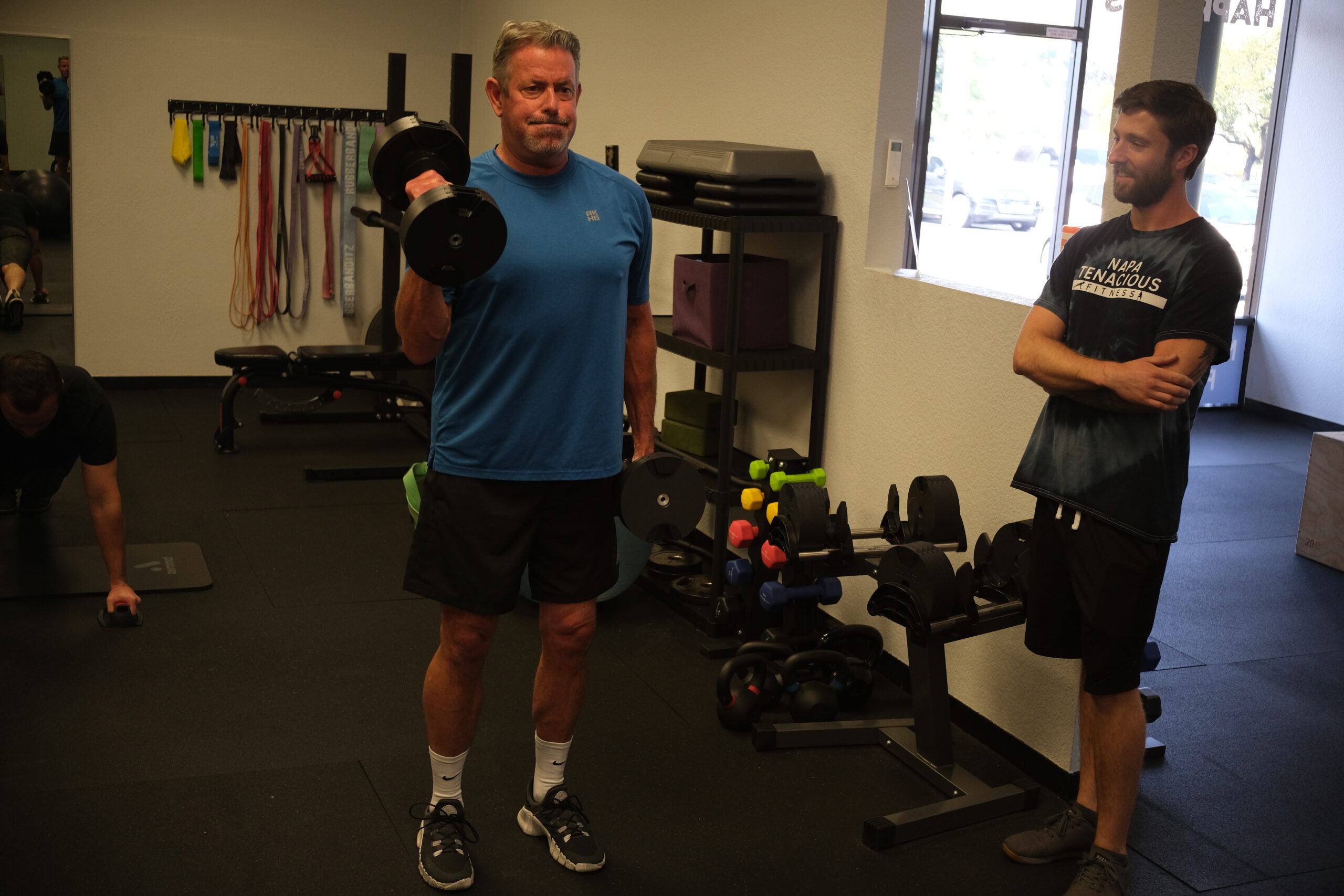
Sean McCawley, the founder and owner of Napa Tenacious Fitness in Napa, CA, welcomes questions and comments. Reach him at 707-287-2727, napatenacious@gmail.com, or visit the website napatenaciousfitness.com.