
When was the last time you got down on the floor and back up again without reaching for a chair, a coffee table, or a nearby wall? For some of us, we might not think twice about this.
A new grandchild might change that. Toddlers and boisterous seven-year-olds don’t do their business at table height. They play on the ground, and getting down there on our hands and knees to join them is one of the more meaningful things we get to do. It can also be daunting. Standing over a stretch of carpet and calculating the trip down and back up is often overlooked when we think about a person’s overall strength and fitness levels.
The floor isn’t the only place where strong knees matter. Getting into and out of bed, standing up from a chair, and climbing a flight of stairs rely on the muscles around the hip, knee, and ankle joint. Throughout recreational athletic physical activity, the bones, ligaments, tendons, and nerves of the hips, knees, and ankles carry us through a round of golf, a few games of pickleball or tennis, a hike, a bike ride, an afternoon on a paddleboard, and the training miles that lead up to a 5K, a half marathon, or a full marathon. Whether the destination is a finish line or the living room rug, knee strength is important.
The knee is a hinge joint. Its job is to bend and to straighten, actions called flexion and extension. The hamstrings along the back of the thigh draw the heel toward the back of the leg and create flexion. The quadriceps along the front of the thigh straighten the leg, creating extension. Both muscle groups attach at the hip and travel down across the knee, creating anchor points for contractions that extend and flex the joint and provide reinforcement.
Hip muscles are commonly overlooked when creating plans to optimize knee health. The hip houses the adductors that draw the leg toward the midline of the body, the abductors that carry it away, and the internal and external rotators that turn the leg in and out. When these muscles are strong, the rotational forces reaching the knee are reduced. Strong hip abductors and rotators help keep the knee joint in line and support patellar tracking. Optimal hip strength can reduce the likelihood of the knee shifting beyond a healthy range of motion or turning inward or outward when it shouldn’t.
When the muscles surrounding a joint are strong, the bones at the ends of that joint sit in a better position, and bone-on-bone contact that might produce discomfort can be less present. For those of us living with advanced osteoarthritis, strengthening the hip and thigh muscles can help reduce pain. It’s worth speaking with a physical therapist or physician about what is appropriate before starting a new strength and conditioning routine.
The supine knee extension is a simple and effective exercise we use with our personal training clients to build strength around the knee. It requires nothing more than a mat or carpeted floor, and it trains the muscles that straighten the knee while the spine and hips rest on the ground.
To perform the “seated-on-ground knee extension” exercise, sit flat on the ground with good posture, with one knee extended and the other knee flexed so the foot is flat on the ground. While keeping the toes flexed toward the body, extend one leg as if you are trying to touch the back of the knee to the ground until you feel a slight muscular sensation in the quadriceps and kneecap region. Repeat this movement for five to ten repetitions each leg.
The human body adapts to the demands we impose upon it. Consistently building hip, knee, and ankle strength each week can pay invaluable dividends for long-term lower-extremity health by influencing the reduction of age-related joint pain and increasing overall functional capacity. Strong lower extremities can lead to easier mornings, friendlier staircases, and, most importantly, the ability to get up and down from the ground for years to come.
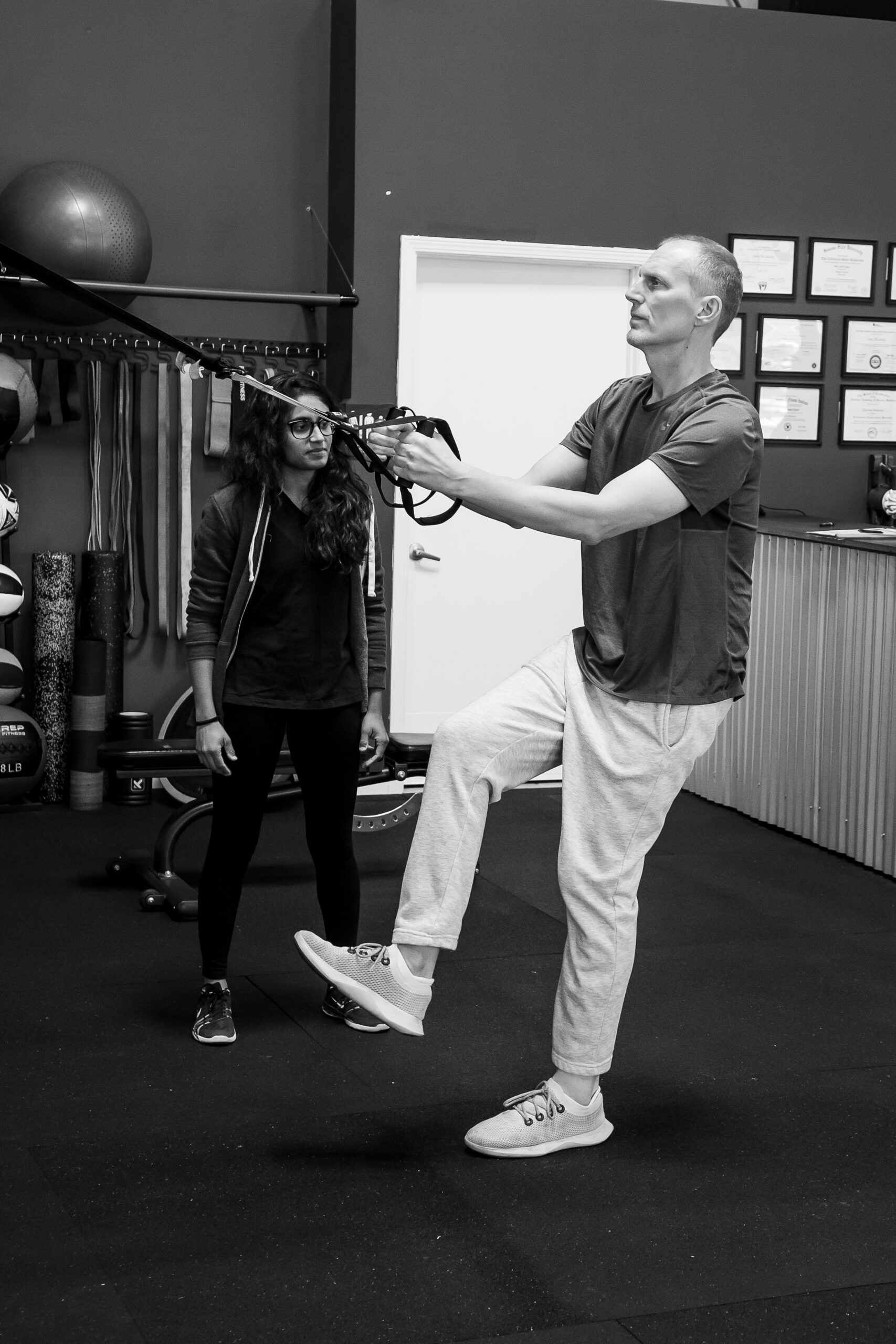
Sean McCawley, the founder and owner of Napa Tenacious Fitness in Napa, CA, welcomes questions and comments. Reach him at 707-287-2727, napatenacious@gmail.com, or visit the website napatenaciousfitness.com.