
Research has shown that strength training helps people be more productive, live in less pain, and mitigate the detrimental effects that aging may have on the body. Adhering to a consistent and effective form of resistance training can be beneficial to humans at any point in their lives. Whether it be a young child in the single digits of age practicing gymnastics or tumbling, a teenager participating in a high school early flight weight training class, a regular participant at a local gym who utilizes the weights machine at a local gym, or a retired grandparent conducting body weight exercises in a small group fitness class, resistance training applies productive physical stress to the body and can significantly increase the productivity, functionality, and enjoyment of peoples lives.
Skeletal muscle is a type of connective tissue that produces mechanical force and moves bones closer or farther apart from joints, creates rotational movements in joints, triggers isometric forces to prevent bones from moving against external resistance, and responds to stimuli from the external environment. Stemming from the capillaries in our blood vessels that deliver oxygen to our muscles, nerve cells that send electronic signaling to the matrix of skeletal muscle and connective tissues that transfers a lightning fast message from our brain to make our bodies move, to the hormones produced throughout strength training, exercising following a safe, organized, and appropriately designed exercise session promotes factors that positively influence longevity.
To become stronger than our initial status of existence, we need a type of stimulus to adapt to. Strength training adaptations can be connected to the SAID principle, which stands for Specific Adaptations to Imposed Demands. The body is hardwired to heal connective tissue after a form of physical stress has occurred. A cut on the hand after scraping a knuckle against a wall develops a scab, and after a few weeks, the scab is largely replaced by new skin. When a bone breaks due to a traumatic injury, the usual treatment is to apply a cast to the area for a few months, allowing the bone to mend and heal back to its initial solid, beam-like structure.
Our skeletal muscles aren’t much different when it comes to healing after a bout of rigorous resistance training. However, we’re not talking about tearing apart our skeletal muscle like slicing through a lean cut of steak and expecting it to heal. Muscle resynthesis occurs at the cellular level, where muscle fibers, blood vessels, nerve cell connections, and chemical reactions take place after a muscle has been stressed and its microscopic environment has been disrupted. Following a bout of resistance training, the structure of muscles slightly deteriorates. The body’s natural response is to heal. It’s the demand of resistance training and working past a point at which muscles are comfortable that induces this type of stress and recovery process. After the muscle recovers from a day or two of resistance training, it generally becomes stronger, develops the ability to absorb increased concentrations of oxygenated blood flow, and exhibits a more pronounced coordination of neuromuscular connections from the brain to muscle signals. Therefore, after the stress of resistance training occurs, muscles become stronger, more durable, and more coordinated.
Just like flour is a key ingredient in bread, pasta, and pizza, “resistance” is a critically important component to triggering the production of strength, coordination, and durability in muscle cells. A commonly grasped concept of resistance training is seen when exercise participants visit a gym, grab a pair of dumbbells, and perform a set of bicep curls. While dumbbells are a useful form of resistance, they’re not the only tool available to induce productive muscular stress. Fortunately, a few centuries ago, our buddy Isaac Newton discovered a form of resistance that is free of charge, and, if you live on Earth, is available everywhere: Gravity.
Resistance has many definitions, but in the context of utilizing physical resistance for exercise, resistance can commonly be understood as impeding, slowing, or stopping the effect of something moving toward an object or place. This concept can be applied to someone performing a squatting movement. When cueing squatting exercises throughout our personal training sessions, we instruct exercise participants to bend their knees, apply slight dorsiflexion in the ankles, and lower their hips slowly and in a controlled manner. This slow and controlled downward movement requires muscular activation from the core, hips, knees, and ankles to support a structurally reinforced position, as gravity pushes downward when the body enters slightly compromised movements past its comfort zone during squatting exercises. This resistance to gravity applies stress that triggers an adaptation response in the muscles responsible for squatting.
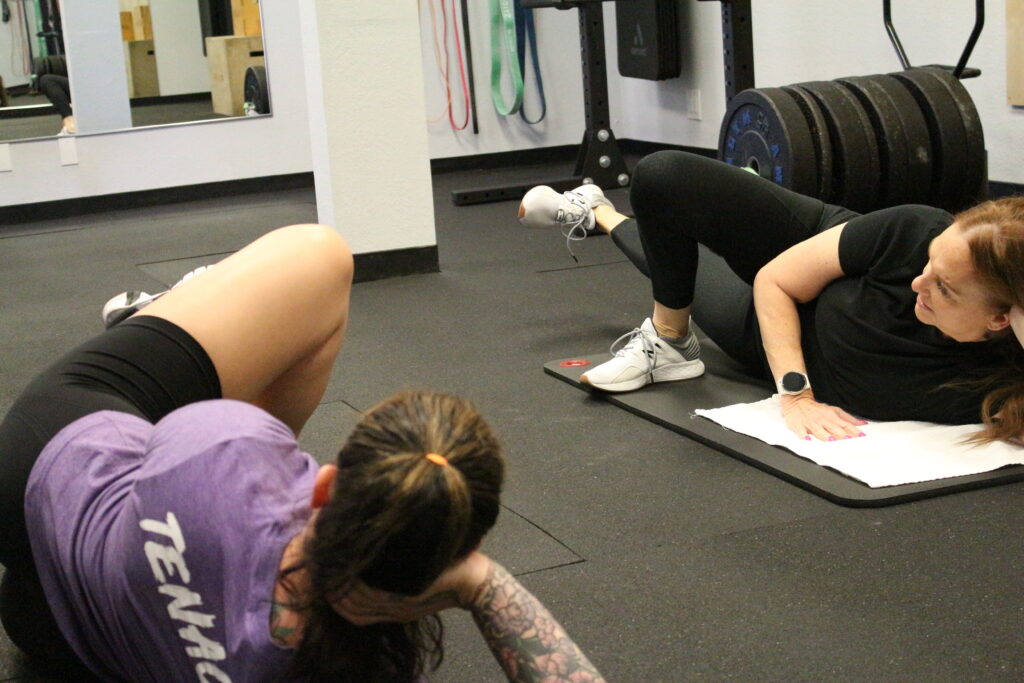
While squatting movements utilizing only gravity as a resistance source are a simple and effective exercise that requires a lower learning curve to perform competently, gravity can be applied in a variety of ways to implement strength adaptations. The simple straight-arm plank, push-up, or bird-dog movements require only a few ingredients to influence strength adaptations: a human, the ground, and gravity. Resistance training can be an intimidating term when it comes to exercising. Remember that resistance training is incorporated into some of the most foundational forms of exercise, such as the common push-up, squat, or plank. We can utilize these simple, effective, and low-learning-curve exercises to conduct an efficient and effective exercise routine, helping us live happier, healthier, and stronger lives.
Sean McCawley, the founder and owner of Napa Tenacious Fitness in Napa, CA, welcomes questions and comments. Reach him at 707-287-2727, napatenacious@gmail.com, or visit the website napatenaciousfitness.com.