
It should come as no surprise that consistently practicing a fitness routine benefits long-term health and everyday functionality. Most of us already understand, without reading research articles or sitting through a college course, that getting stronger, eating the right foods, and taking care of our bodies help us live happy, healthy, and strong lives. Regular physical activity plays an important role in reducing the risk of chronic disease and premature death.
The image commonly associated with regular physical activity is someone sweating in a gym, waving around a fifty-pound kettlebell, or holding a barbell over their head. Regular gym-goers who maintain this elite level of physical capacity deserve recognition. Sticking to a routine of going to the gym four to five times per week while also eating a clean diet is a challenging feat. For many of us who are balancing work, family, and a calendar that already looks like a game of Tetris, that level of commitment might feel out of reach.
However, images of hyperathletic people commonly seen in internet articles, on social media, and in TV commercials can give people the idea that, to be fit, a person must look like a fitness model or a professional athlete. When it comes to reducing the risk of chronic disease and premature death through fitness, much simpler forms of exercise can be just as valuable.
Simple fitness adaptations are more attainable for most people and strongly connected to a long, healthy life. For example, being able to stand on one leg for ten to twenty seconds, hold a thirty-second plank without pain, or walk up a hill of about fifty yards without feeling out of breath are all practical benchmarks of fitness. Each benchmark reflects the balance, strength, and cardiovascular conditioning we rely on for everyday functional movements such as stepping off a curb, carrying groceries, or climbing a flight of stairs.
These simple adaptations improve overall function and can reduce several risk factors. Standing on one leg reflects the strength and coordination of the muscles around the hip, knee, and ankle, and practicing it can help reduce the risk of falling, since every step we take briefly places our body weight on a single leg. Strength and weight-bearing exercise can help slow the progression of osteoporosis and arthritis by supporting bone density and building the muscles that support our joints. Regular exercise can also help alleviate psychological, emotional, and mental stress.
A good question might be, “What are some simple, effective exercise habits a person can follow to enhance health?” These habits are subjective. They depend on a person’s interests, physical capacity, hobbies, and what they really want to get out of their fitness journey.
For example, some people really enjoy running. Running anywhere from ten minutes to a few miles, two to three times per week, can build a routine that supports their fitness goals. Others might prefer small-group fitness classes or meeting with a personal trainer one to two times per week. In a class or personal training session, a coach can guide exercise selection, keep movements safe and effective, and help hold each person accountable. Either way, these habits contribute to the overall process of building a routine.
If you haven’t exercised in a while or are managing a health condition, talk with your physician before starting a new routine. From there, starting with one of the simple benchmarks above can give a clear place to begin. For example, you can start by standing on one leg next to a kitchen counter for a few seconds at a time and progress to ten to twenty seconds over several weeks. Who knows, you might surprise yourself and be able to stand on one leg longer than you expected.
The human body adapts to the demands we impose upon it. A lack of exercise puts the body in a deconditioned state. In contrast, consistently practicing a routine that fits our own interests and lifestyle pays far more dividends than an intermittent, random session ever could. Routines built around what we enjoy can improve everyday functionality, reduce the risk of chronic disease and premature death, and, most importantly, help us live happy, healthy, and strong lives for years to come.
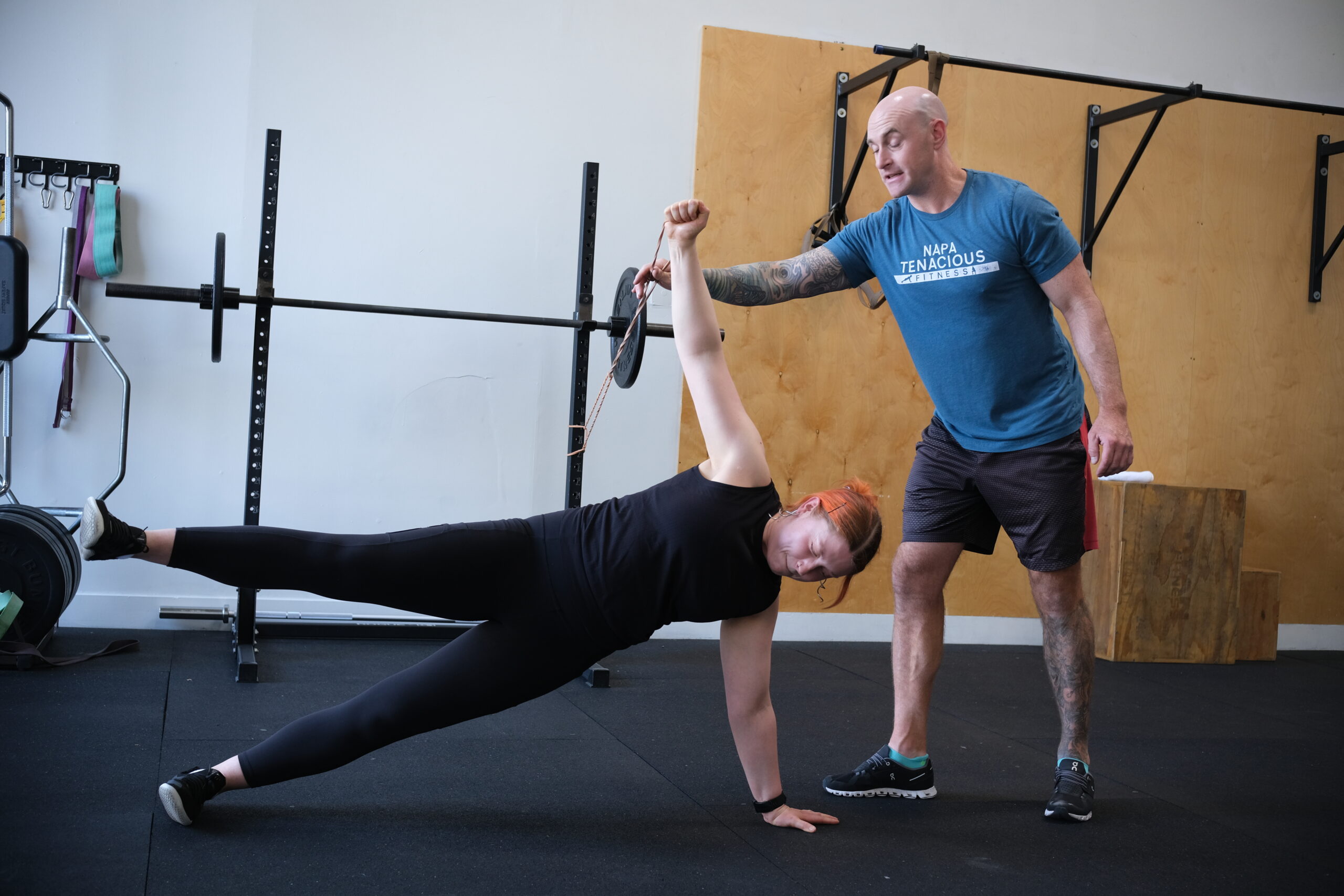
Sean McCawley, the founder and owner of Napa Tenacious Fitness in Napa, CA, welcomes questions and comments. Reach him at 707-287-2727, napatenacious@gmail.com, or visit the website napatenaciousfitness.com.