
There are two primary forms of stretching we use with our personal training clients: dynamic and static.
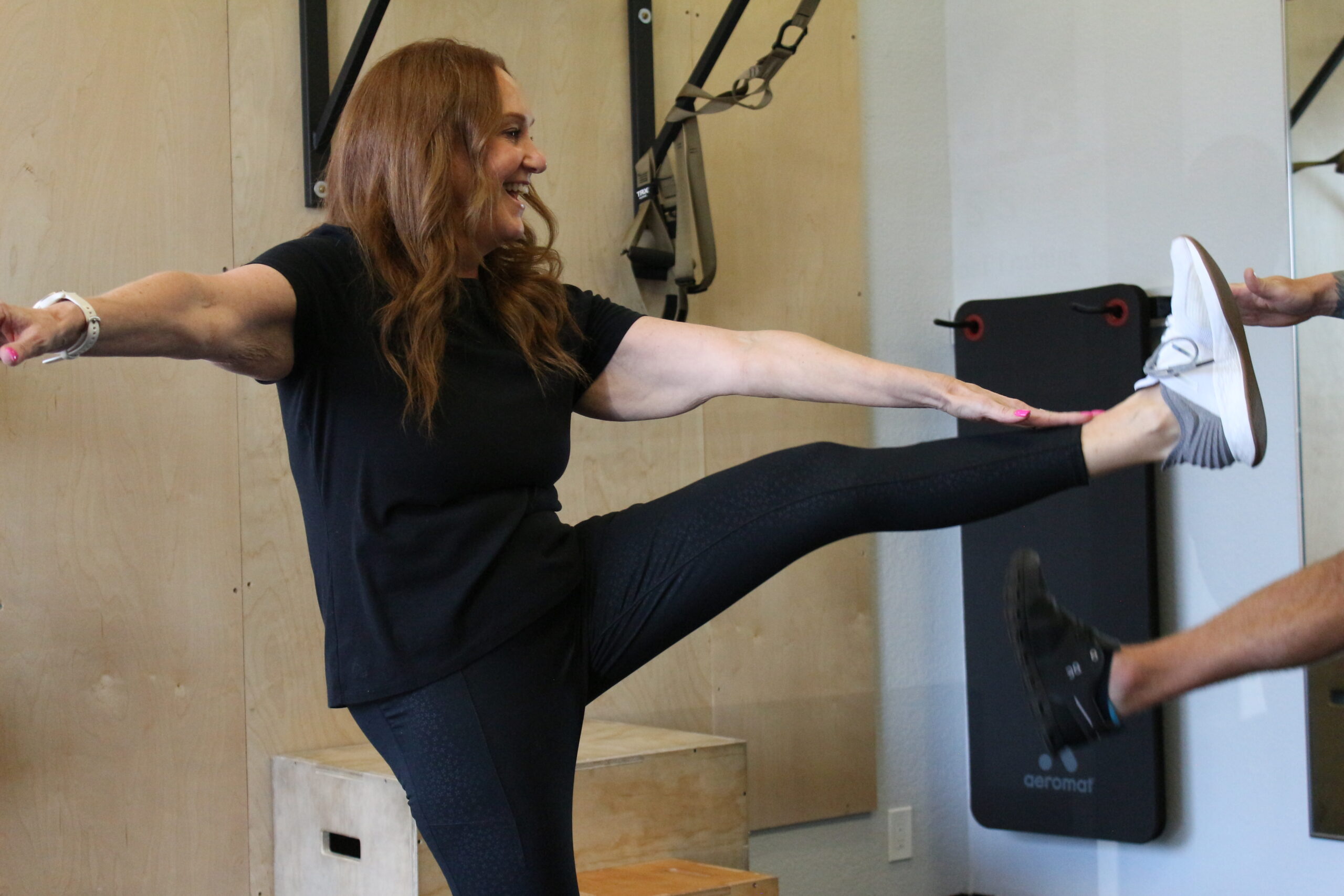
Dynamic stretching is performed before exercise. Dynamic stretching can be defined as the act of moving through full ranges of motion to create short, repeated stretches that prepare the body for exercise. A few examples include arm circles, hip circles, and leg swings. These movements help warm up the body by mobilizing joints and activating muscles through a full range of motion in a controlled, purposeful way. This prepares the body for movement and reduces the risk of injury during training.
In contrast, static stretching involves holding a muscle in a fixed position for a set period (typically 15–60 seconds). This approach is most effective after a workout, when the goal is to help the body cool down and relax. Static stretching can improve flexibility and may help reduce post-exercise muscle tightness. A common example is the half-kneeling hip flexor stretch, which targets the front of the hips and thighs.
–Written by Coach Paul Atienza