“That’s just bad math,” my physics professor told me, clearly unimpressed, as I struggled through a long equation involving solving for potential energy involving force production in overhead throwing athletes in the lab. “Use PEMDAS.”
She had a way of delivering that line with just enough irritation to make sure it stuck. At the time, I remember thinking she had very little patience for bad math. Looking back, she was right. I should’ve trusted that she knew what she was doing. Her career before teaching involved launching rockets into space at NASA.
I immediately thought back to grade school. Parentheses, exponents, multiplication, and division. Once I slowed down and followed the correct order of operations, the problem became simple. I fixed my work, submitted the lab, and got full credit.
That lesson stuck. When you do things out of order, you get poor results.
The same idea applies to exercise.
During my time at Napa College, physics taught me how to think through complex problems step by step. Today, as fitness professionals, we do something similar for our personal training clients. We guide them through their workouts in the right order so their bodies can perform efficiently, safely, and effectively.
Exercise is not random. It is a sequence.
When you jump straight into intense movements without preparing the body, the result is often stiffness, poor coordination, or even injury. When you follow a structured approach, your body responds better, moves more efficiently, and produces stronger results.
Think of it as your workout version of PEMDAS. Or, as my professor might say, a way to avoid bad math.
Our Order of Operations in our Clients Exercise Prescriptions
- Start with dynamic stretching
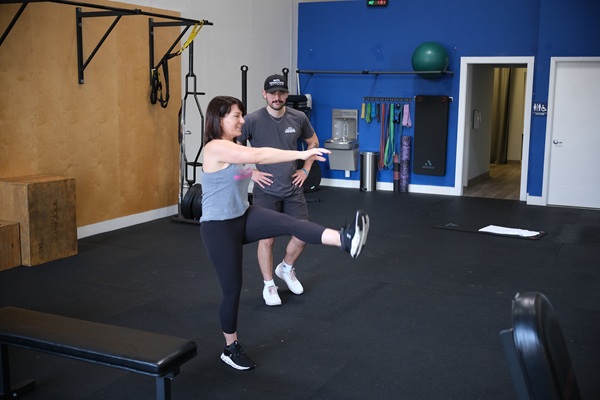
Before anything else, prepare the body. Dynamic movements like arm circles, hip circles, and leg swings help increase blood flow, improve joint mobility, and activate the muscles you are about to use. This is your body’s way of waking up before the real work begins. - Perform compound movements first
Exercises like squats, lunges, push-ups, and presses require the most energy, coordination, and focus. These movements involve multiple joints and muscle groups working together, so they should be performed when your body is fresh and ready. - Finish with assistance movements
Once the major work is complete, shift to simpler, single-joint exercises like biceps curls or triceps press-downs. These require less coordination and allow you to target specific muscles without the same level of intensity.
Exercise is a form of productive stress that helps the body become stronger and more resilient. Like any equation, the outcome depends on how you approach it.
Follow the right order of operations, and your workouts will feel better and produce better results.
And if you ever forget, just remember what Professor “Bad Math” would say.
Avoid exercise-related “bad math” and organize your exercise routines in a harmonious order of operations.