
“Make sure you look forward,” I cued Tina, one of our personal training clients, as she was performing a set of “zombie squats” during one of her training sessions. Her eyes darted toward me momentarily to receive the instruction and then returned to looking straight ahead. She immediately rotated her head upward, with her chin and face projecting toward the gym’s ceiling. The back of her neck looked like a capital “C,” her cervical spine contorted unnaturally. “No, look forward, not upward,” I added. After a grimace of irritation toward my secondary exercise correction cue, she looked straight ahead, as if her line of vision was perpendicular to the surface of the wall in front of her. What followed was a harmonious composition of hip, knee, and ankle movements that allowed her body to descend and ascend throughout the squat while maintaining optimal posture.
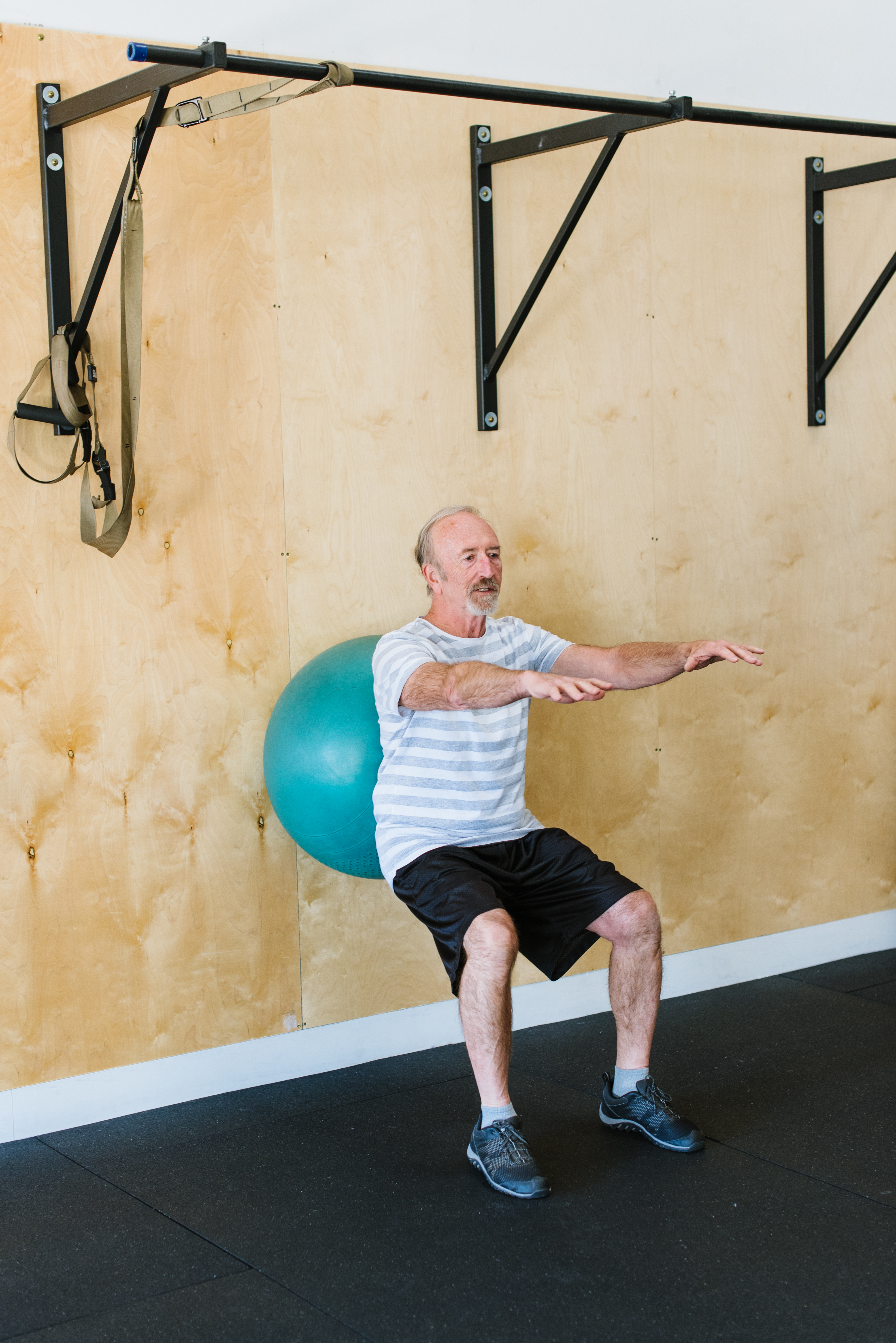
We utilize a zombie squat in our clients’ exercise prescriptions to teach them the nuances involved in performing a squat proficiently. A commonly understood definition of squatting is the act of lowering your hips downward and backward to sit on a chair. Sitting down and back is a cue we use when teaching our personal training clients how to squat correctly. We add an extra component in the zombie squat, which involves extending the arms in front of the body while performing a squatting movement. This action of bringing the arms in front of the body resembles the dancers in Michael Jackson’s music video “Thriller,” who are portrayed as undead humans, or zombies, who have come out of their graves, extend their arms in front of them, and perform a masterfully coordinated dance with Michael Jackson.
Postural awareness and coordination are needed to conduct a squat proficiently. Cueing exercise participants to extend their arms out in front of them to emulate the actions of a cast member from Night of the Living Dead isn’t prompted just to get a chuckle out of our coaching staff. The act of extending the arms in front of the body during squatting exercises serves as a reminder to keep the torso from collapsing forward.
Along with the lower-extremity muscles responsible for coordinated movements of the hip, knee, and ankle, the paraspinal muscles along the lumbar and thoracic spine, the muscles of scapular stabilization, and the neck stabilizers need to be engaged. If these additional stabilizer muscles aren’t engaged, the head can tilt forward, the shoulder can slump forward, the lower back can round, and most of the weight of the body can transfer forward, causing the heels to come off the ground while squatting. This lack of engagement of the stabilizing muscles of the torso during a squat can lead to a slew of suboptimal muscle and joint dysfunction, including neck, back, and knee injuries. Therefore, it’s imperative to understand the preparatory actions that need to be engaged before performing squat-specific exercises.
Having participants extend their arms anteriorly during squats reminds them to keep their torso upright. We use the cue “park the shoulder blades down and back” to ensure the muscles that attach from the base of the skull and the thoracic spine to the shoulder blades are activated. When the muscles of cervical, thoracic, and scapular stabilization are engaged, the vertebral column is less likely to bend throughout squatting movements. Furthermore, we use the phrase “act like you’re balancing two plates of scalding hot tea on the back of your hands” throughout the squatting movement. This cue helps clients ensure their center of gravity doesn’t shift forward while in the “zombie-style” extended-arm position. Optimal torso posture, along with a balanced center of gravity, allows the strong muscular motors of the hips to perform most of the work. This shifts strain off the back and knee, directing more force to the hips. To perform the zombie squat:
In a standing position, extend your arms in front of you to just below armpit height. Keeping pressure on the heels and the feet flat on the ground, rotate your hips outward until you feel a slight muscular sensation in the outer hip and glute muscles. In a slow, controlled motion, gradually lower your hips and back as you bend your knees. Lower your hips until the crests of your hips are slightly above the level of your knees. Reverse the motion by pushing your heels into the ground and using your glutes to push your hips under your body until you reach a standing position. Repeat this movement for five to ten repetitions.
Daily activities usually involve sitting, looking down at our phones, or hunching over tables and desks to type, write, or eat. Consistently practicing exercises that reinforce optimal posture can reduce the likelihood of muscle and joint dysfunction, while also enhancing our productivity and everyday quality of life.
Sean McCawley, the founder and owner of Napa Tenacious Fitness in Napa, CA, welcomes questions and comments. Reach him at 707-287-2727, napatenacious@gmail.com, or visit the website napatenaciousfitness.com.