
Arthritis is a degenerative joint condition in which the smooth cartilage that normally cushions the ends of the joints gradually wears down. Healthy cartilage allows joints to glide smoothly and distribute forces during everyday movements. Previous joint injuries, the repercussions of a life of manual labor in one’s career and lifestyle, or advancing age contribute to cartilage degradation over time within significant joints in the body. Sharp, twinging pain is especially common in the knee joint where areas of arthritis are present. As the joint’s smooth gliding and cushioning properties wear down, hindrances to movement due to pain during walking, climbing stairs, kneeling, and getting up from the ground can occur. When this cartilage becomes thinner or roughened, the bones experience increased friction and pressure at the joints during daily activities involving lower-extremity movements.
The knee joint is comprised of the connection at the inferior portion of the femur and the superior portion of the tibia. The femur is the thigh bone. The tibia is the larger of the two bones of the shin. The tibia’s neighbor is the fibula, on the outer side of the shin. At the end of the femur, where it connects to the tibia, there are two bony knobs called condyles. The medial condyle is on the inner portion of the femur, closer to the midline of the body, and the lateral condyle is located on the outer portion of the femur on the same side of the body as the pinky toe. These femoral condyles sit on top of the proximal portion of the tibia called the tibial plateau.
The femoral condyles and the tibial plateau have a cartilage coating that provides a smooth track and gliding surface, allowing the bones to roll and slide along them, like a rocking chair or the wheels of a train on tracks. If the cartilage covering the ends of these joints wears down, the bony surfaces of the knee joints can contact each other to produce bone-on-bone friction. Imagine there was decomposed granite or sand on the surface of where a rocking chair usually rocks on a hardwood floor. The crunchy, grinding motion of gritty material beneath the rocking portion of the chair creates a rough, uneven surface, making the rocking feel bumpy and potentially causing it to slide out of alignment with its direction of travel. The development of knee joint arthritis can produce similar issues, including degeneration of the cartilage coating the femoral condyle and tibial plateau.
Surrounding the knee joint is a series of connective tissues composed of ligaments, tendons, and muscles. Ligaments attach bones to each other. Tendons connect muscles to bones. Muscles contract to move bones. While preserving ligaments by avoiding injury is important, ligamentous tissue doesn’t recover at the same rate as tendons and ligaments. The lack of blood supply and the small size of ligaments don’t have the regenerative and growth properties when compared to tendons and muscles. However, muscles will develop, grow, and become stronger with regular exercise, which can help mitigate pain and support joints affected by arthritis. A few examples of muscles that reinforce the knee joint include the hamstrings, adductors, and hip flexors.
The hamstring muscle originates at the hip and attaches to the medial and lateral portions of the shin. Hamstrings bring the femur toward the back of the body and act as a flexor to the knee. It’s important to note that hamstrings have stabilizing components to the knee that assist in ensuring the knee joint doesn’t track too far forward past its range of motion, which provides injury prevention properties to the knee’s cruciate ligaments and menisci.
The adductors originate in the groin region of the inner thigh and have multiple attachments that span down the bottom portion of the femur and the tibia. Adductors are responsible for bringing the leg toward the midline of the body and act as structural stabilizers of the inner portion of the knee joint.
Hip flexors and quadriceps originate at the anterior crest of the hip and attach to the top of the shin bone, directly under the anterior presentation of the knee joint. The quadriceps have the kneecap ensheathed within it, which helps with patellar tracking, preventing it from shifting medially or laterally out of alignment and causing friction at the front of the knee.
Dealing with arthritis is challenging. However, strengthening the muscles and tendons that support the knee joint’s structural integrity is within a person’s direct control. We just have to be consistent in exercise practice. Education on the strength and conditioning techniques for the connective tissue attachment points that support the knee joint can help mitigate knee pain and dysfunction. Skeletal muscle cells grow, and muscle architecture improves when a consistent, effective strength and conditioning routine is followed. Therefore, it can’t be overstated enough that one of the most effective medicines for managing arthritis is exercise.
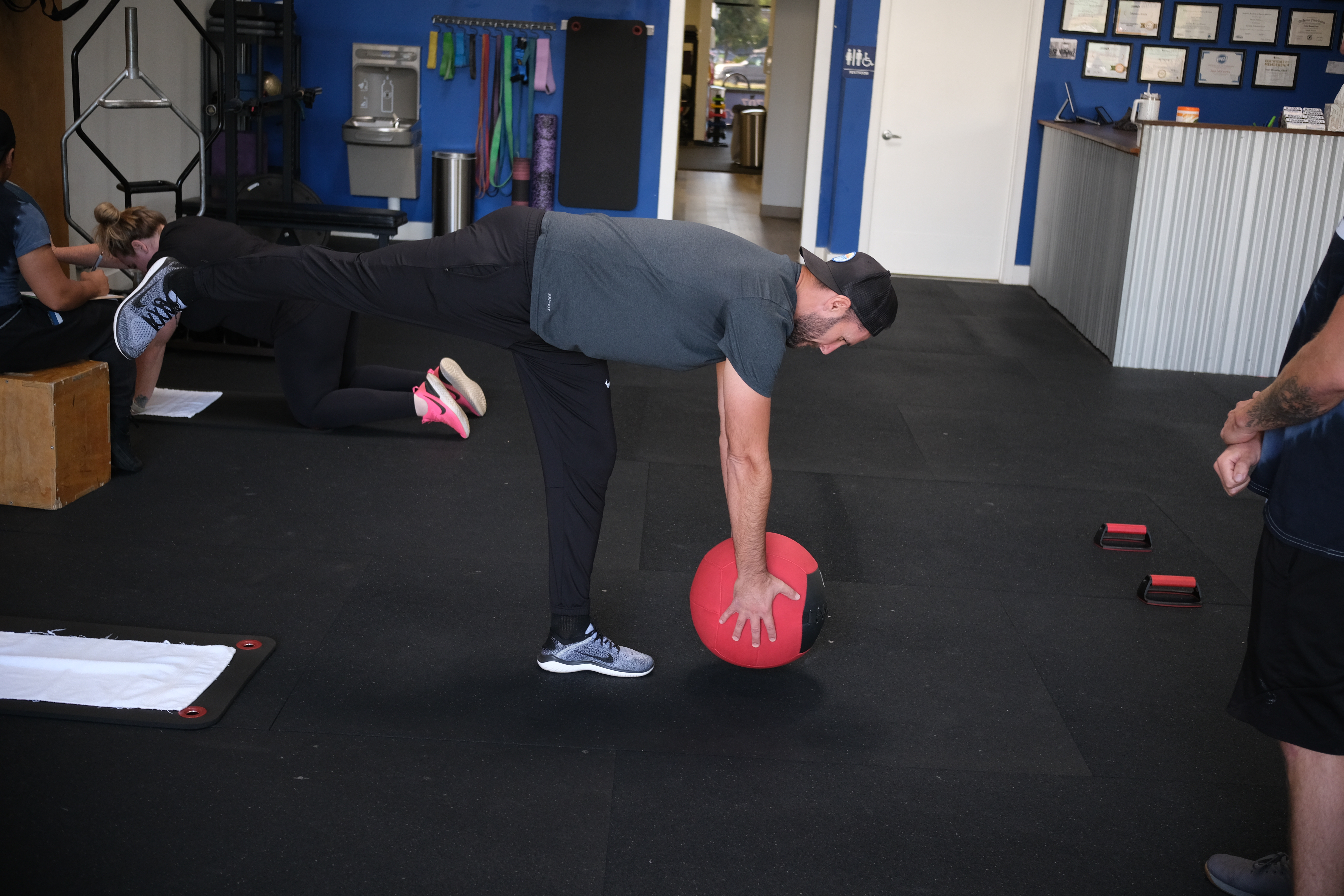
Sean McCawley, the founder and owner of Napa Tenacious Fitness in Napa, CA, welcomes questions and comments. Reach him at 707-287-2727, napatenacious@gmail.com, or visit the website napatenaciousfitness.com.