
After a three-hour competitive pickleball session with a few of my pickleball peers, we sat on the bleachers outside Vineyard Park in Yountville. Covered in a fine coat of sweat and sunscreen, we admired the picturesque landscape to the east. Miles of trellised grape vines paved a vibrant green blanket of grape leaves and native California foliage across the land, leading up to the hills and mountain ranges that were speckled with patches of vineyards, rustic-looking buildings, and rocky protrusions as the line of sight traveled upward to the tip of the mountains. One of my favorite views is the summit of a hill that can be reached by hiking to the legendary Stag’s Leap site, starting at the Rector Creek Reservoir trail. That site brings back a sense of nostalgia from when I took a four-hour hike with one of my best friends. He shared that the area we hiked to was named after a legend of a stag that the indigenous people of Napa were said to be hunting. The tale has it that the stag evaded the hunters and cleared a rocky formation over ten feet high. This glorious landscape, along with stories of the hikes I’ve taken in the mountains to the east of the pickleball courts, brings a sense of joy after concluding a heart-pounding, sweat-filled, and adrenaline-inducing session of smashing a wiffle ball at my opponents for three straight hours.
One of my fellow pickleball peers shared with me that pickleball was his favorite way to exercise. I can relate, as I’m not fond of staying on a treadmill, staring at an electronic device, to burn the same amount of calories as I would engaging in one of my favorite recreational physical activities. The thought of staying on a treadmill for anywhere over five minutes chills me to the bone. He also added, “I haven’t felt knee pain until I started to play pickleball, though.” He said, “I played tennis for years. Pickleball quickly became my new point of interest because it was new, fun, and gave me something different to work on. But, after getting to age forty-five, and picking up a new sport, my knees ache after playing so much pickleball.”
It shouldn’t be a surprise that, along with the advancement of age, maladies in our joints can appear in new spots that we’ve never had before. My grandfather and dad were physical specimens when they were my age. They woke up earlier than I and any rooster that “cock a doodle doed” before the break of dawn, worked their hands to the bone, got home later than everyone else in the house, and went to bed after everyone else was safely asleep. However, after they retired, they would occasionally experience back pain, knee pain, or a crick in their neck. After observing firsthand that joint pain can occur in the most roughnecked, knuckle-dragging, and hard-nosed people like my dad and grandpa, I realized that investing in learning tactics to manage age-induced joint pain was a crucial part of being able to enjoy my life to the fullest.
Aging and the appearance of joint pain are usually an inevitable part of life’s progression. Cartilage surrounding the ends of bones undergoes general age-related breakdown. Muscles aren’t the same as they were in our youth. Previous injuries that didn’t seem so bad in the past might unmask themselves and re-appear in certain areas ten to twenty years later. However, exercise is one of the most effective ways to reduce the likelihood of unexpected and severe joint pain.
Age-related joint pain can occur in various areas of the body. Some of the most common sites of joint pain we observe in our personal training clients are in the knees, lower back, and shoulder joints. These areas often emerge as pain points after years of manual labor or previous injuries. To mitigate joint pain, the last thing we want to do is avoid moving. Lack of physical activity triggers muscles to stop growing and adapting to the demands of everyday life. Therefore, discovering safe and effective exercises that target strengthening the knees, lower back, and shoulders is critically important for managing age-related joint pain.
An effective index of exercises we prescribe for our personal training clients, to reduce joint pain, is to prioritize the muscles of the knee, lower back, and thoracic spine. These portions of the body contain muscles that serve as the base of support for common areas of joint pain. Learning how to engage the scapular and core muscles that surround the ribs and thoracic spine helps reinforce the neck, upper back, and lower back. Consistently practicing movements that increase the range of motion of the hips and ankles helps the lower extremities take on the brunt of the load when engaging in physical activities that involve lifting and recreational athletics. Exploring exercises that are enjoyable, safe, and supported by research to help alleviate joint-related pain has the potential to support a happy life while reducing joint pain.
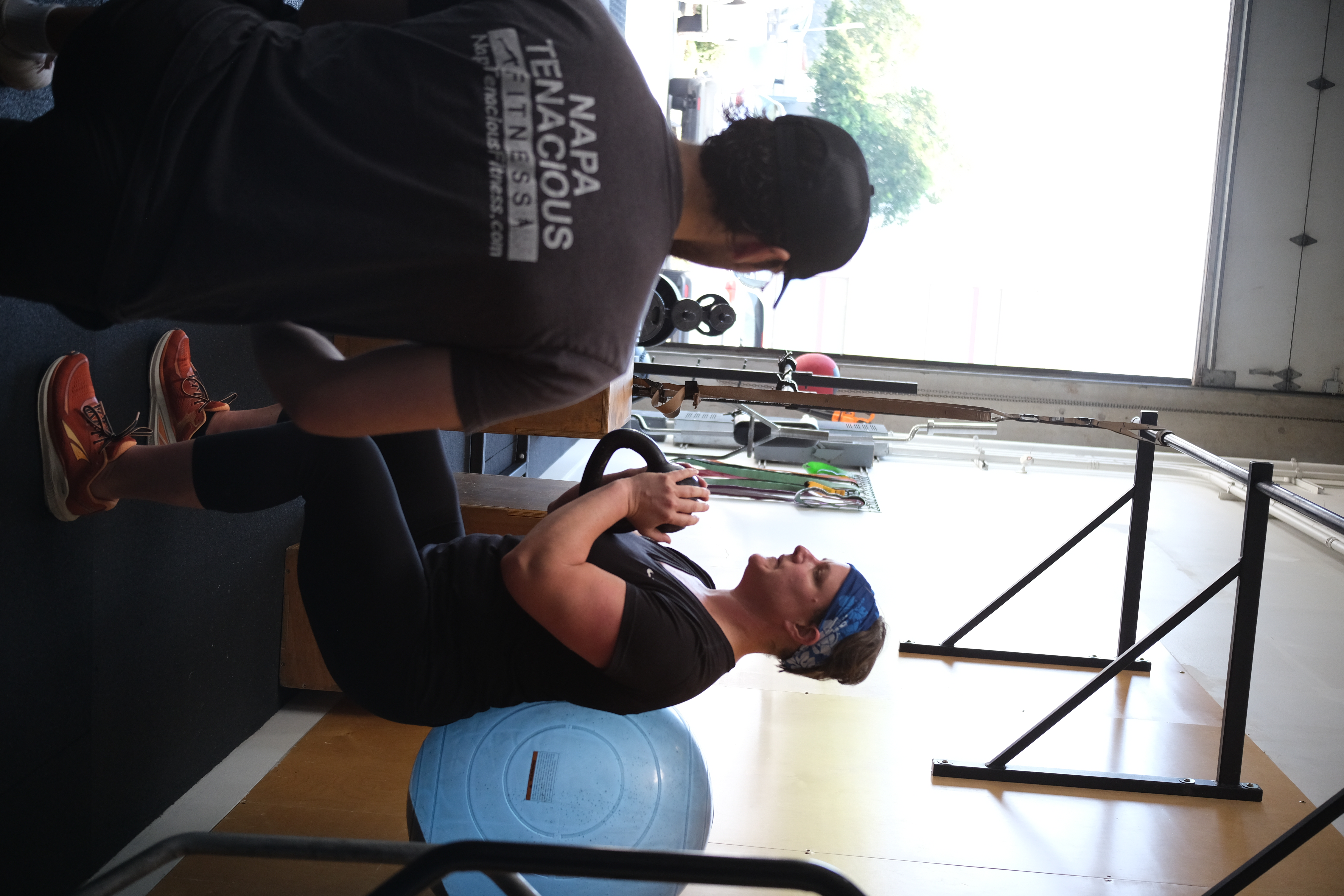
Sean McCawley, the founder and owner of Napa Tenacious Fitness in Napa, CA, welcomes questions and comments. Reach him at 707-287-2727, napatenacious@gmail.com, or visit the website napatenaciousfitness.com.