
“The Foundations of Playing Pickleball,” mentioned Goliath as he pulled out a book from our book collection in our Napa Tenacious Fitness library. Included in this book collection is a shelf featuring titles that cover musculoskeletal anatomy, coaching and cueing techniques, healthy eating cookbooks, and a few other sport-specific books that coaches can reference to enhance their skill set when working with personal training clients.
Goliath is one of our newest additions to the coaching team. On his first observation shift to determine if our gym was a good fit for him to have a job as a lifetime fitness coach, part of this invitation to observe included taking in the vibe of our day-to-day activities as coaches. He mentioned, “Pickleball seems like a ton of fun. But when I was working in the physical therapy clinics as part of my internship experience in college, I saw a noticeable amount of patients coming in with ankle and knee-specific injuries as a result of playing pickleball.” Goliath received high marks during his first day of observation due to his ability to be curious about the features we had in our gym that allowed him to learn and improve his coaching skill set. Perhaps he could stay around for a while.
Goliath made a good point of mentioning that injuries from playing a fun, seemingly simple, and less physically demanding recreational sport caused significant injuries. He was correct. Pickleball can cause debilitating injuries. That is, if the participants think they can jump on the court and expect to be the Michael Jordan of the pickleball world without putting in the work to ensure their bodies can endure the stresses and demands of the sport.
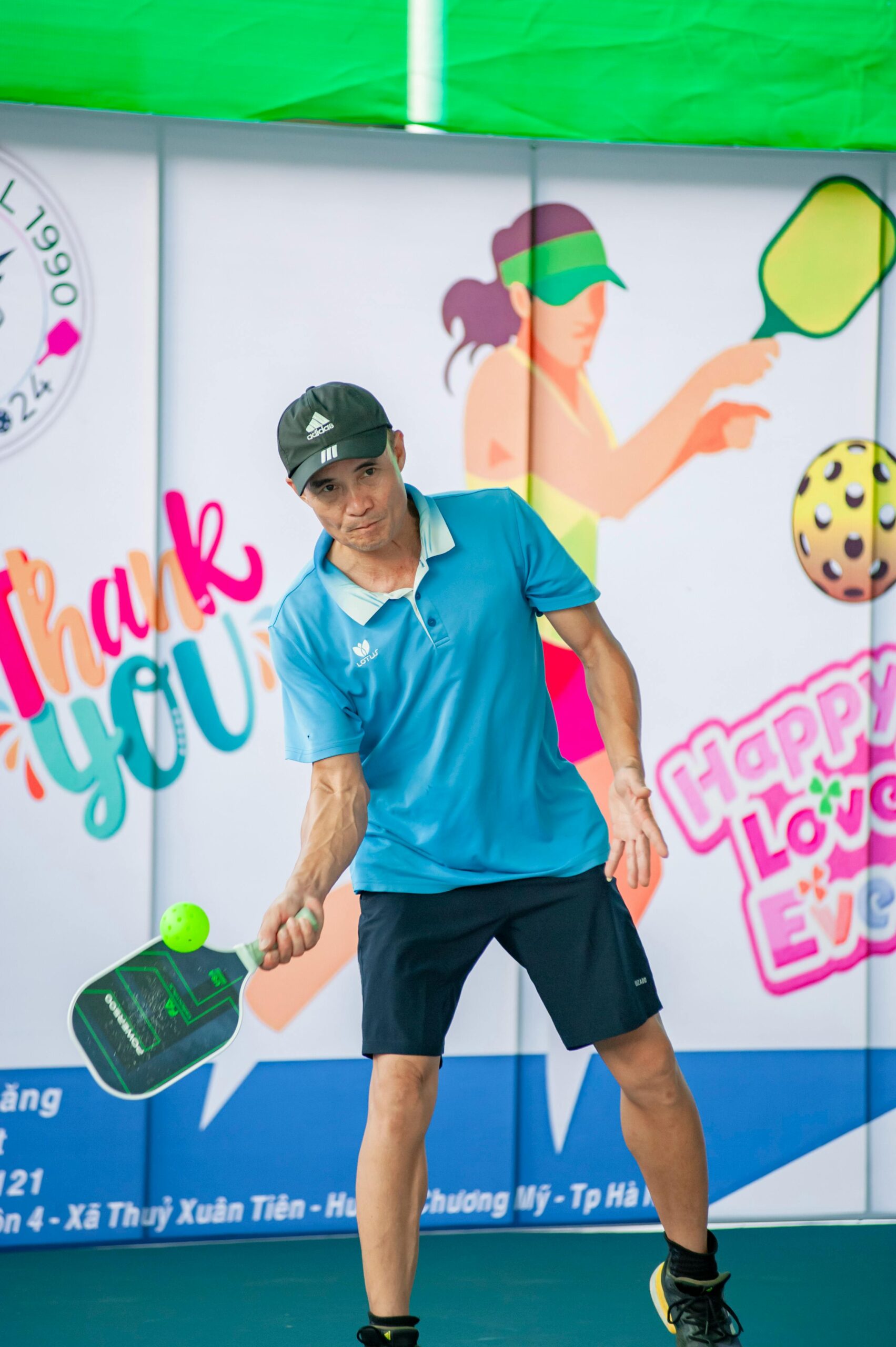
The sport-specific physical demands of playing pickleball include hitting a wiffle ball over the net and working to win a point against your opponents. The learning curve of playing pickleball is enticing to new enthusiasts looking to get into a fun and engaging recreational activity. Understanding the game’s strategy is intuitive, and participants seem to grasp it relatively quickly. However, a commonly overlooked component of pickleball is the need to immediately react to the various directions a ball can be hit on the court. For example, perhaps a player sees an opening for an offensive shot and rolls it away from their opponent on the other side of the court, producing a ball with an extreme amount of top spin that shoots the ball off at a sharp angle after it hits the ground. This scenario causes the recipient of this offensive shot to immediately move their feet in a fast manner to retrieve the ball. These fast-twitch type of movements require the muscles, tendons, and ligaments of the ankles, knees, and hips to be able to manage this immediate and rapid production of force on lower extremity joints.
For a player unhindered by previous lower extremity injuries, this may not seem overly important. However, after six games of pickleball and reproducing this immediate high-impact demand to chase after balls repeatedly, the stress can add up. A substantial amount of stress can be applied to the hip, knee, and ankle joints if six games of pickleball per day are repeated two to three times per week for three months. Over the course of a few weeks of playing pickleball multiple times per week, inflammation at the ends of joints and tendons can occur.
For new pickleball participants, it’s not uncommon for them to attend as many pickleball outings as possible due to the invigorating sense of accomplishment of improving at an athletic skill set. However, injuries to the lower extremities have an increased likelihood to occur during these first few months of playing this new sport they love as well. These injuries commonly occur due to the participants perceiving pickleball as something you should just be able to walk on the court and be able to run around like a golden retriever puppy chasing after a ball with reckless abandon. However, a human body that is over the age of thirty doesn’t recover at the same rate as a golden retriever puppy. Therefore, compliance with a strength and conditioning program to decrease the likelihood of injury in conjunction with pickleball participation can’t be overstated.
Research has repeatedly supported that engaging in fifteen to thirty minutes of resistance training one to two times per week decreases the likelihood of sport-specific injuries. Compliance with practicing injury prevention tactics, mobility and static stretching routines, and resistance training is critically important toward reinforcing the ankle, knees, and hips when regularly engaging in recreational athletic activities.
Pickleball isn’t meant to injure people. It’s intended to encourage physical activity, improve fitness, and laugh and smile. Just make sure to take some time out throughout the week, alongside pickleball, to ensure the body can be strong enough to continue playing for years to come.
Sean McCawley, the founder and owner of Napa Tenacious Fitness in Napa, CA, welcomes questions and comments. Reach him at 707-287-2727, napatenacious@gmail.com, or visit the website napatenaciousfitness.com.