
Reaching back to slide your arm into a zip-up hoodie, fixing a bun or ponytail in your hair, or simply lying on your side while sleeping in your bed shouldn’t be too challenging. However, for those of us who have endured an injury to one or both of the shoulders, a seemingly simple everyday life action can seem like a complex and challenging decision on whether or not to make a movement that causes pain or discomfort.
Comprised of a network of unique bony attachments, ligaments, tendons, muscles, and nerves, the shoulder has unique capabilities that differentiate it from other joints. The attachment of the humerus to the scapula and clavicle enables a full range of motion, which sets humans apart from other creatures. Imagine if we had the shoulder design of a crab, cat, or lizard. We wouldn’t be able to engage in the activities that have enabled us to become the most advanced organism on Earth. However, it’s worthwhile to appreciate the differences our shoulders have when compared to other phyla in the world.
Our crustacean friends have shoulder joints that attach to their arms, equipped with little pinchers that grab onto food and transport it to their mouths. If you’ve picked up a live crayfish and seen that they can only pinch something that’s in front of them, you can see the limitations of their shoulder joint. Cats are one of the most agile and athletic species of land-dwelling mammals in the world. However, they have similar limitations to those of Mr. Crabs. They can’t reach behind their body. Lizards have unique abilities to stay close to the ground and skitter along walls and crawl into narrow cracks. A lizard can abduct its arms out wide, but it can’t reach its arms up over its head or behind its body to touch its back. We have quite the privilege of being able to move our arms in various planes of motion that grant us the ability to do something as simple as reach out in front of us and bring a cup of coffee to our mouths, to something as sophisticated as practicing and refining our ability to throw a football ten to thirty yards to a moving target.
So, why would we want to compare our shoulder joints to crustaceans, felines, or reptiles? While we are the top of the food chain and the most successful species on Earth, if we don’t tend to our shoulders and ensure they are strong and able to move in optimal range of motion, our shoulders will devolve into the same shoulder limitations as crustaceans, reptiles, and felines.
Our personal training clients sometimes present a plethora of musculoskeletal injuries that may have been caused by using a dominant hand more than the other, a previous traumatic event such as a car crash, or the development of a degenerative connective tissue condition. Shoulders that have endured unfortunate afflictions that affect a persons range of motion, strength, and structural integrity of the connective tissue within the joint that haven’t been properly managed via skillfull exercise decisions create scenarios in which the arm starts to move in the same manner as that of a crab with a pincher bringing a piece of debree from the bottom of the ocean to their mouths.
At the beginning of our client’s training sessions, exercise participants are required to perform a series of dynamic stretching movements that prepare the body for exercise. Included in this routine are over ten tactics that pertain to shoulder muscular activation, range of motion practice, and education on how to move the shoulder correctly through various planes of motion. One such technique that makes a big difference in a person’s fitness journey is shoulder protraction and retraction:
To perform scapular protraction and retraction, lift your arms and bend the elbows at about a ninety-degree angle, and elevate them until they are in line with your armpits. While maintaining your elbows at a ninety-degree angle and keeping your fingertips facing forward, glide your shoulder blades forward along your rib cage until you feel a stretch in the upper back and a muscular sensation in your pectoral region. Reverse the motion and glide your shoulder blades backward against your ribs. You should feel a muscular sensation in the muscles surrounding your shoulder blades. Repeat this movement for five to ten repetitions.
Equipped with the ability to reach the arm in front, across the midline of the torso, to the side, overhead, and even behind the body, the shoulder is an invaluable asset allowing humans to interact successfully in their careers, recreational sporting activities, and even simple everyday functions such as using our phone, working on computers, cooking, shopping, or driving. Understanding and appreciating the range of motions of the shoulder is critical for successful and efficient functionality in everyday human life.
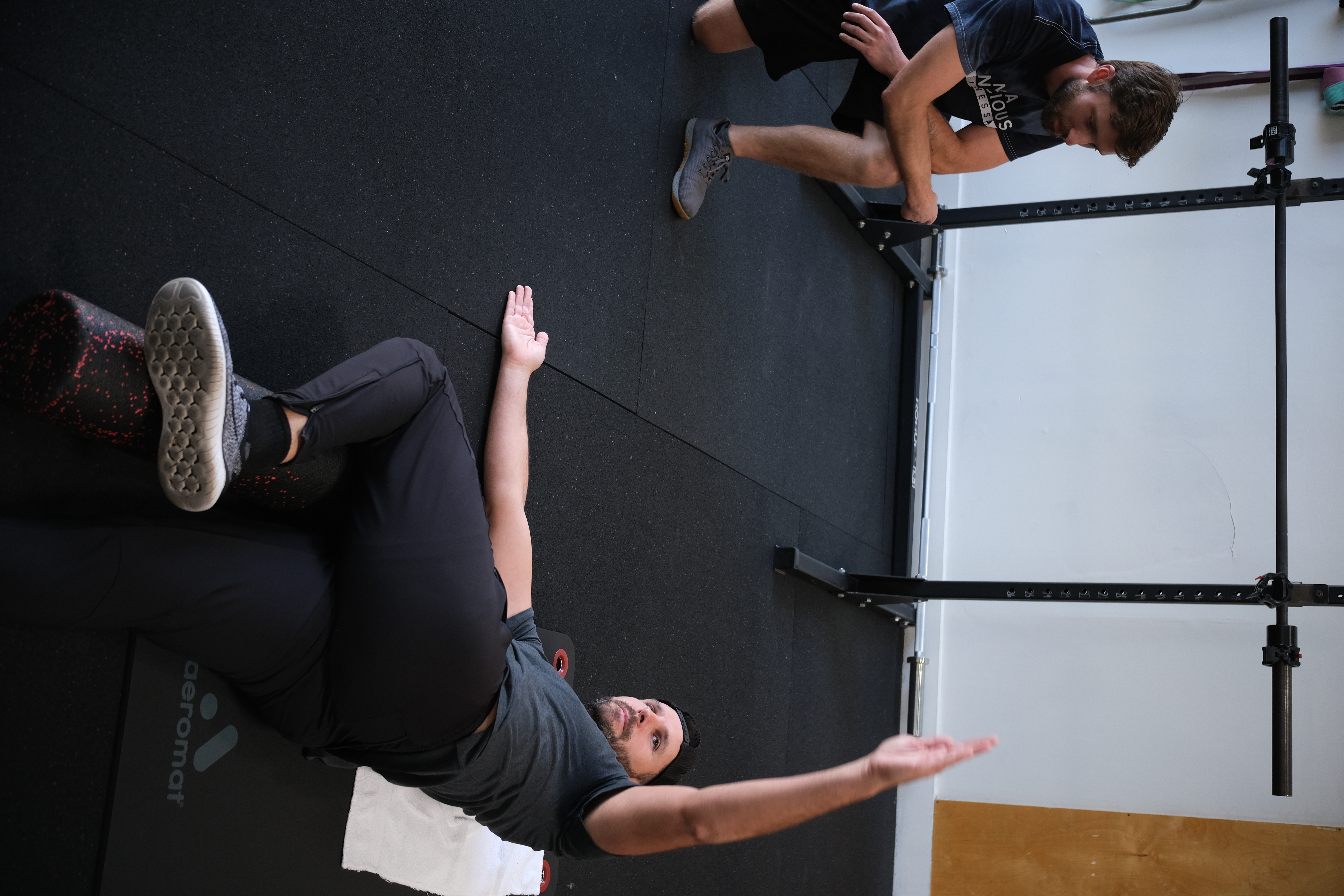
Sean McCawley, the founder and owner of Napa Tenacious Fitness in Napa, CA, welcomes questions and comments. Reach him at 707-287-2727, napatenacious@gmail.com, or visit the website napatenaciousfitness.com.