
Sarcopenia can be defined as the loss of muscle during the natural aging process. As people age, there are usually changes in their psychological, emotional, and physical health. Shifts in family life, interpersonal relationships, or career settings create stimuli that prompt people to adjust to various demands as we age. Along with matching the pace of life’s multiple stresses, connective tissue in the body endures them as well. In the case of sarcopenia, skeletal muscle mass endures years of physical demands that could have been produced by physical stress from manual labor, underuse injuries, or an accident that might have caused a decrease in physical activity.
Something that is always certain in our lives is the sun setting and rising, which occurs three hundred and sixty-five times per year. Some of us have seen this happen for more decades than others. For those of us who have experienced the changes in the world for fifty to ninety years, a few physical maladies may have been experienced as well.
While there may be multiple contributors to sarcopenia and a decrease in muscle mass with age, there are other risk factors that become more prevalent with age as well, including decreased joint mobility, increased risks of falling and repercussions from the events of falling, decreased functional strength, and the introduction of metabolic disease due to low levels of physical activity. Sure, our muscle size might not be as pronounced as that of a young man at the age of twenty-one or the pristine, majestic figure of an eighteen-year-old female gymnast. However, that doesn’t mean we need to give up on the mindset of staying happy, healthy, and strong, or on counteracting the effects of aging on our well-being.
A common question we hear from our newer personal training clients is “How can I increase lean muscle mass when my doctor tells me my strength is decreasing due to my sarcopenia?” A powerful question I often ask to generate potential remedies for this issue is: “What does your current exercise routine consist of?” The answers vary from “nothing at all” to an illustrious story of biking two to three times a week, frequently walking the Vine Trail from north Napa to Yountville, or playing tennis, golf, or pickleball three to four times a week.
It should go without saying that individuals in the “nothing at all” category would benefit from starting with introductory-level, safe, low-impact physical activities once or twice a week, such as taking a ten-minute walk or practicing simple bodyweight exercises. For individuals who are already active and engage in regular recreational athletic activities, they’re looking to fill a gap they know exists to counteract the effects of aging and sarcopenia. My follow-up question for the already sporty and physically active individuals looking to counteract the advancement of age and sarcopenia is, “Do you practice any resistance training exercises?” More often than not, I get the response, “What’s resistance training?”
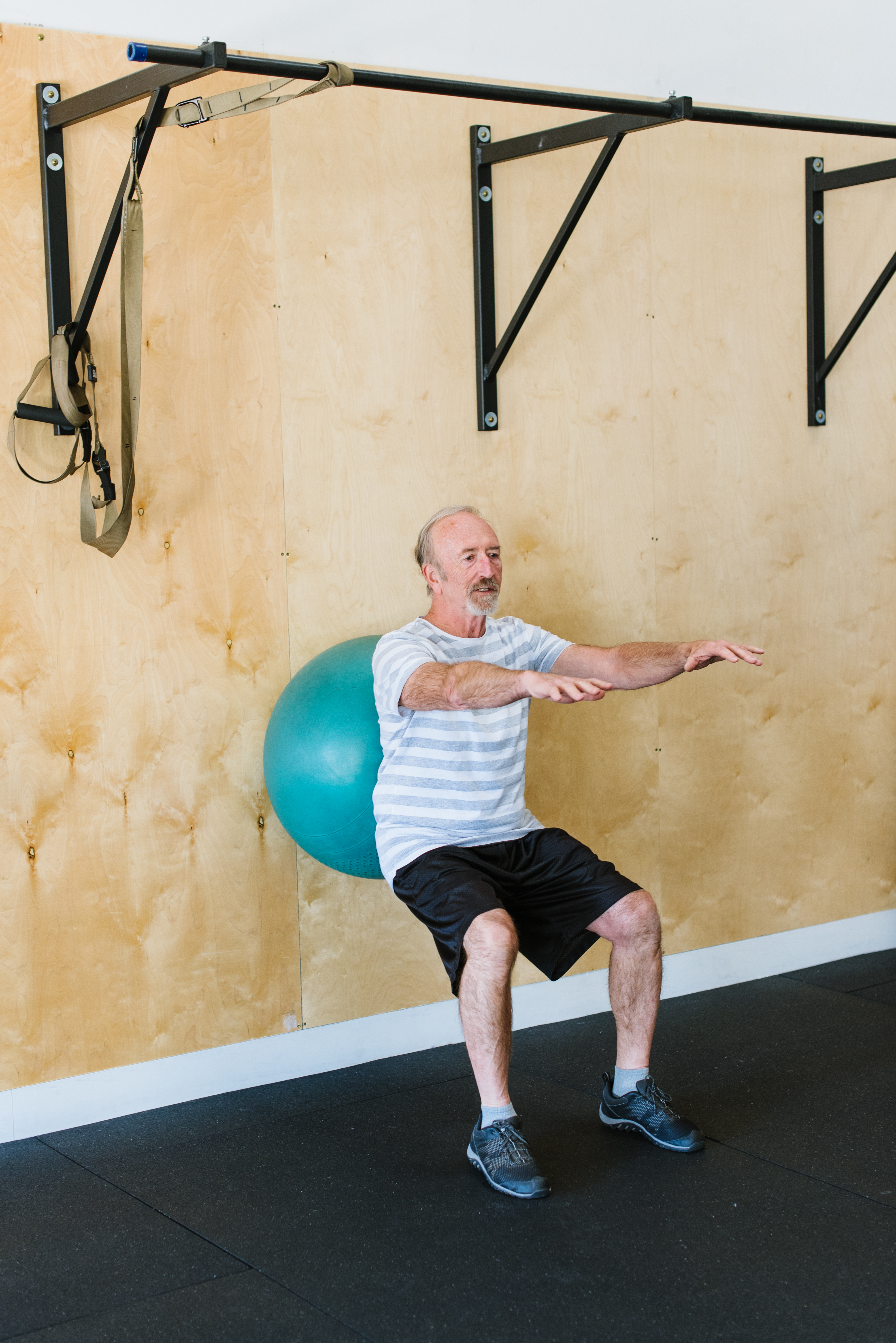
Resistance training can be defined as practicing the action of performing a set amount of physical movements against a form of resistance that exceeds the demands of normal physical activity. A common form of resistance training might be a squat, plank, or push-up. In this case, the resistance is a strenuous movement in which the body resists gravity, and the joints move through a range that might not normally occur during a typical day of activities. However, people exhibiting sedentary behaviors aren’t exposed to the physiological stress of resistance-training-specific bouts of exercise. For example, will a desk worker who sits at their desk for five to six hours per day find themselves on the ground holding a plank for thirty seconds or pushing themselves up from a prone position twenty times? Probably not.
The practice of training strenuous movements through controlled exercise-based stimuli that are outside the body’s comfort zone induces a positive feedback response at the microscopic level in skeletal muscle. The SAID principle means “specific adaptation to an imposed demand.” When the body is consistently exposed to resistance training, the likelihood of enhancing skeletal muscle size, strength, and neuromuscular coordination can be increased.
If the discovery of sarcopenia or decreased strength is present, it might be helpful to look at what is missing in the management of strength and conditioning exercises present in daily routines. Recreational athletic physical activities are undeniably a critically important asset to happiness, health, and longevity. Let’s not forget that the muscles allowing us to perform those activities need attention as well. Practicing full-body resistance training one to three times per week can help manage sarcopenia and age-related changes in strength.
Sean McCawley, the founder and owner of Napa Tenacious Fitness in Napa, CA, welcomes questions and comments. Reach him at 707-287-2727, napatenacious@gmail.com, or visit the website napatenaciousfitness.com.